July Class 8 Orders Hit 22,000, Up 75% Year Over Year as 2026 Build Slots Run Out
North American fleets ordered 22,000 Class 8 trucks in July, according to preliminary data from FTR Transportation Intelligence. The total is down 31% from June's near-record intake but still 75% above July 2025. Through July, 2026 net orders are running 120% ahead of the same period last year, and FTR says the remaining 2026 production slots are close to fully committed. Orders placed now are landing in first-quarter 2027 build slots.
What the Data Shows
| Indicator | June 2026 (preliminary) | July 2026 (preliminary) |
|---|---|---|
| North America Class 8 net orders | 30,500 units | 22,000 units |
| Month over month | +16% | -31% |
| Year over year | +241% | +75% |
July is seasonally the weakest month on the order board, so a month-over-month decline from June is normal. The year-over-year comparison also comes off a weak base: fleets ordered only about 12,700 trucks in July 2025. Even with that context, 22,000 units is a strong July, and it extends a run of elevated intake that started in December 2025. ACT Research's final June count came in even higher than the preliminary reading at 31,751 units, more than triple the year-ago month, with tractor orders of 22,041 leading the gain.
Why Fleets Keep Ordering
Four factors are holding demand up:
- Freight rates are paying for equipment. DAT spot rates were running more than 50% above year-ago levels at the start of July, and contract rates have followed, according to ACT Research. Carriers that are making money replace trucks.
- Capacity keeps tightening. Driver supply is shrinking under several pressures at once, including the FMCSA's nondomiciled driver crackdown, tighter carrier registration rules, and CDL school closures. Fewer drivers per truck pushes utilization and rates up, which supports orders.
- The EPA 2027 pre-buy is underway. The EPA's July 9 proposal keeps the 2027 start date and the 35 milligram per horsepower-hour NOx limit but softens warranty and useful-life requirements. Fleets are still pulling purchases forward to lock in current-spec trucks and prices.
- Vocational demand has its own engine. AI and utility infrastructure spending in the US is running at an estimated $12.5 to $15 billion per week, and flatbed rates are at records. That keeps vocational orders firm even where consumer freight is flat.
Class 8 backlogs reached a 38-month high in June, and OEM third- and fourth-quarter build plans have moved up. FTR senior analyst Dan Moyer notes that the question has shifted from demand to execution: whether proposed non-conformance penalties would let OEMs slot excess demand into early 2027, and how USMCA review risk could change parts and truck tariffs.
What It Means for the Aftermarket
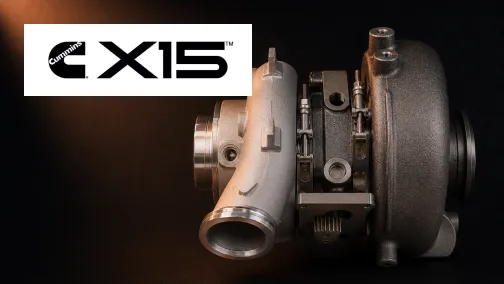
- Today's trucks will run longer and harder. A truck ordered in August 2026 may not be delivered until 2027. Until new units arrive, fleets will keep existing trucks at high utilization, which means steady near-term demand for wear components, including HE400VG turbochargers on Cummins X15-powered trucks.
- The pre-buy extends the current parts generation. Every current-spec truck sold between now and the 2027 rule start is another engine that will need current-generation parts for the next decade. Buyers sourcing Cummins X15 turbochargers should expect healthy availability of current part numbers well into the 2030s.
- Watch EPA enforcement details. If non-conformance penalties end up cheaper than 2027 hardware, OEMs can keep building current-spec engines into early 2027. That would stretch the current parts generation further and delay the mixed-generation parts matching problem.
UPAPSI tracks monthly order data because it is the earliest reliable signal of parts demand 12 to 24 months out. Strong order intake now means a larger working fleet later. If you are planning inventory for 2027, send us your engine model and OE number and we will confirm availability against the current production generation.
Sources
- Class 8 Truck Orders — FTR Transportation Intelligence (July 2026 preliminary data)
- Class 8 Orders Surge Again as Industry Nears 2026 Production Capacity — FTR (July 6, 2026)
- June Class 8 Orders Totaled 32k Units — ACT Research (July 21, 2026)
- New Equipment Demand Development Continues — ACT Research (July 13, 2026)
- FTR July 2025 Class 8 Orders — Fleet Equipment (August 2025)