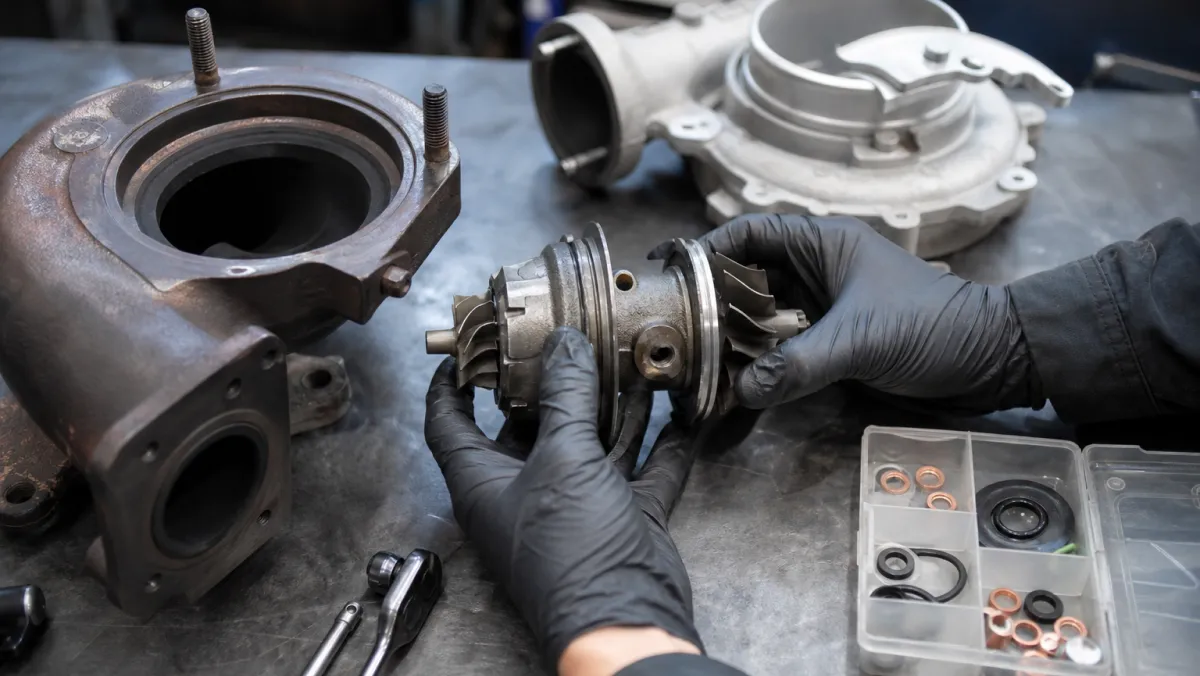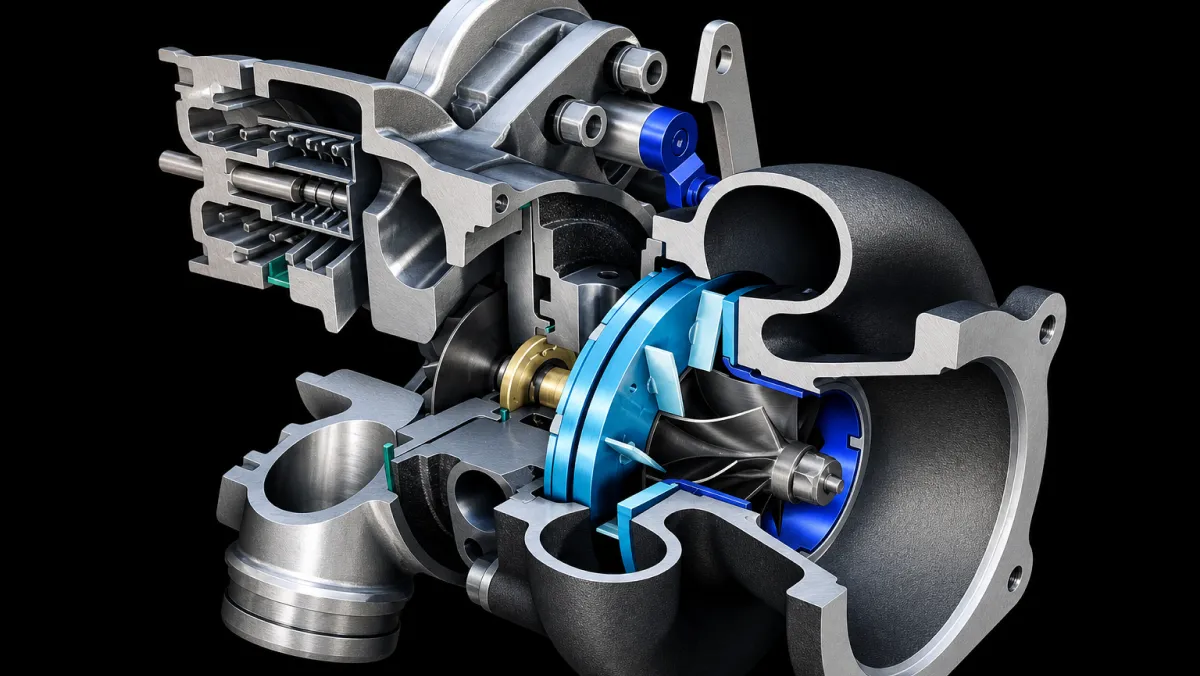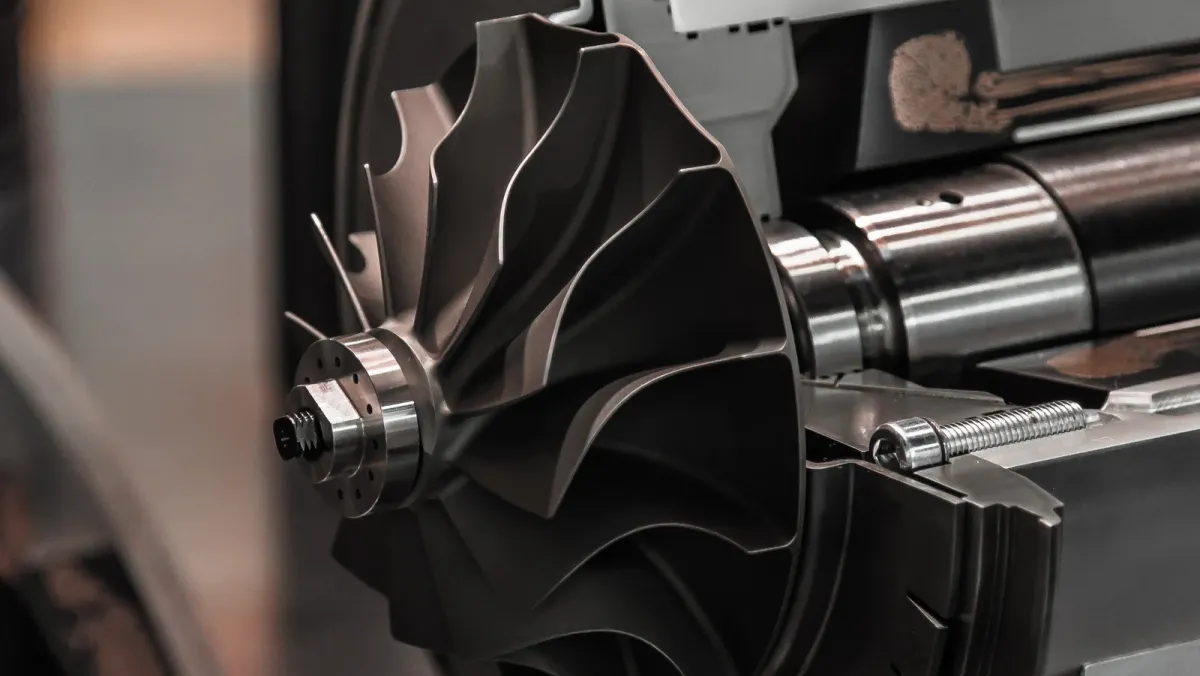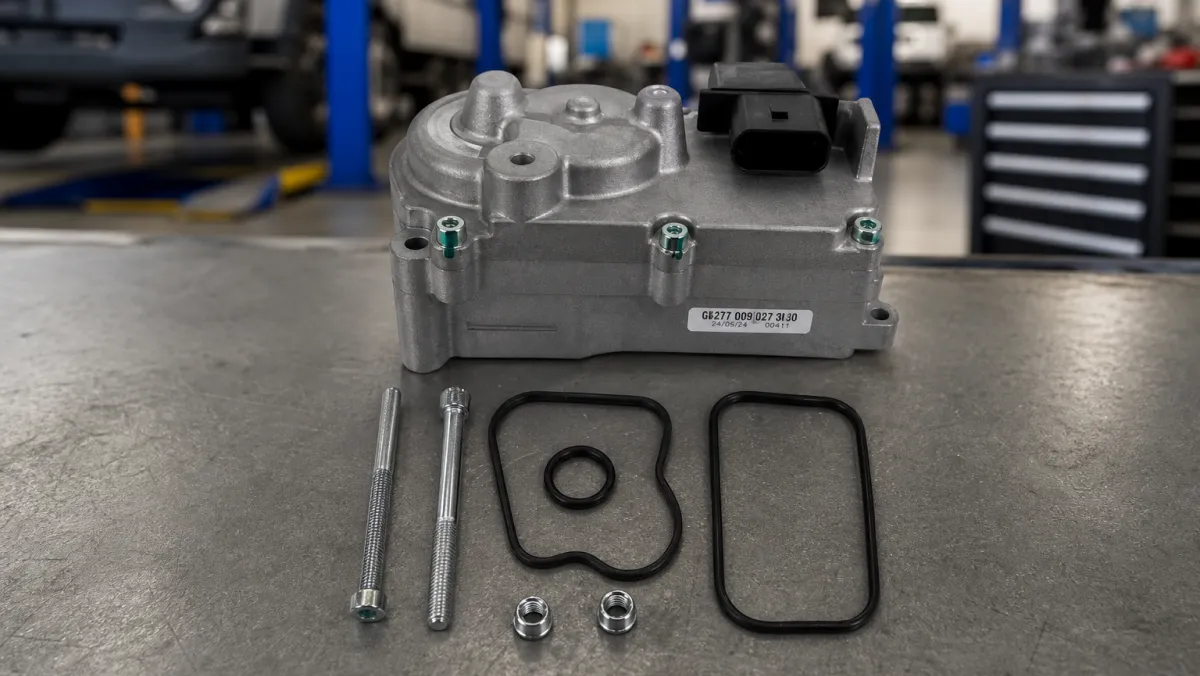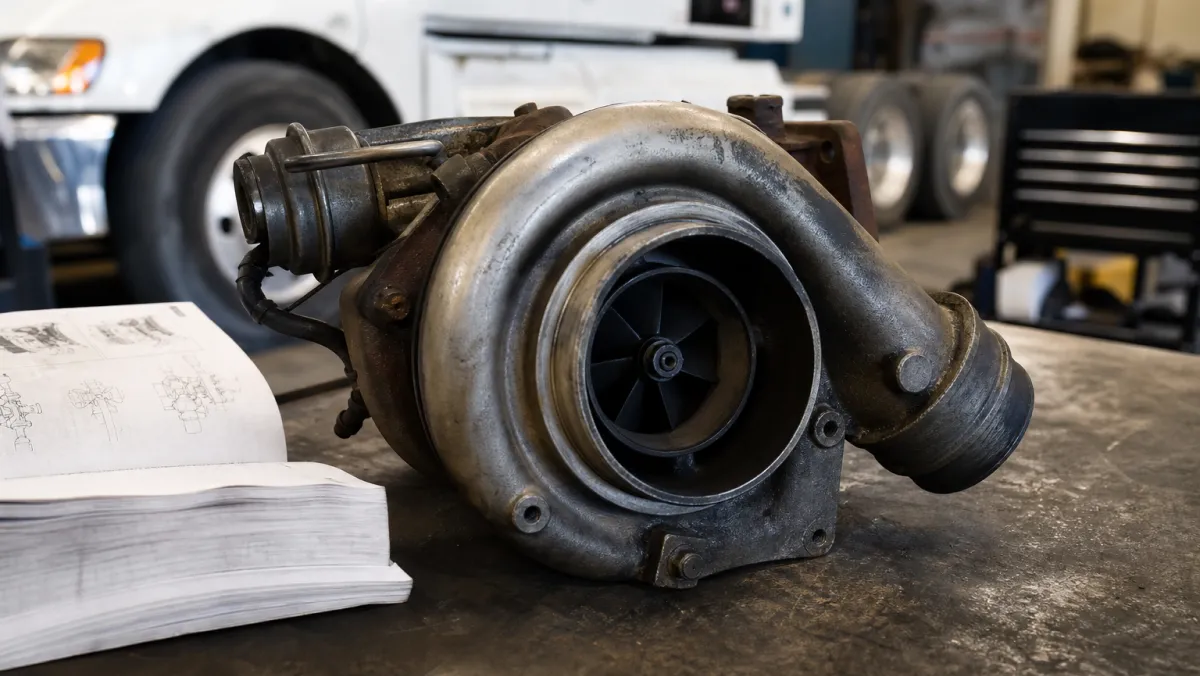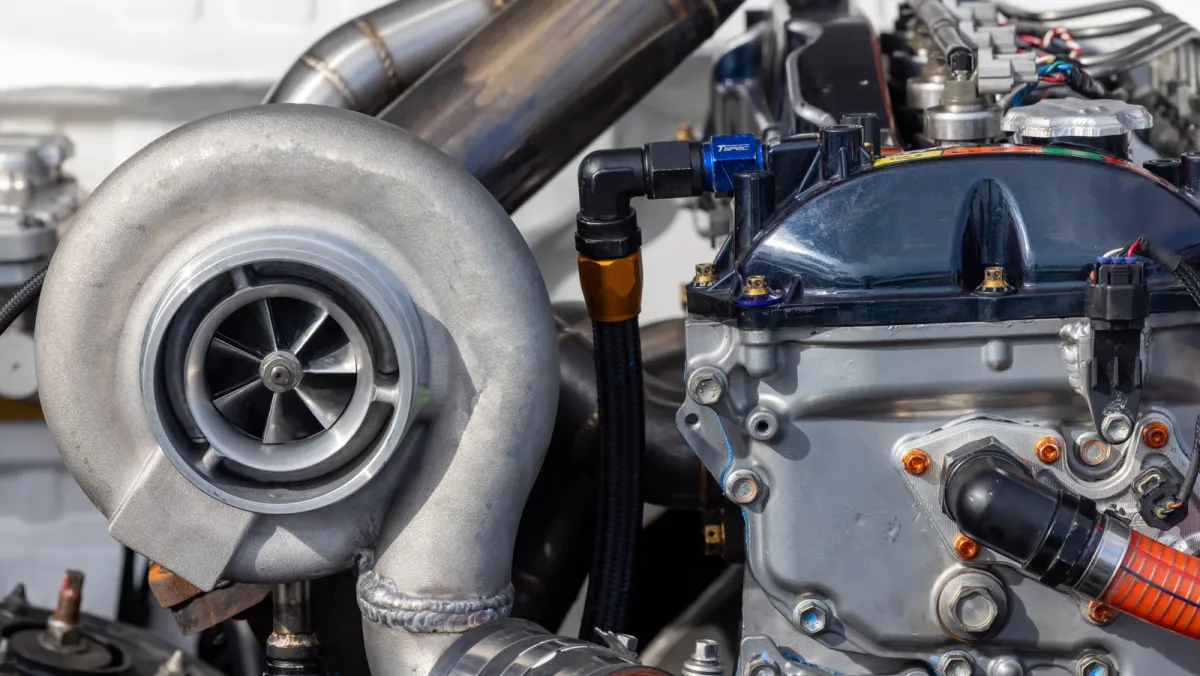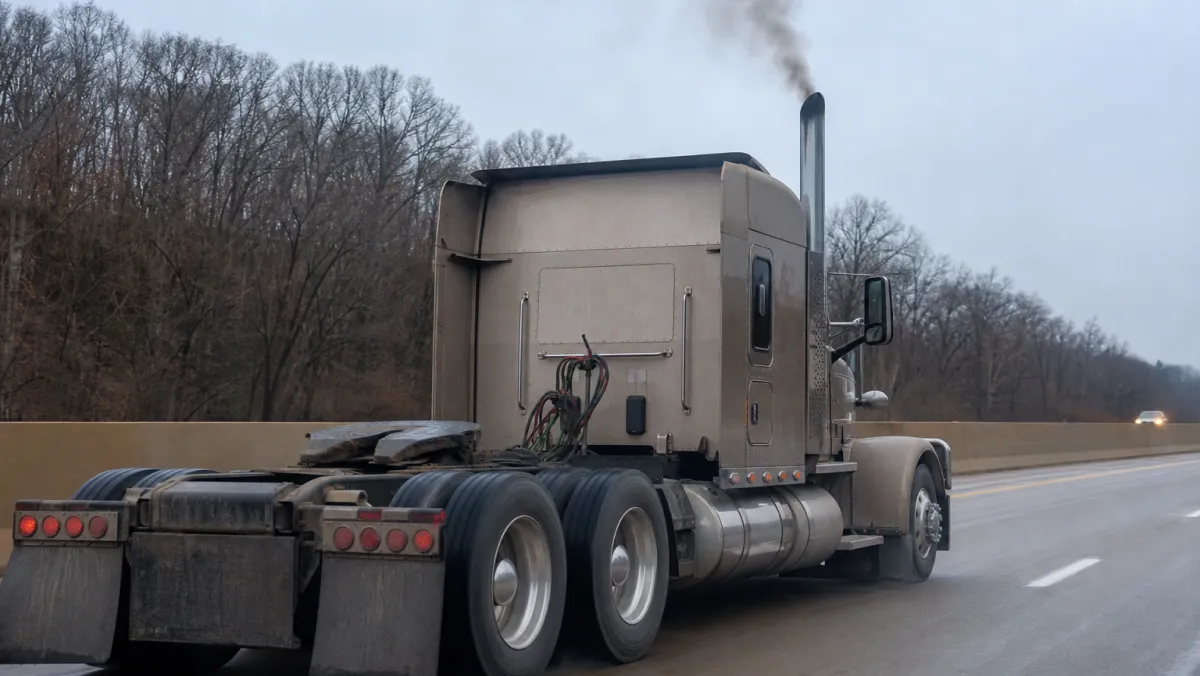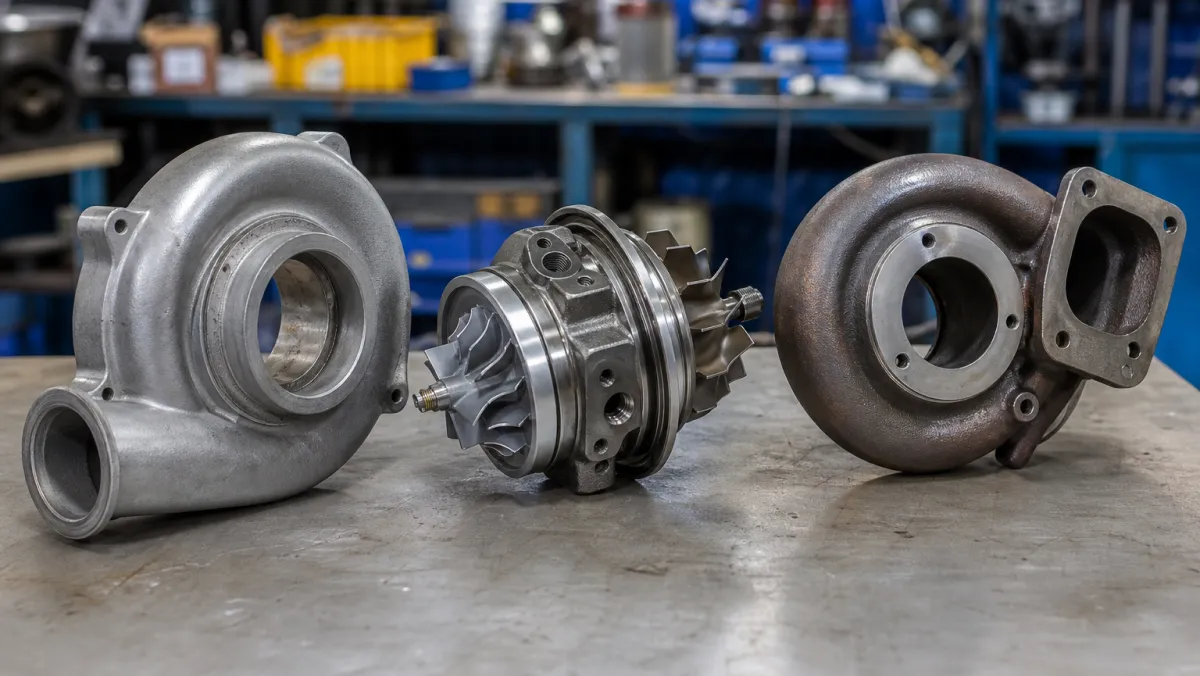
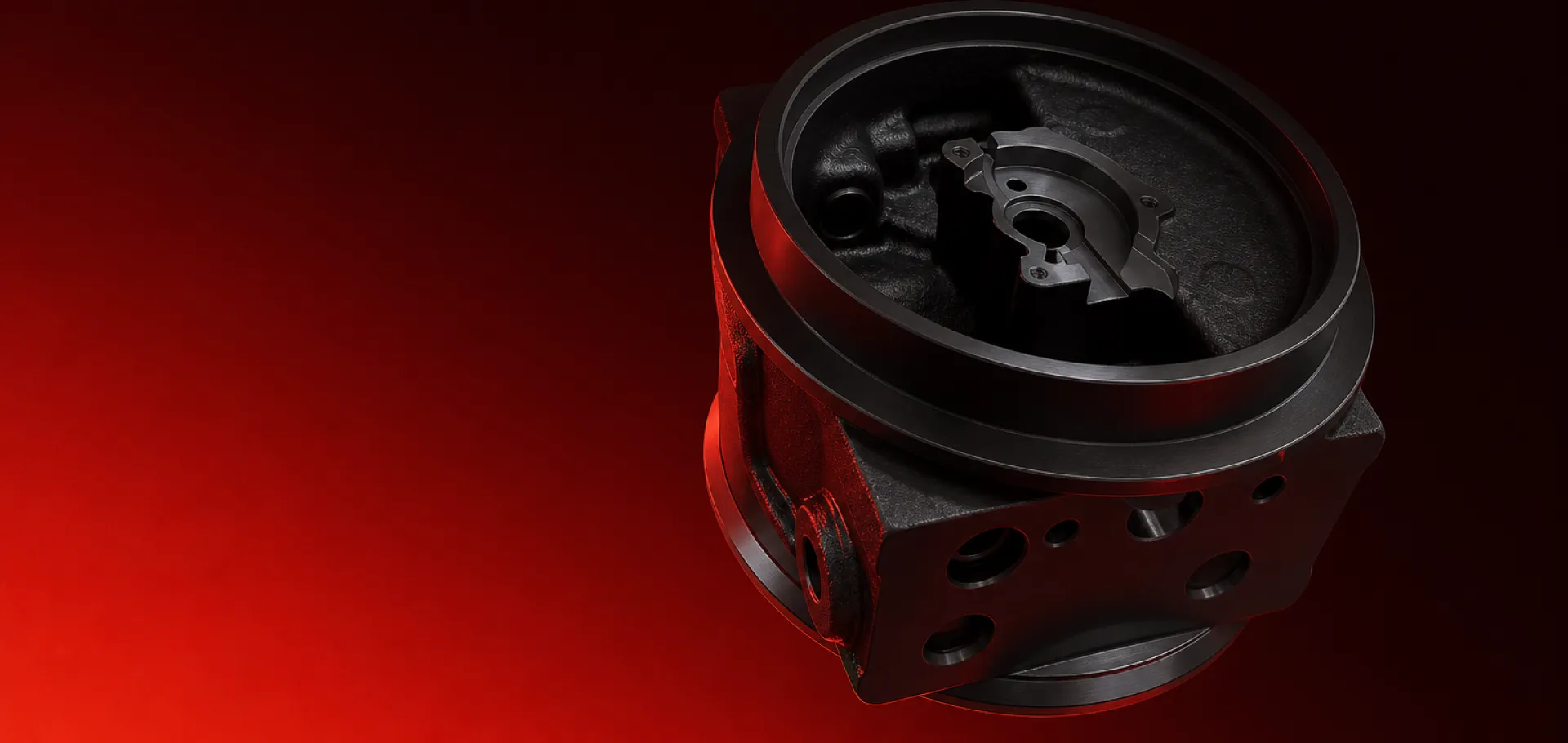
Brand new turbo bearing housing center housing for Holset VGT turbochargers on Cummins diesel engines supplied by UPAPSI

Turbo Bearing Housings

New Center Housings for Holset HE451VE, HE551VE, HE561VE and HE400VG Turbochargers

The bearing housing — also called the center housing — is the structural core of the turbocharger. It holds the journal bearings and thrust bearing that support the rotating shaft, carries the oil feed and drain passages, and on water-cooled models includes coolant channels that protect the oil from coking at shutdown. When the housing itself is cracked, corroded, or has scored bearing bores, no amount of new bearings or seals will save the rebuild. We stock brand new bearing housings for Holset VGT turbochargers on Cummins heavy-duty engines: HE451VE and HE400VG for ISX and X15, HE551VE for ISX CM870, and HE561VE for EPA07 platforms. Each housing is new cast iron, machined to OEM-spec bearing bore tolerances, and matched by turbo part number. Turbo rebuilders, shops and distributors order from US stock.

  • 100% Brand New
  • OEM-Spec Bearing Bore Tolerances
  • US Stock, Fast Dispatch
  • Direct-Fit Replacement
  • 1-Year Warranty
  • Bulk & Distributor Supply
  • No Core Charge
Bearing Housing For Turbo Cummins HE451V 3792574 2882111 2882112

Bearing Housing For Turbo Cummins HE451V 3792574 2882111 2882112

05-15 Cummins Various with ISX QSX HE451VE HE400VG Turbo Bearing Housing 2882111, 2882111, 2882110NX, 2882111NX, 2882111RX, 2841220, 2841221, 2841222, 2882004NX, 2882111, 2881807, 2882004, 2840007, 3768194, 3773569, 3792586, 3773562,3773561, 2882110, 3792586H, 2882110NX, 3792586HX,8773568, 3783568, 2843893, 3792584, 3773566, 3768191, l Fit to Vehicle: 2005-15 Cummins Various with ISX, QSX Engine, l Turbo Model: HE451VE HE400VG, If you are not sure about which item you need, please leave , us your turbo number(on your turbo's tag). We will check it for you.

The Structural Core That Holds the Rotating Assembly Together

The bearing housing is the one turbo component you cannot fake with a gasket or a seal. If the bores are worn, the oil passages are corroded, or there is a hairline crack in the casting, the turbo will fail again regardless of what new parts go inside it. A quality new housing is the foundation of every rebuild that lasts.

The Structural Center of the Turbocharger

Every bearing housing is a new iron casting machined to OEM-spec journal bearing bore diameters and surface finishes. Bearing bore tolerances control shaft float and oil film thickness — two variables that determine whether a turbo lasts 500,000 miles or 50,000. Our housings hold the numbers the bearings were designed for.

Oil and Coolant Passages Built Into the Casting

We stock housings for the HE451VE, HE400VG, HE551VE and HE561VE — covering the Cummins ISX, X15, and EPA07 ISX CM870/CM871 platforms. These are the highest-volume heavy-duty VGT turbos in the rebuild market.

Matched by Turbo Model and Bearing Configuration

A rebuilder can install perfect bearings, a new shaft, new seals — and still get a comeback if the housing bore is egg-shaped or the oil passages are partially blocked with carbon. Inspecting the housing is step one of any serious rebuild. When it fails inspection, a new housing is the only correct path.

Replace When Bore Dimensions Are Out of Spec

Brand new, not salvaged from a core, not line-bored from a worn unit. No core charge, nothing to return. A salvaged housing carries the previous owner's oil history, thermal cycles and potential micro-cracks — a new casting starts clean.

Ships New, Ready for CHRA Assembly

Housing dimensions and oil passage routing vary between Holset model revisions. We match by the turbo's Holset or Cummins part number to ensure the bearing bores, seal surfaces and bolt pattern align with your specific rebuild.

Rebuild-Shop Supply for In-House Turbo Work

One-year warranty on every housing, handled by our US team. If a rebuilt turbo comes back with bearing wear, we help you trace it — oil supply restriction, contaminated oil, excessive crankcase pressure — before assuming the housing. Details on the warranty page.

The Structural Center of the Turbocharger

Every bearing housing is a new iron casting machined to OEM-spec journal bearing bore diameters and surface finishes. Bearing bore tolerances control shaft float and oil film thickness — two variables that determine whether a turbo lasts 500,000 miles or 50,000. Our housings hold the numbers the bearings were designed for.

Oil and Coolant Passages Built Into the Casting

We stock housings for the HE451VE, HE400VG, HE551VE and HE561VE — covering the Cummins ISX, X15, and EPA07 ISX CM870/CM871 platforms. These are the highest-volume heavy-duty VGT turbos in the rebuild market.

Matched by Turbo Model and Bearing Configuration

A rebuilder can install perfect bearings, a new shaft, new seals — and still get a comeback if the housing bore is egg-shaped or the oil passages are partially blocked with carbon. Inspecting the housing is step one of any serious rebuild. When it fails inspection, a new housing is the only correct path.

Replace When Bore Dimensions Are Out of Spec

Brand new, not salvaged from a core, not line-bored from a worn unit. No core charge, nothing to return. A salvaged housing carries the previous owner's oil history, thermal cycles and potential micro-cracks — a new casting starts clean.

Ships New, Ready for CHRA Assembly

Housing dimensions and oil passage routing vary between Holset model revisions. We match by the turbo's Holset or Cummins part number to ensure the bearing bores, seal surfaces and bolt pattern align with your specific rebuild.

Rebuild-Shop Supply for In-House Turbo Work

One-year warranty on every housing, handled by our US team. If a rebuilt turbo comes back with bearing wear, we help you trace it — oil supply restriction, contaminated oil, excessive crankcase pressure — before assuming the housing. Details on the warranty page.

Rebuild-grade housings, rebuilder-friendly terms

WHY CHOOSE US

Rebuild-grade housings, rebuilder-friendly terms

We stock new bearing housings for the turbo models rebuilders work on most, verify the part number match before dispatch, and price for shops that do this work regularly. Same housing, same price, same verification — order after order. More about our company and quality process.

FAQ

The bearing housing (center housing) is the main structural body of the turbocharger. It supports the rotating shaft through journal and thrust bearings, routes engine oil to lubricate and cool those bearings, and on water-cooled models circulates coolant to prevent oil coking at shutdown. It also carries the compressor-side and turbine-side seals that keep oil inside the bearing cavity.

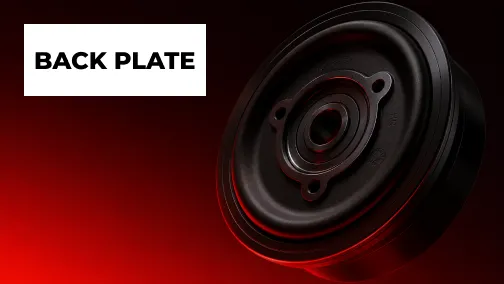
Replace the housing if you find any of these during a rebuild teardown: scored or out-of-round bearing bores (measure with a bore gauge — even a few ten-thousandths matters), cracked casting (especially around oil drain or mounting bolt holes), corroded or blocked oil feed passages, damaged coolant channels on water-cooled units, or a scored seal plate bore that cannot be corrected with a new back plate alone.

Holset HE451VE, HE400VG, HE551VE and HE561VE — covering Cummins ISX, X15 and EPA07 ISX CM870/CM871 heavy-duty engines. Each product page lists the exact Holset and Cummins part numbers covered.

All housings are 100% new iron castings, machined to OEM-spec tolerances. No salvaged cores, no line-bored used housings. No core charge, nothing to return. One-year warranty.

Yes. We sell the bearing housing as a standalone component — you supply the bearings, shaft, seals and wheels from your own rebuild inventory. This is how most professional turbo rebuilders order: individual components matched to the specific unit on the bench.

Yes. Turbo rebuilders and remanufacturers order bearing housings as a regular rebuild component. Consistent wholesale pricing, US inventory, matched by part number on every unit. See the wholesale page.

Turbo Bearing Housing: What Rebuilders Need to Know

The bearing housing is the most overlooked component in a turbo rebuild. Shops meticulously balance the rotating assembly, install new bearings and seals, then bolt the whole thing into a housing that has 400,000 miles of thermal stress baked into the casting. When the turbo comes back six months later with bearing wear, the housing is rarely the first suspect — but it should be.

What Lives Inside the Bearing Housing

The housing is not just a shell. It contains precision-bored journals for the floating bearings, a thrust bearing pocket with controlled depth, oil feed drillings sized to deliver the correct flow rate and pressure to each bearing surface, oil drain cavities large enough to prevent pooling, and on water-cooled Holset models (common on the HE400VG and later HE451VE units) a separate coolant circuit that protects the oil from coking during hot shutdowns. Every one of these features has a machined tolerance that matters.

How Bearing Housings Fail

  • Bore wear — journal bearing bores go out of round over hundreds of thousands of miles. The oil film thins on the tight side, bearing temperatures rise, and wear accelerates. A bore gauge catches this during teardown.
  • Oil passage coking — carbon buildup from degraded oil gradually restricts the feed passages, starving the bearings even when the external oil supply is fine. Common on trucks with extended oil change intervals or frequent hot shutdowns without idle-down.
  • Casting cracks — thermal cycling creates micro-cracks, especially around the oil drain and mounting bolt holes. A crack that weeps during a bench pressure test will leak under operating heat and vibration.
  • Coolant passage corrosion — on water-cooled housings, coolant contamination or neglected coolant changes corrode the internal passages. Restricted coolant flow leads to oil coking in the bearing area.

Inspection Checklist During Rebuild Teardown

  • Measure journal bearing bores with a bore gauge at two axes — compare to OEM spec. Out-of-round beyond tolerance means the housing is done.
  • Visually inspect oil feed and drain passages for carbon restriction. Push a light through the feed drilling — if light is dim or blocked, the passage is coked.
  • Pressure-test the housing if a crack is suspected. Dye penetrant inspection catches surface cracks that a visual pass will miss.
  • On water-cooled housings, flush the coolant passages and check for flow restriction or discolored coolant residue.
  • Inspect the thrust bearing pocket depth — a worn pocket allows excessive axial play even with a new thrust bearing installed.

New Housing vs Line-Bored Salvage

Some shops line-bore worn housings back to an oversize dimension and run oversize bearings. It works in theory, but the oil film dynamics change with the larger bore, and there is no way to restore coked internal passages or heal a micro-crack by machining. A new casting starts with zero thermal history, correct bore dimensions, clean oil passages and full structural integrity. For a component that costs a fraction of the total rebuild and determines whether everything else inside the turbo survives, new is the right call.