Amplify Battery Plant to Finish Construction Without a Production Date — What the EV Truck Slowdown Means for Diesel
Amplify Cell Technologies, the battery joint venture backed by Daimler Truck, PACCAR, and Cummins' Accelera division, will complete construction of its Mississippi factory by the end of 2026 but has no date to start production. Daimler Truck North America CEO John O'Leary confirmed the position in a Transport Topics interview published July 17: the building will be finished, and then it will sit idle until market demand justifies turning it on. For the diesel industry, the message is direct — the electric transition in heavy trucks is running years behind plan, and diesel platforms will carry North American freight well into the 2030s.
What Was Announced
- The 2.6-million-square-foot plant in Byhalia, Mississippi, will be fully built by late 2026 at a cost of $2 billion to $3 billion, but manufacturing equipment installation is deferred.
- Series production, originally planned for 2027, was already pushed to 2028 in an earlier revision. There is now no confirmed start date at all.
- Daimler Truck is taking a roughly $235 million impairment charge related to the delay. A team of about 30 engineers will keep working on battery chemistry and manufacturing technology so the plant can start on a newer design when it does open.
- The technology partner in the venture, Chinese battery maker EVE Energy (10% stake), was added to the US Department of Defense list of "Chinese military companies" in June, adding a further complication.
Why Battery-Electric Truck Demand Fell Short
The partners gave a consistent reason: demand for battery-electric and fuel cell trucks in North America came in well below the forecasts these investments were built on. Several factors sit behind that. Federal purchase subsidies for electric trucks expired, removing the main price bridge against diesel. High vehicle costs and weak residual values kept fleet total-cost math negative on most duty cycles. Charging infrastructure for heavy trucks is still thin outside a few corridors. And the startup segment that was supposed to prove the market — Nikola most visibly — largely collapsed. Cummins wrote down roughly $458 million in its Accelera zero-emissions segment in 2025 and stopped pursuing new electrolyser business, though it kept the fuel cell and battery-electric powertrain lines that include Amplify.
What This Means for the Diesel Aftermarket
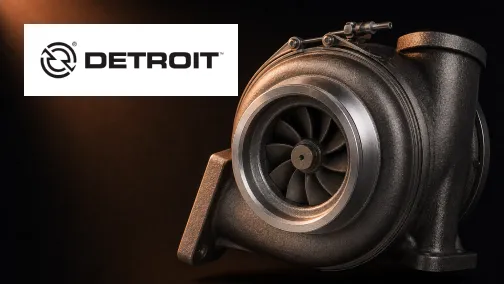
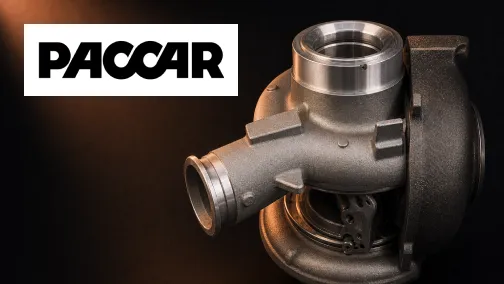
Every year of delay in electric truck adoption extends the service horizon of the diesel fleet already on the road — and that fleet is growing, not shrinking. North American Class 8 orders have risen year over year for seven straight months, with June 2026 up 231% according to ACT Research, as fleets lock in diesel trucks ahead of the 2027 emission rules. Those trucks will still be in service, and needing parts, deep into the next decade. For parts distributors, repair chains, and fleets, the practical read is simple: demand for diesel engine components — turbochargers, actuators, fuel system and aftertreatment parts — on platforms like the Cummins X15, Detroit DD15, and PACCAR MX-13 has a longer runway than the electrification headlines of two years ago suggested. Electrification is delayed, but it is not cancelled; the joint venture partners all state their long-term strategy is unchanged. The smart position for the aftermarket is to plan around a diesel-dominated fleet through at least 2035 while watching where zero-emission technology actually gains share.
What to Watch
Three signals will show whether the timeline slips further: any update on Amplify's production decision after construction completes, fleet zero-emission purchase data as post-subsidy pricing settles, and the final form of the EPA's proposed revision to the 2027 heavy-duty emission rules, which is still in its comment period. We will cover each as it develops.