Detroit Commits to Full EPA 2027 Switch: Gen 6 DD13, DD15 and DD16 From January 2027
Detroit, the powertrain brand of Daimler Truck North America, will switch its entire North American heavy-duty diesel lineup to fully EPA27-compliant engines starting in early 2027. CEO Karin Rådström and CFO Eva Scherer confirmed the plan on the company's second-quarter earnings call: the current platform is phased out, production moves entirely to the new Gen 6 family, and the company will run no parallel production and pay no non-compliance penalties. For fleets running Freightliner and Western Star trucks, and for the shops that keep them on the road, the decision removes one of the biggest open questions about the 2027 emissions transition.
What Was Announced
- The Gen 6 portfolio, consisting of the DD13, DD15, and DD16, covers every heavy-duty Freightliner and Western Star model and is fully compliant with the EPA's 2027 standard.
- Gen 6 DD13 and DD15 production begins in January 2027, with the DD16 following in January 2028.
- Scherer added that Detroit holds a strong bank of NOx credits and expects to pay no penalties, since the engines arriving early next year will be fully compliant from day one.
| Engine | Production Start | Applications |
|---|---|---|
| Gen 6 DD13 | January 2027 | Heavy-duty Freightliner and Western Star |
| Gen 6 DD15 | January 2027 | Heavy-duty Freightliner and Western Star |
| Gen 6 DD16 | January 2028 | Heavy-duty Freightliner and Western Star |
The EPA 2027 Rule Behind the Move
The EPA's 2023 final rule cuts the heavy-duty NOx limit from 0.20 to 0.035 g/bhp-hr starting with model year 2027, a reduction of more than 80 percent, and halves the particulate matter limit. In July, the agency proposed revisions that keep those limits intact while adding flexibility: broader use of emissions credits, a temporary non-compliance penalty option, more time for real-world validation, and DEF inducements that replace sudden engine derates with audible and visual warnings.
"Nobody took away the NOx standard," Allen Schaeffer of the Engine Technology Forum told Fleet Maintenance. "The coordinates for the future are still 0.035."
Other OEMs are using the transition flexibility. PACCAR and Cummins both plan staged ramps, with Cummins scheduling limited production of its MY2027 X15 in January and full output in the fourth quarter, and the X10 reaching full production in the third quarter of 2027. Detroit is taking the opposite route: one clean switch.
How the Gen 6 Engines Get There
To meet the NOx limit, Gen 6 engines add a pre-Selective Catalytic Reduction system upstream of the primary aftertreatment unit. The pre-SCR uses the same proven hardware family Detroit has run since 2010 and, working with a thermal control valve, helps the aftertreatment reach operating temperature faster, cutting cold-start emissions and reducing the need for parked regenerations. The package preserves existing chassis space with no impact on back-of-cab packaging, a key point for vocational upfitters. Supporting changes include a simplified fuel system without amplified injection, an asymmetric intake port, Miller timing on the camshaft, and a new wastegate actuator that improves engine braking and high-altitude gradeability. Ratings reach up to 1,900 lb-ft of torque.
Rådström emphasized what the design avoids: no 48-volt electrified add-ons and a low cost increment, with the company projecting roughly a 3 percent total cost of ownership advantage from the new engines. The Gen 6 family is an evolution of a platform launched in 2007 and now running in about 1.2 million heavy-duty engines worldwide. All Detroit engines are assembled in Redford, Michigan, where a $285 million investment supports Gen 6 production and an expected annual capacity of around 200,000 units.
What It Means for Fleets and the Aftermarket
- Ordering a 2027 Detroit-powered truck gets simpler. Buyers of Freightliner and Western Star trucks get fully compliant engines from January 2027 with no credit accounting or penalty surcharges in the background. Industry analysts had projected 2027-compliant engines could cost more than $20,000 above current models, yet the expected pre-buy has not materialized; advisors tell fleets to time replacement by mileage, condition, and warranty rather than model year.
- The existing DD fleet is not going anywhere. With 1.2 million engines in operation and Gen 6 built as an evolution of the Gen 5 design introduced in 2021, service knowledge and much of the hardware architecture carry over. Parts demand for DD13 and DD15 engines will run well into the 2030s.
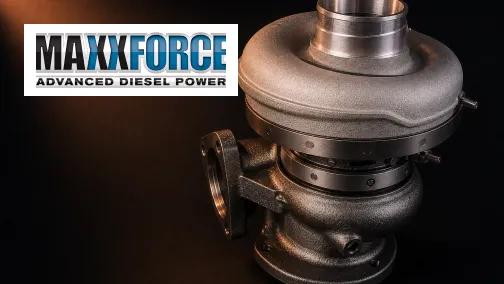
- Turbocharging stays at the center of the platform. The Gen 6 wastegate actuator update underlines how much emissions performance and engine braking still depend on precise boost control. High-mileage DD13 and DD15 units in service today will keep needing turbo replacement on normal wear cycles.
Whatever the 2027 rulebook finally looks like, the trucks already earning keep earning. We stock brand-new, OEM-spec replacement turbochargers for Detroit diesel applications, including DD15 turbo replacements, alongside every major North American diesel platform. Every unit is built from 100 percent new components with no core charge, ships from US inventory with most orders leaving within 24 hours, and carries a one-year unlimited mileage warranty. Send us the part number from your turbo's nameplate or your engine serial number, and we will confirm exact fitment before you order.
Sources
- Daimler Truck North America Newsroom, "Detroit Introduces Its 2027 Heavy-Duty Gen 6 Engines," February 19, 2026
- Power Progress, "Daimler Truck NA and Detroit Introduced New Gen 6 Engines," August 17, 2026
- Fleet Maintenance, "EPA27 Uncertainty Reshapes Class 8 Truck Buying Decisions for 2027," August 25, 2026
- TiJia Commercial Vehicles via NetEase, coverage of Daimler Truck's Q2 2026 earnings call, August 18, 2026