Compound Turbo Systems: How They Work, vs Single Turbos, and Which Diesel Engines Use Them
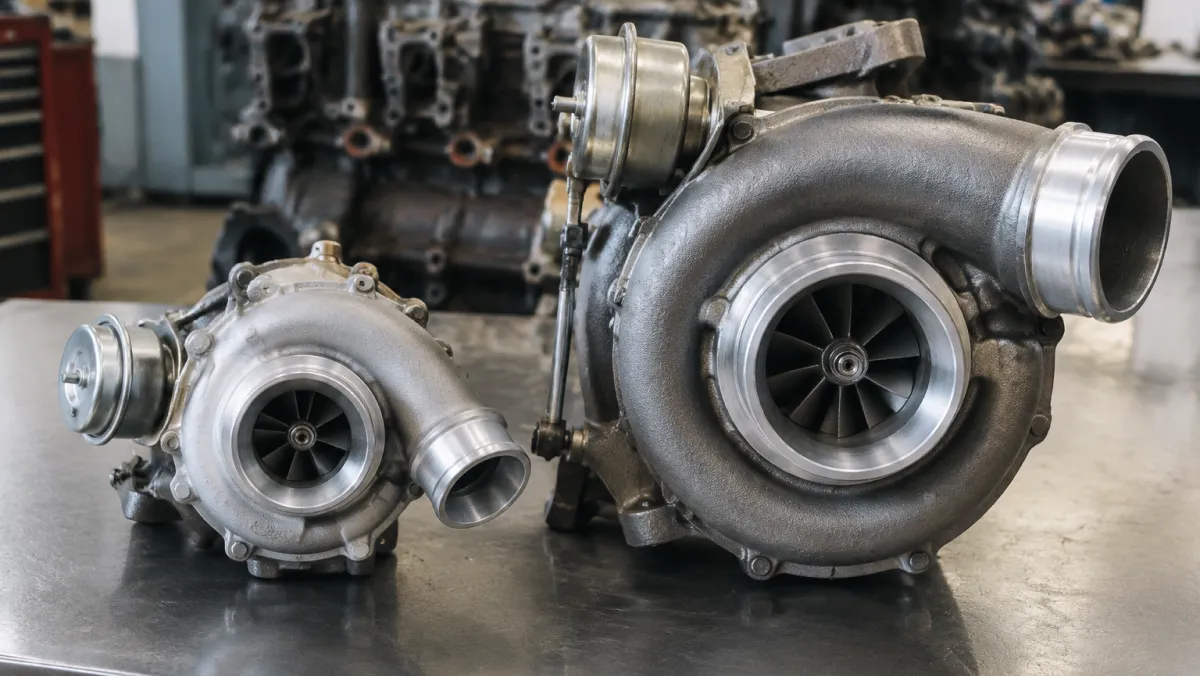
A compound turbo system bolts two turbochargers together in series, and the layout is older than the diesel pickup scene that made it famous. Factory engineers used the same arrangement on production diesels — the 2008-2010 Ford 6.4L Powerstroke and Cat's C15 ACERT among them — for reasons that had little to do with horsepower. This guide explains what a compound system is, how the two stages share the work, how it compares with single and parallel-twin setups, which production engines run one, and what the layout means when one turbo fails.
What Is a Compound Turbo System?
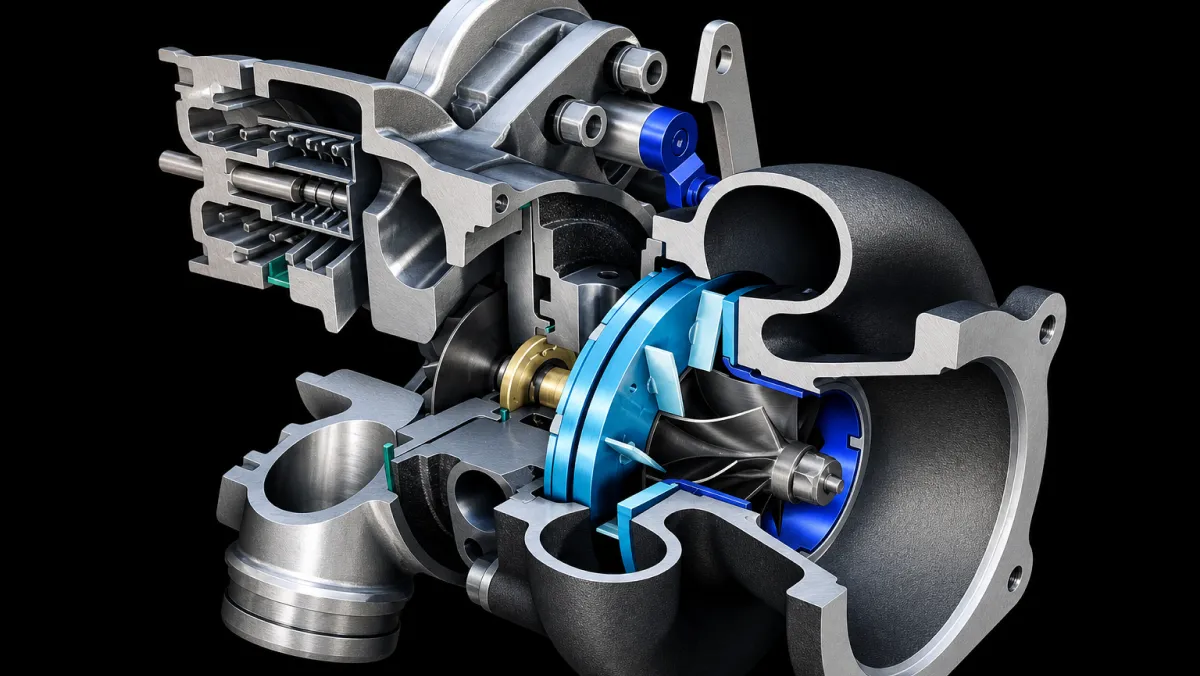
A compound turbo system is a two-stage turbocharger arrangement: a small high-pressure turbo and a larger low-pressure turbo working in series. Exhaust spins the small turbine first, then the large one. On the intake side, the large compressor pre-compresses incoming air and the small compressor raises it to final boost. Each stage multiplies the pressure ratio of the other, so the system reaches boost levels that would overspeed a single turbocharger.
Three terms get mixed up constantly in search results and forums, so they are worth separating before going further:
- Compound (series) turbos. Two turbos of different sizes, staged one after the other. This is what this article covers.
- Parallel twin turbos. Two identical turbos working at the same time, each typically serving one bank of a V-engine. No staging — both make the same boost together. Most factory "twin-turbo" gasoline V6 and V8 engines use this layout.
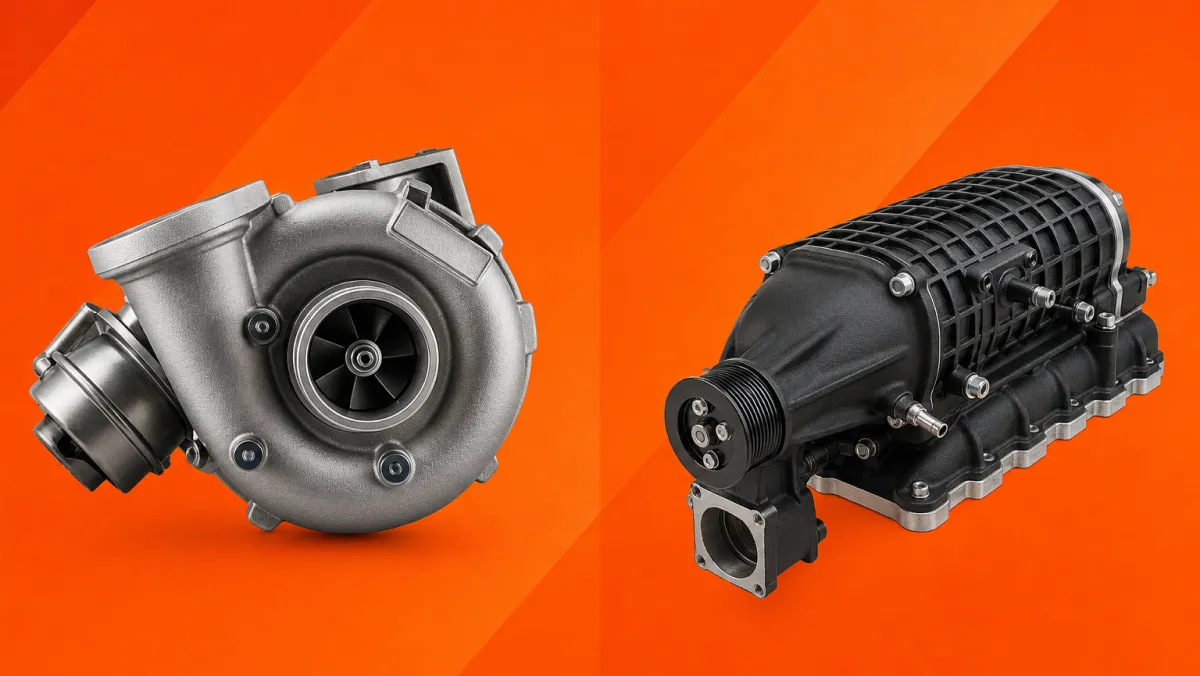
- Turbo-compound engines. A turbine in the exhaust stream that recovers energy and feeds it back to the crankshaft, mechanically or electrically. Volvo's D13TC truck engine is the current production example. Despite the similar name, it involves no second compressor and no staged boost.
If a spec sheet says "turbo-compound," it describes energy recovery, not two turbos in series. The confusion matters when ordering parts: a D13TC still runs a single conventional turbocharger, while a 6.4L Powerstroke genuinely runs two.
How Do Compound Turbos Work?
The gas path runs through both turbos twice — once on the exhaust side, once on the intake side:
- Exhaust leaves the manifold and enters the small high-pressure turbine first. Its low inertia gets it spinning at low engine speed, which is where the system's responsiveness comes from.
- Exhaust then flows into the larger low-pressure turbine, which extracts the energy the first stage left behind.
- On the intake side, ambient air is drawn into the large low-pressure compressor for the first compression stage.
- That pre-compressed air feeds the small high-pressure compressor, which raises it to final boost pressure.
- The charge air passes through the intercooler and into the engine.
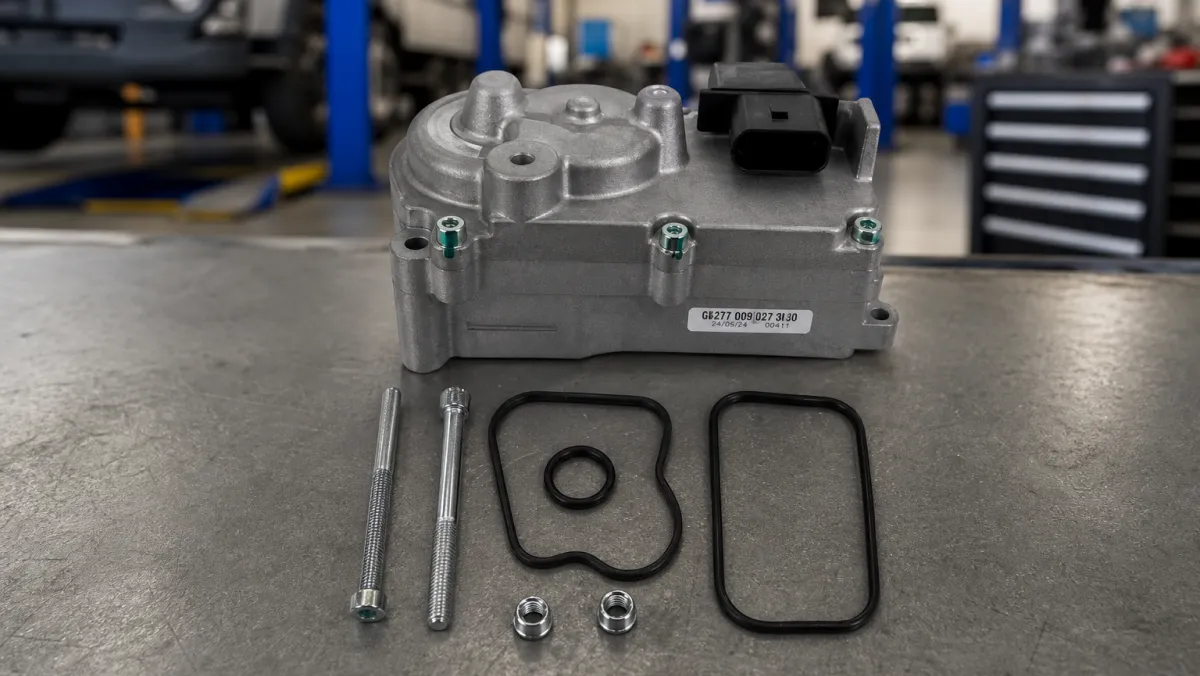
The reason for going through this trouble is a simple piece of compressor math: pressure ratios multiply across stages. Asking one turbo for a 4:1 pressure ratio pushes it toward the edge of its compressor map — high shaft speed, high discharge temperature, little margin. Splitting the same 4:1 across two stages means each compressor only works at 2:1, the comfortable middle of its map. The system turns one hard job into two easy ones. A wastegate or an electronically controlled bypass manages how exhaust divides between the stages; on the 6.4L Powerstroke's V2S system, the ECM regulates that split directly.
What the driver or operator notices is response and exhaust temperature. The small high-pressure stage lights early, so a compound setup spools quickly despite movi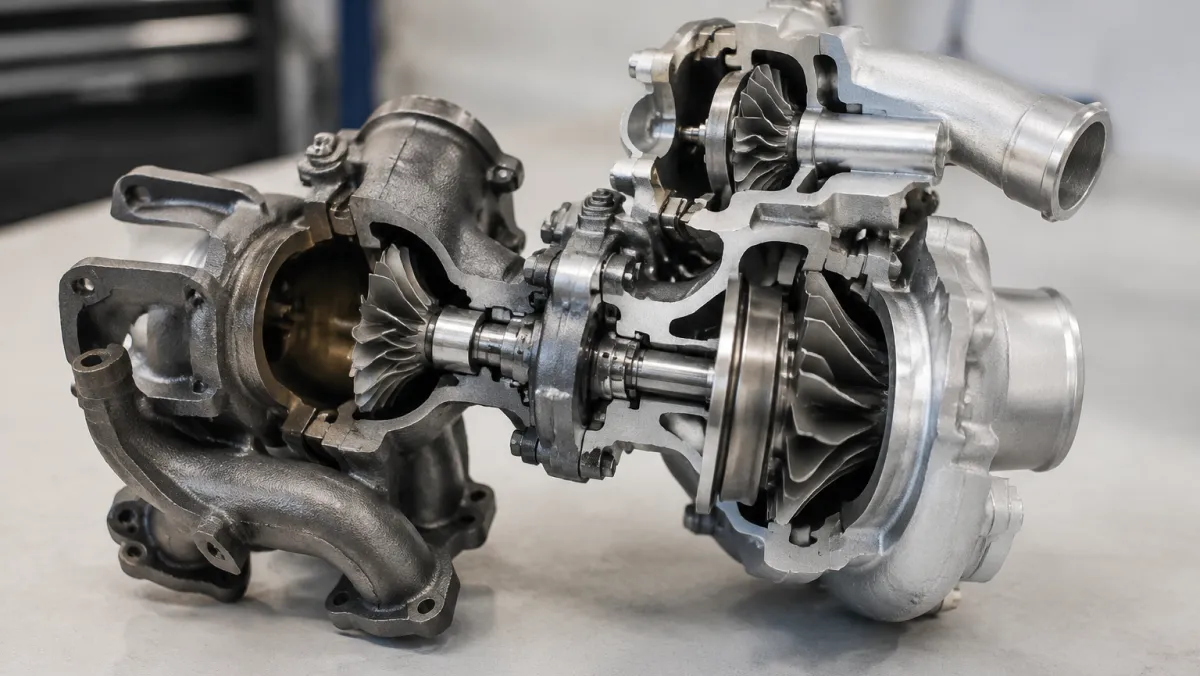 ng enough air for serious power. Under sustained load — towing, long grades — the staged compression keeps exhaust gas temperature in check; aftermarket diesel builders report EGT reductions of 175-300°F at equivalent power when Cummins pickup builds move from a large single to compounds. Factory engineers had a different priority list: emissions-era drivability, EGR flow control, and low-rpm torque for a heavy vehicle.
Compound vs Single vs Twin Turbo: Which Setup Wins Where
| Single Turbo | Compound (Series) | Parallel Twin | |
|---|---|---|---|
| Layout | One turbo | Small HP + large LP in series | Two identical turbos, one per bank |
| Low-rpm response | Good if small, laggy if large | Strong — small HP stage lights early | Good — each turbo is small |
| High-rpm flow | Limited by the same trade-off | Strong — LP stage carries volume | Strong — combined flow of two |
| Efficiency under sustained load | Single-point compromise | Best of the three for towing and grades | Adequate |
| Cost and complexity | Lowest | Highest — two units, more plumbing | High |
| Typical use | Most diesel trucks | Factory: 6.4L Powerstroke, C15 ACERT; aftermarket power builds | V-configuration gasoline and diesel engines |
Two questions around this comparison come up in almost every discussion of compounds. Do they spool faster? Against a large single sized for the same peak power, yes — the small high-pressure stage reaches useful boost at low rpm where the big single is still waking up. Against a small single, no. And do they increase MPG? The honest answer is situational. Under load, lower EGT and better-matched airflow let the engine work in a more efficient part of its map, and towing fuel economy often improves. Unloaded highway cruising shows little difference either way.
Factory Compound Turbos in Diesel Trucks: 6.4L Powerstroke V2S and Cat C15 ACERT
Compound systems are not only an aftermarket game. Several production diesel engines left the factory with staged turbos, and those trucks are now old enough that their turbos are a live replacement market.
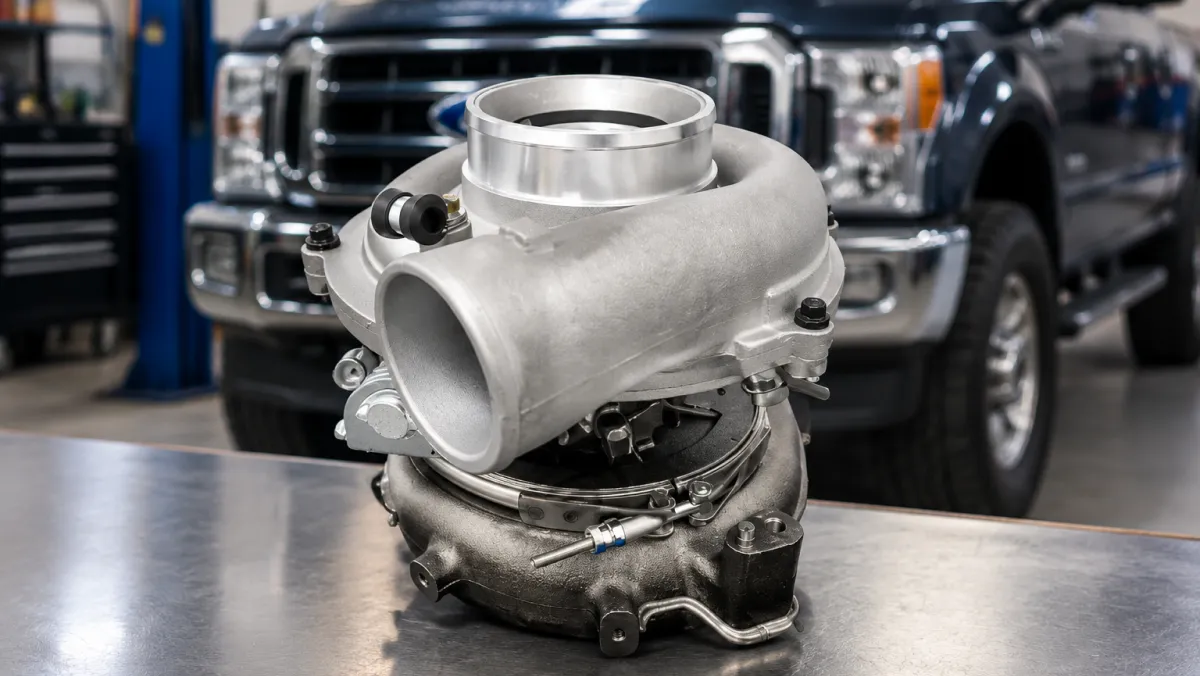
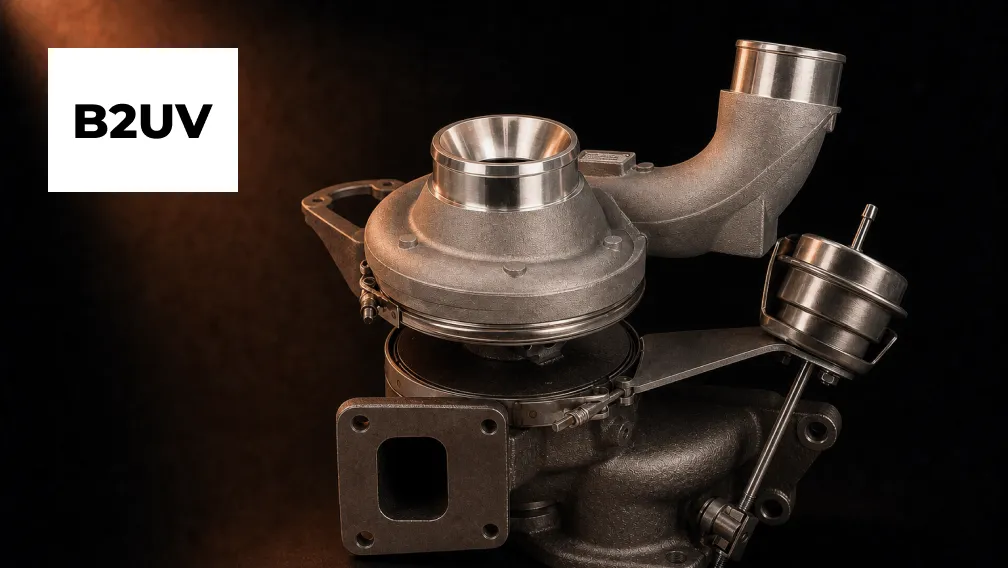
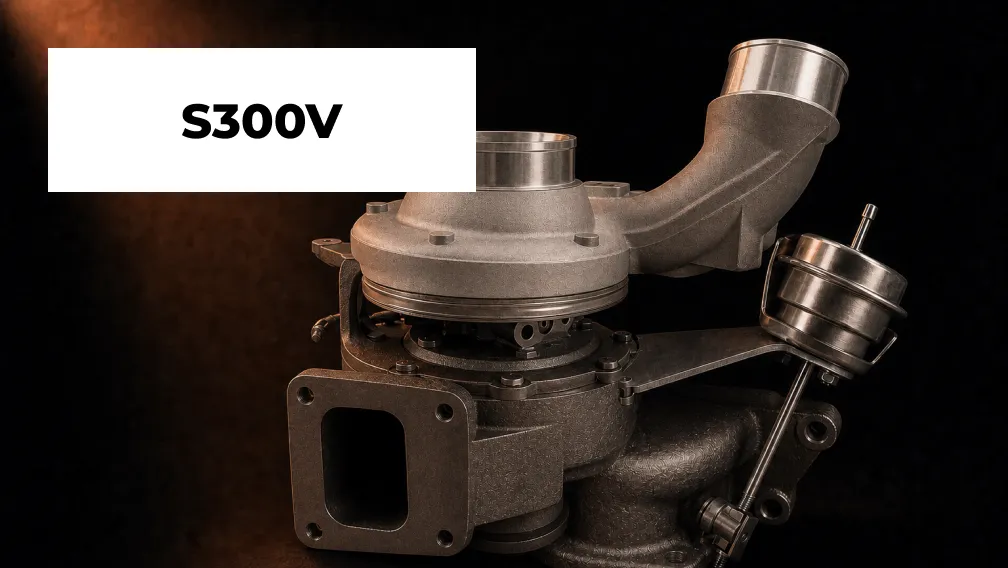
Ford 6.4L Powerstroke (2008-2010) — BorgWarner V2S. The 6.4L runs a regulated compound system: a small high-pressure turbo mounted directly on the exhaust manifold spools first for low-rpm response, and a larger low-pressure turbo downstream handles airflow as rpm climbs, with the ECM regulating exhaust flow between the two stages. The units are stacked, which keeps the package tight and makes service access the main complaint. We stock both sides of the system — the V2S high-pressure unit and the low-pressure unit — because they fail on independent schedules and many jobs only need one.
Cat C15 ACERT. Caterpillar's ACERT-era C15 used a series arrangement with a high-pressure and a low-pressure turbo, part of how Cat met its emissions targets while keeping the C15's torque character. The two-turbo ACERT setup is covered in detail in our Cat C15 turbocharger guide, including how the stages split the work and the serial-prefix differences that decide which unit a given engine takes.
International MaxxForce 13. International ran a series-compound arrangement on the MaxxForce 13 in the early 2010s — another emissions-era factory compound now squarely in its replacement years.
Factory compounds stayed the exception because packaging two turbos costs money and space, and modern single VGT turbos cover most of what a Class 8 engine needs. Where they were used, though, they were used for keeps — which is why the service side of these systems matters.
When One Side Fails: Diagnosis and Replacement Rules
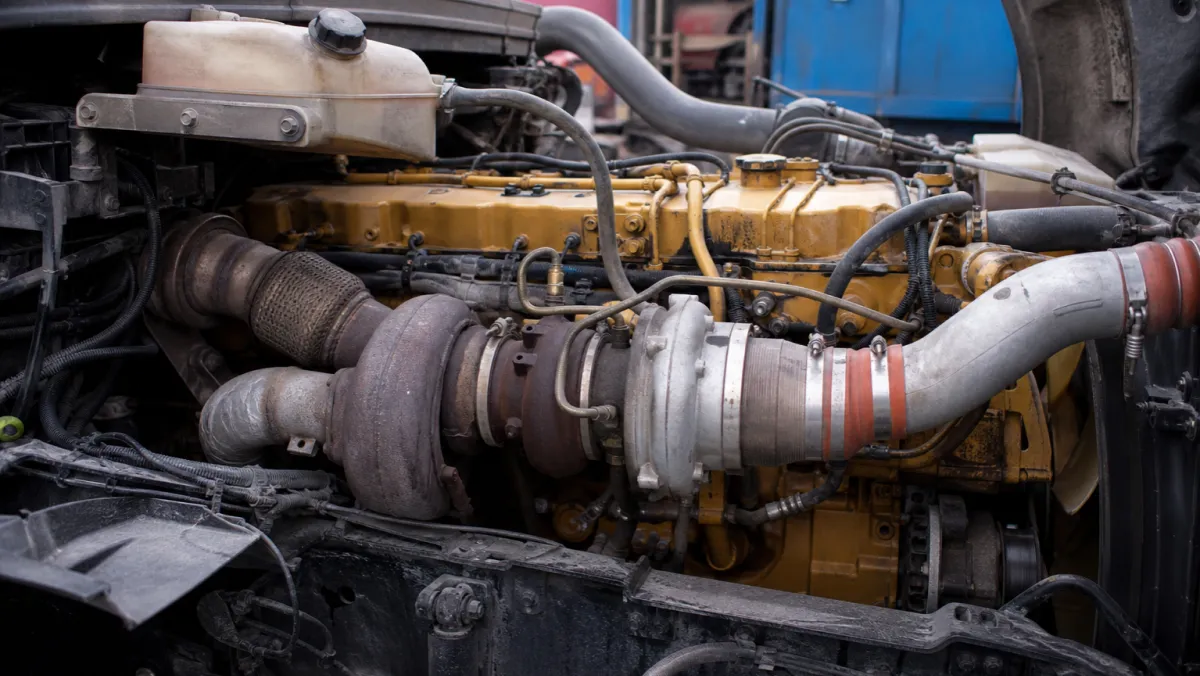
A compound system changes the service question from "is the turbo bad" to "which turbo is bad." The stages share an oil feed but not a failure schedule: on the 6.4L V2S, the two units fail independently, and shaft play on the high-pressure side says nothing about the low-pressure side. Diagnose each stage on its own — check shaft play per unit, read boost behavior, and remember that oil in the charge-air piping points at the stage upstream of the contamination.
Replacement follows three rules:
- Replace only the failed side when the survivor measures healthy. A compound system does not require pair replacement by default — verify the good stage (shaft play, wheel condition, oil passage) and leave it in service.
- Replace the pair when both show wear, or when access labor argues for it. On stacked systems like the V2S, splitting the plumbing twice can cost more labor than the second turbo.
- Fix the root cause before either unit goes on. Oil supply restriction and foreign-object damage kill the replacement on the same timeline as the original. This is a warranty condition across the industry, ours included — the cause has to be corrected, not just the casualty.
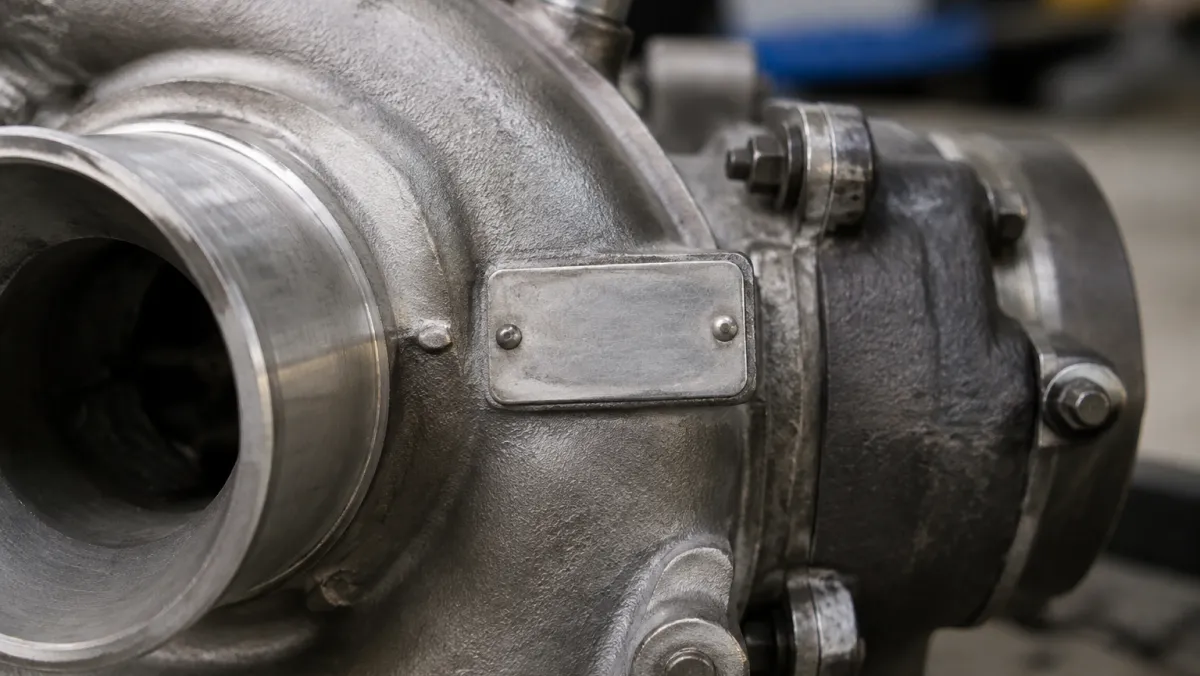
For C15 ACERT work, we stock the C15 ACERT high-pressure turbo as a brand-new unit; if your diagnosis points at the low-pressure side, send us the part number and we will confirm availability before you tear anything down. That verification step applies to every compound job we supply — matched by the number on the old unit's dataplate, dispatched from US stock within 24 hours, brand new with no core charge and a one-year warranty on both stages.
The short version of everything above: compounds stage two turbos so each one works easy, the layout earned its factory place on engines like the 6.4L Powerstroke and C15 ACERT, and a failure in one stage is not automatically a two-turbo bill. If you are staring at a compound system with a dead stage, send us the dataplate numbers off both units — we will confirm which side you need and have the replacement moving within 24 hours.

FAQ
A compound turbo system stages two turbochargers in series — a small high-pressure unit and a larger low-pressure unit — so each compressor handles a comfortable share of the total pressure ratio. The result is quick low-rpm response and high-flow capability that would overspeed a single turbo making the same boost.
It depends on the job. A single turbo is simpler, cheaper, and easier to package, which is why most diesel trucks use one. Compounds win when an engine needs strong low-rpm response and high airflow at the same time — sustained towing, or factory engines like the 6-4L Powerstroke and C15 ACERT that were designed around staged boost.
Against a large single turbo sized for the same peak power, yes — the small high-pressure stage is light and reaches useful boost at low rpm. Against a small single, no. The comparison only makes sense at equal total airflow.
Only in specific conditions. Under sustained load such as towing, staged compression lowers exhaust temperature and keeps the engine in a more efficient part of its map, and fuel economy often improves. Unloaded highway cruising shows little difference.
Yes. The two stages fail on independent schedules, so check shaft play and oil passage on the surviving unit and, if it measures healthy, replace only the failed side. Replace the pair when both show wear or when the labor to open the system twice would cost more than the second turbo.
Aftermarket compound kits for diesel pickups commonly list from around $2,000 to $10,000 or more depending on platform and turbo pairing. Factory systems like the 6-4L Powerstroke V2S price per unit when a stage fails — a new replacement turbo costs far less than a full conversion kit.
No. A compound system stages two different-sized turbos in series, with one feeding the other. Twin turbo usually means two identical turbos working in parallel, each serving part of the engine. Turbo-compound is a third, unrelated arrangement that recovers exhaust energy into the crankshaft — Volvo's D13TC is the current example.