Do Turbochargers Improve Fuel Economy and MPG? (Diesel Owners' Guide)
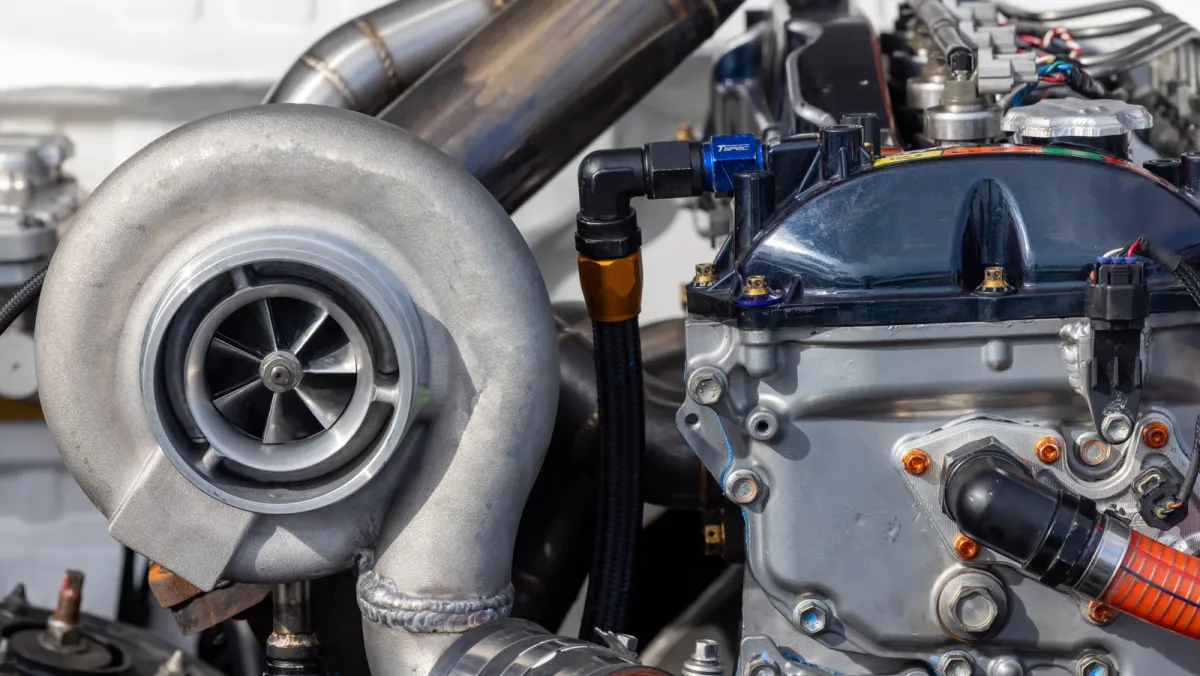
Fuel is the largest single operating cost on most diesel trucks, and even a one or two mpg improvement adds up to serious money over a year of highway miles. That is why one of the most common questions we hear from truck owners and fleet buyers is: does a turbocharger increase mpg? The short answer is yes, a turbocharger can improve fuel economy, but it works indirectly, and the size of the gain depends on how you drive and how healthy the turbo is. This guide explains the mechanics behind the gain, where it shows up on a diesel truck, where it disappears, and how to keep it.
How Turbochargers Improve Fuel Efficiency
A turbocharger improves fuel efficiency through three mechanisms working together: it recovers energy from exhaust gas that would otherwise be wasted, it lets a smaller engine do the work of a larger one, and it feeds the cylinders enough air for fuel to burn more completely. More of each gallon becomes useful work instead of heat blowing out of the tailpipe.
Free Energy from Exhaust
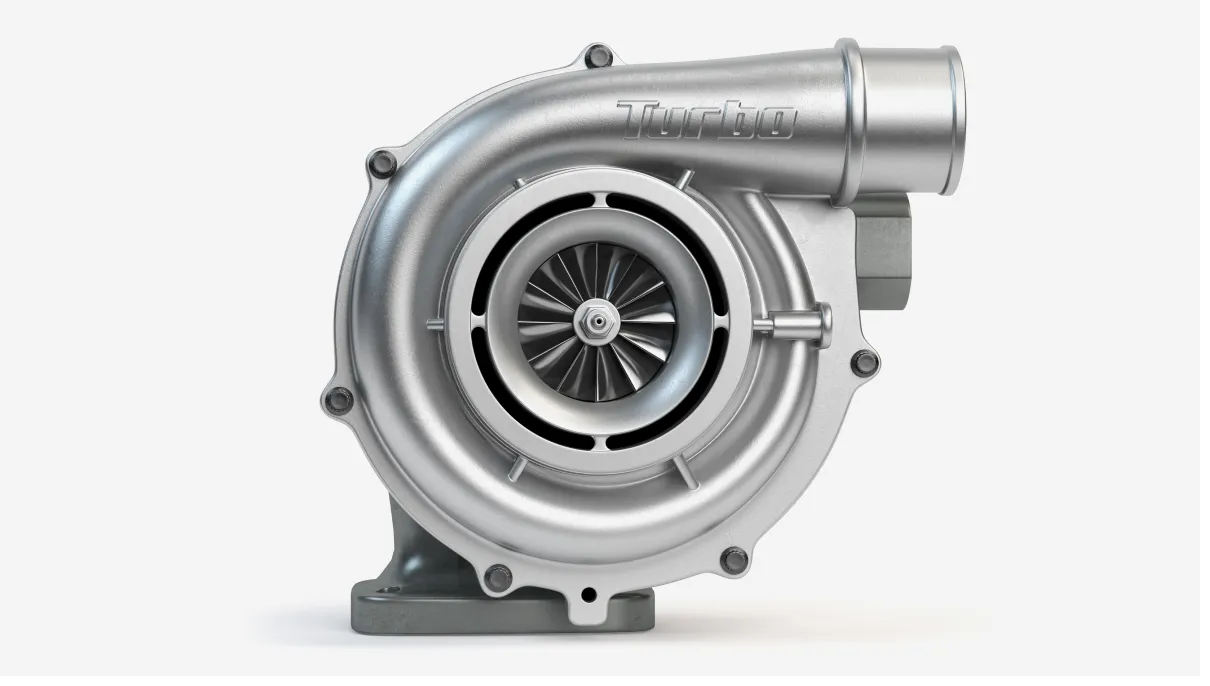
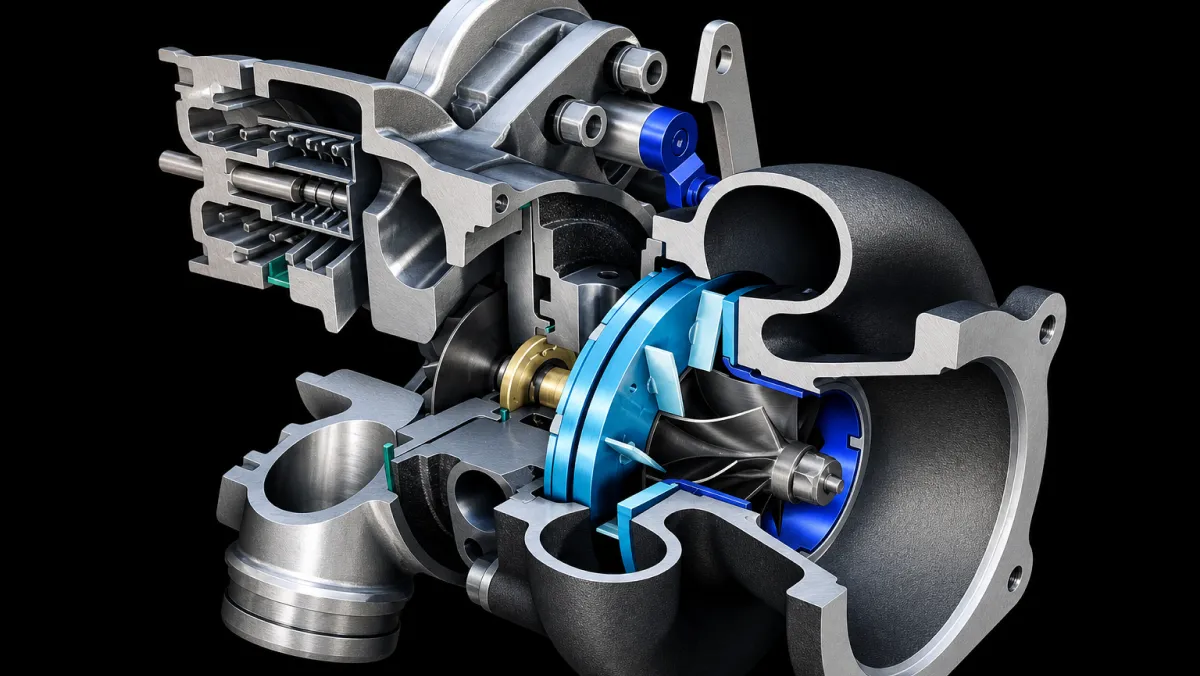
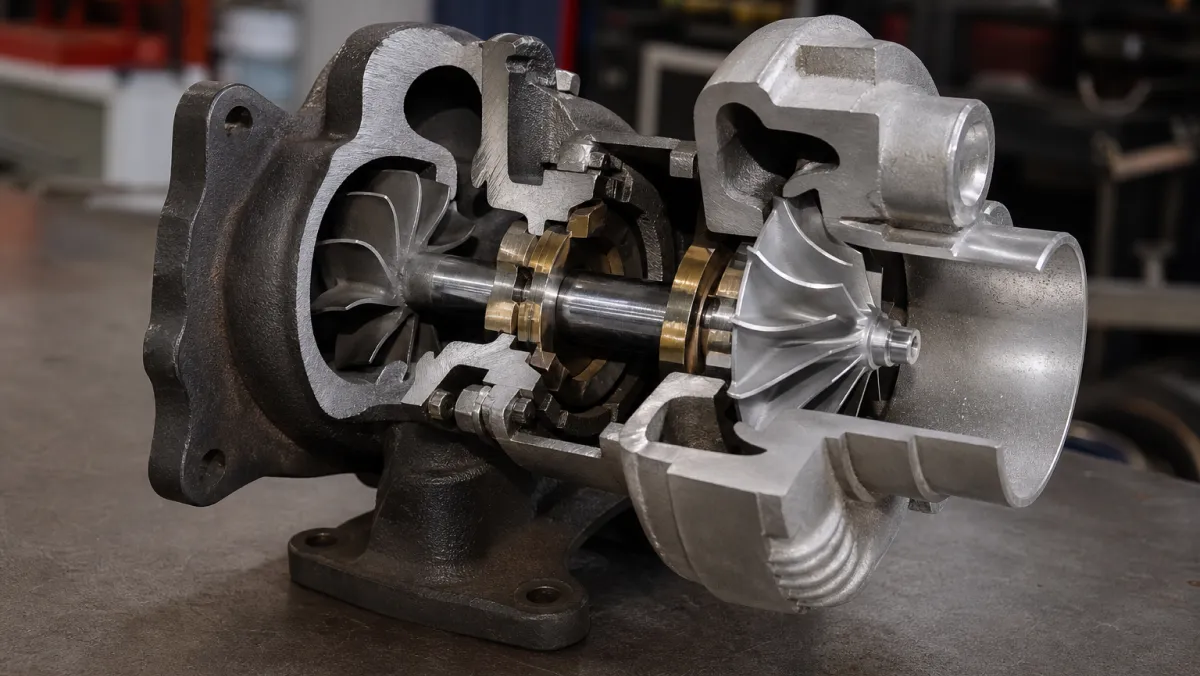
A turbo's turbine is spun by exhaust gas, energy the engine has already paid for in fuel. A belt-driven supercharger consumes crankshaft power to make boost, while a turbocharger runs on waste heat and pressure, so the efficiency gain carries no parasitic loss. For a deeper look at the compressor, turbine, and center section, see our guide on how turbochargers work.
Engine Downsizing
Boost lets a small engine produce big-engine power on demand, so a truck can run a smaller displacement engine with less internal friction, less weight, and lower pumping losses during the light-load cruising where most highway miles happen. A larger naturally aspirated engine drags its full size and friction around all the time, whether the power is needed or not.
More Complete Combustion
Diesel engines always run with excess air, and a turbocharger increases that margin. More oxygen in the cylinder means fuel burns more completely, extracting more energy from the same injection quantity and leaving less unburned fuel to form soot.
Does a Turbocharger Increase MPG in Real-World Driving?
In real-world driving, a turbocharger raises mpg mainly during steady, moderate-load operation such as highway cruising, where the smaller engine works well inside its efficient zone while boost stays in reserve for hills and passing. In aggressive stop-and-go driving the gain shrinks or disappears, because every deep press of the pedal calls for boost, and boost always brings more injected fuel along with the extra air.
Drivers who ask does turbo increase mpg usually see the improvement on the highway rather than in the city. The conditions below decide which side of the line your truck lands on:
- Highway cruising: the sweet spot. Moderate rpm, steady load, and a small engine loafing along add up to the best mileage a turbocharged diesel will deliver.
- Stop-and-go traffic: repeated boost requests from low rpm mean repeated fuel enrichment, and the efficiency advantage mostly evaporates.
- Driving style: a patient right foot keeps the turbo in its efficient range. Chasing boost for acceleration fun spends fuel exactly as fast as a bigger engine would.
- Load and towing: under load the turbo earns its keep, delivering torque at low rpm where a larger naturally aspirated engine would be revving hard and drinking fuel.
Turbo vs. Non-Turbo Diesel Engines: Fuel Consumption Compared
Comparing turbo vs non turbo fuel consumption in diesel engines comes down to one fact: a turbocharged diesel delivers equal or greater power from a smaller, lighter engine, so it burns less fuel in the duty cycles trucks actually run. A naturally aspirated diesel large enough to match that power would carry more weight and friction everywhere it went.
| Comparison Point | Naturally Aspirated Diesel | Turbocharged Diesel |
|---|---|---|
| Power from the same displacement | Limited by what the cylinders can breathe | Significantly higher, boost adds air on demand |
| Fuel use at highway cruise | Higher, because matching power needs a larger engine | Lower, smaller engine works in its efficient zone |
| Towing and heavy loads | Revs high, works hard, burns more fuel | Holds torque at low rpm without revving |
| Engine weight for equal power | Heavier | Lighter |
| Where it still makes sense | Older equipment and light-duty applications | Modern pickups, medium-duty, and Class 8 trucks |
For buyers, the practical takeaway is simple: if the truck works for a living, the turbocharged option will almost always burn less fuel doing the same job.

Why Diesel Engines Gain More from Turbocharging
Do turbochargers increase fuel economy in diesel engines more than in gasoline engines? Generally yes. Diesel combustion always runs lean with surplus air, there is no throttle plate creating pumping losses, and heavy-duty diesels spend their lives in the steady, loaded duty cycles where turbocharging pays back best.
Three diesel-specific traits stack the odds further. Diesel fuel carries more energy per gallon, so every bit of recovered exhaust energy is worth more. Diesels make their torque at low rpm, exactly where a turbo keeps the engine out of the thirsty high-rev range. And long-haul duty cycles multiply small gains: a truck running highway miles all day feels every fraction of an mpg in the fuel budget.
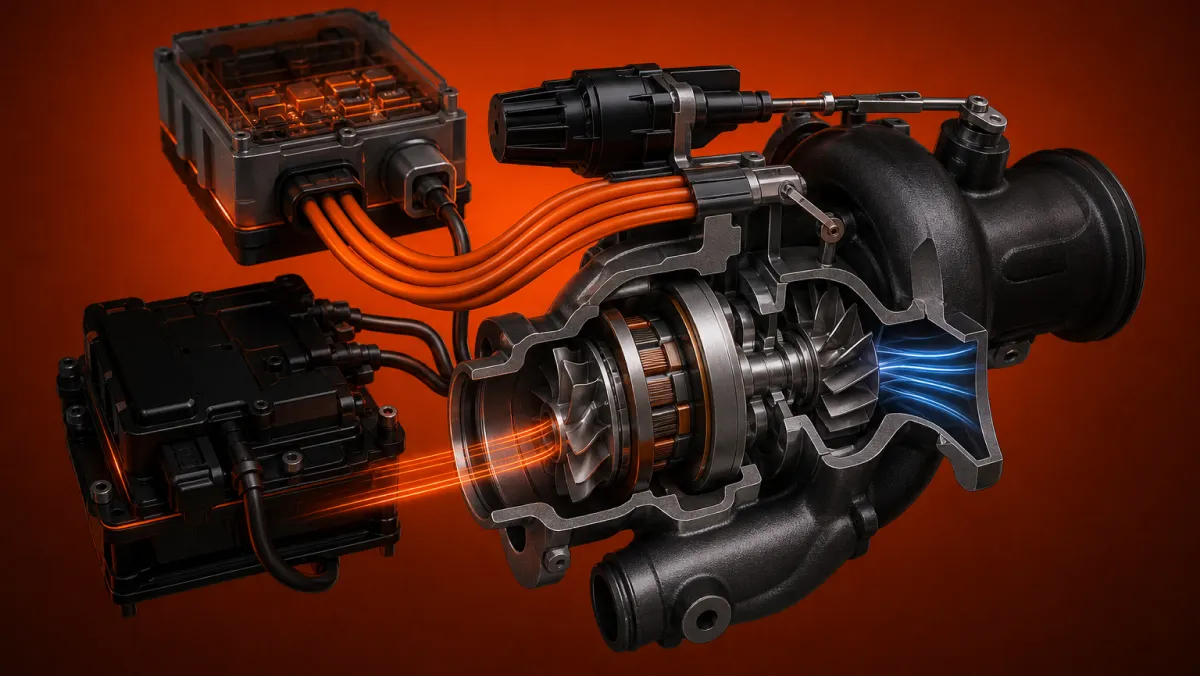
Most modern heavy-duty truck turbos are also variable geometry units. A vgt turbo adjusts its vane position continuously, keeping boost and exhaust backpressure in the efficient zone from low rpm through full load. That broad efficiency map is a large part of why current Class 8 engines achieve fuel economy that older fixed-geometry engines could not reach.
When a Turbocharger Can Hurt Fuel Economy
A turbocharger hurts fuel economy in two situations: when the driver spends the boost aggressively, and when the turbo or its supporting systems are unhealthy. The first is a habit problem. The second is a hardware problem that gets worse, and more expensive, the longer it is ignored.
- Aggressive driving: every request for boost is a request for matched fuel. Drivers who enjoy the torque pay for it at the pump.
- Boost leaks: cracked charge-air piping, a tired intercooler, or loose clamps let compressed air escape, so the engine runs short of air while the fueling stays rich.
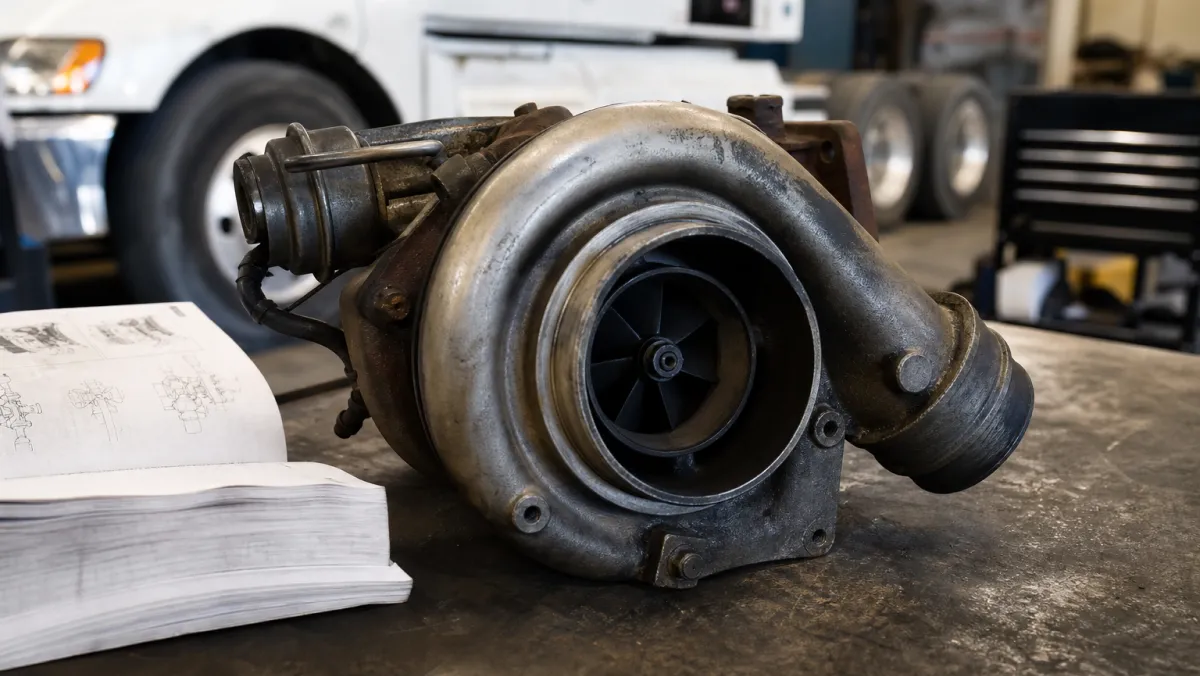
- A worn or sticking turbo: worn bearings, coked oil passages, and sticking VGT vanes all rob efficiency before the turbo fails outright. Power loss, excess smoke, unusual whine, or oil in the intake are classic diesel turbo failure symptoms worth checking early.
- Neglected maintenance: skipped oil changes and dirty air filters shorten turbo life, and a struggling turbo quietly taxes every gallon.
How to Keep Your Turbo Delivering Good MPG
Keeping the fuel economy benefit of a turbo mostly comes down to clean oil, clean air, and heat discipline. The bearing system spins at very high speed on a thin film of engine oil, so oil quality and change intervals decide how long the unit stays tight and efficient.
- Follow the oil specification and change interval. Fresh, correct-grade oil protects the bearing and keeps VGT vanes moving freely.
- Let the engine idle briefly before shutdown after hard running. This gives the turbo time to shed heat so oil does not coke inside the bearing housing.
- Keep the air filter and charge-air system sealed. Dust wears compressor wheels, and leaks dump the boost you already paid fuel to make.
- Fix small symptoms early. A minor leak or a lazy actuator costs a little mpg now; ignored, it becomes a failed turbo and a grounded truck later.
When a turbo is worn past the point where maintenance helps, the quality of the replacement decides whether you get the efficiency back. The units we supply are built new to OEM specification, balanced and flow-tested at production, and oil-leak checked before approval, and on VGT models the actuator calibration is verified before packing. Before any order ships, we verify the part number against your engine, so the replacement matches the exact rating and emissions configuration your fuel map was built around.
The Bottom Line for Diesel Owners
So, do turbochargers increase fuel economy? For diesel owners, yes: a healthy turbo on a sensibly driven truck will deliver better mileage than a larger naturally aspirated engine doing the same job, mile after mile. The gain comes from recovered exhaust energy, engine downsizing, and more complete combustion, and it is kept through maintenance and a patient right foot. If a worn turbo is already costing you fuel, our turbo replacement cost guide breaks down what a quality replacement runs. Every unit we sell is brand new to OEM spec, covered by a one-year unlimited mileage warranty, and shipped from US stock, with most orders dispatched within 24 hours. Send us the part number from your turbo's nameplate or your engine serial number, and we will confirm exact fitment before you order, free of charge.

FAQ
There is no fixed number, because the gain depends on what the turbocharged engine replaces and how the truck is driven. The improvement shows up mostly at highway cruise and under load, where a smaller boosted engine out-performs a larger naturally aspirated one. Restoring a worn turbo to healthy condition often returns noticeable mpg as well.
Positively, in three ways: it recovers waste exhaust energy, it enables a smaller engine for the same power, and it supplies the air needed for more complete combustion. The effect turns negative when boost is used aggressively or when leaks and wear let the system run below its designed efficiency.
Yes, towing is where a turbocharged diesel earns its advantage most clearly. The turbo delivers torque at low rpm, so the engine pulls the load without revving into the high-consumption range the way a larger naturally aspirated engine would.
Not when the engine is designed for boost and the turbo is maintained. Modern diesel engines are engineered around turbocharging from the start. What shortens engine and turbo life is heat and lubrication neglect: wrong oil, stretched change intervals, and shutting down hot without a short cool-down idle.
A healthy replacement usually does. Worn bearings, sticking vanes, and small boost leaks all erode mileage gradually, so many owners only realize how much was lost after a new unit goes on. A correctly matched, properly built replacement restores the efficiency the engine was designed to deliver.