How Long Do Turbochargers Last on a Diesel Engine? Mileage, Hours & Failure Signs
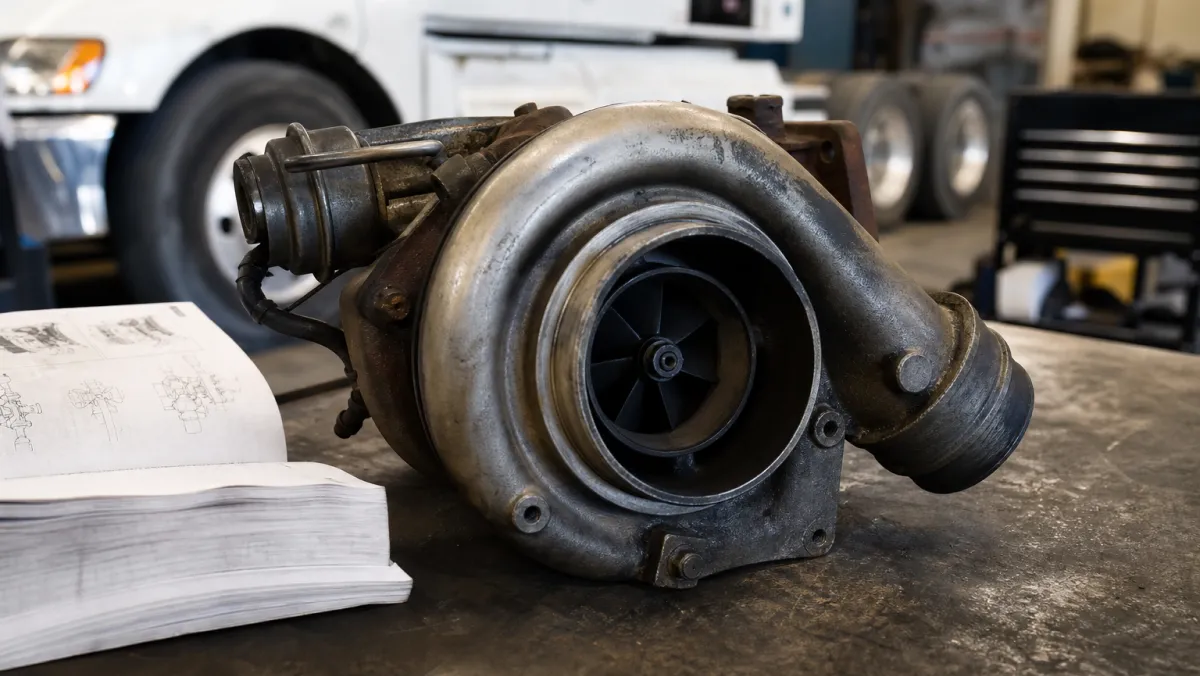
Every fleet manager staring at a service estimate for a high-mileage truck eventually asks the same question: how long do turbochargers last before they turn into a planned maintenance item? The short answer: a well-maintained diesel turbocharger typically lasts 100,000 to 150,000 miles, and many run past 200,000 miles. Which end of that range your truck lands on comes down to oil, heat, and how the truck is driven, far more than the calendar.
How Long Do Turbochargers Last? The Short Answer
On a diesel engine, a factory-quality turbocharger typically lasts 100,000 to 150,000 miles under normal use, and well-maintained units frequently reach 200,000 miles or more. For anyone asking how long does a turbo last on a diesel specifically, diesel turbos often outlast gasoline units because diesel engines run at lower rpm and spend their lives at steady, moderate loads. The range is wide because maintenance discipline matters more than mileage alone.
| Application | Typical Turbo Lifespan | What Wears It Fastest |
|---|---|---|
| Diesel pickup (6.7 Cummins, Powerstroke, Duramax) | 100,000-150,000 miles | Short trips, cold-start boosting, full-throttle towing |
| Class 8 highway tractor (X15, DD15, PACCAR MX-13) | 150,000-200,000+ miles, tracked in miles and engine hours | Extended idling, soot-loaded VGT vanes |
| Vocational and construction equipment | Tracked primarily in engine hours | Dust ingestion, low-speed lugging, debris |
The pattern across all three rows is the same: turbos rarely die of old age. They die of oil, heat, and neglect.

What Determines How Long a Turbo Will Last
Five factors decide how long a turbo will last: oil quality and change intervals, driving habits, engine condition, operating environment, and the build quality of the turbo itself. Lubrication discipline has the largest single impact, because the bearing system spins at extreme speed on a thin film of engine oil.
- Oil quality and change intervals. The turbo bearing depends on a steady supply of clean, correct-grade oil. Stretched intervals and wrong oil grades leave carbon deposits, known as coking, inside the bearing housing and oil passages.
- Driving habits. Boosting a cold engine before oil pressure stabilizes, and shutting down hot without a brief idle, are the two fastest ways to shorten turbo life.
- Engine condition. A dirty air filter passes debris straight into the compressor wheel, and poor combustion from worn injectors raises exhaust temperatures the turbine has to absorb.
- Operating environment. Dusty job sites, constant short trips, and sustained high-altitude operation all load the turbo harder than highway cruising.
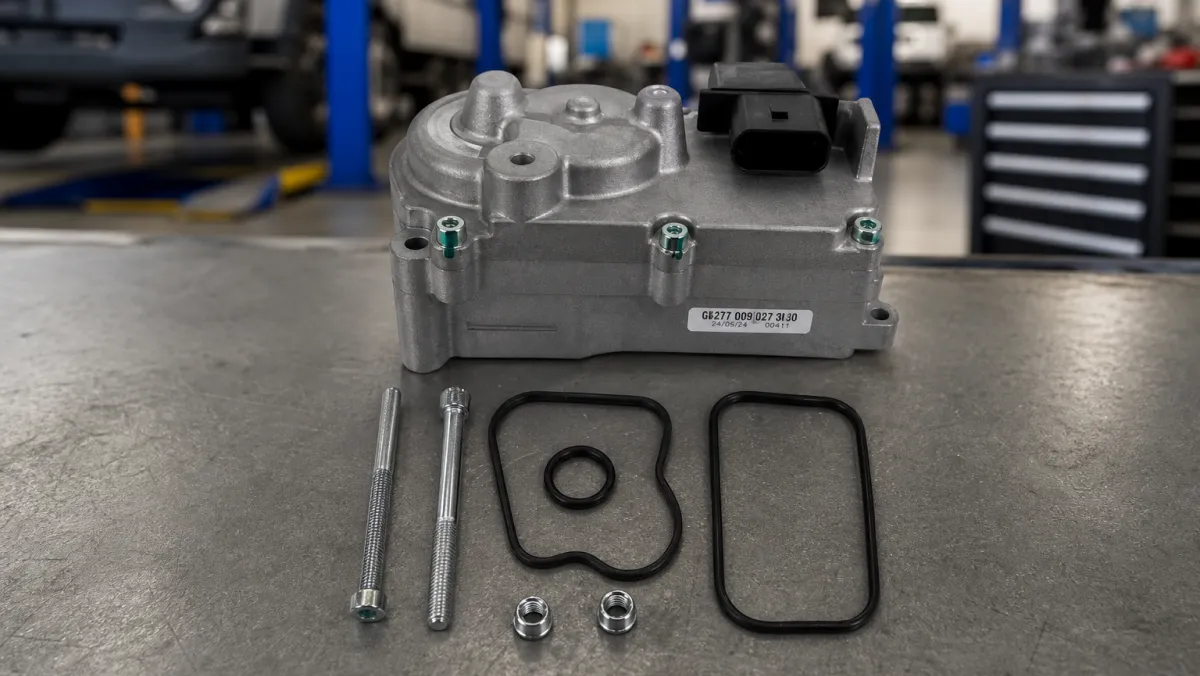
- Build quality. A turbo's lifespan is set on the production line as much as on the road. The units we supply are built new to OEM specification, balanced and flow-tested at production, and oil-leak checked before approval, and on VGT models the actuator calibration is verified before packing.
What Kills a Turbocharger on a Diesel Engine
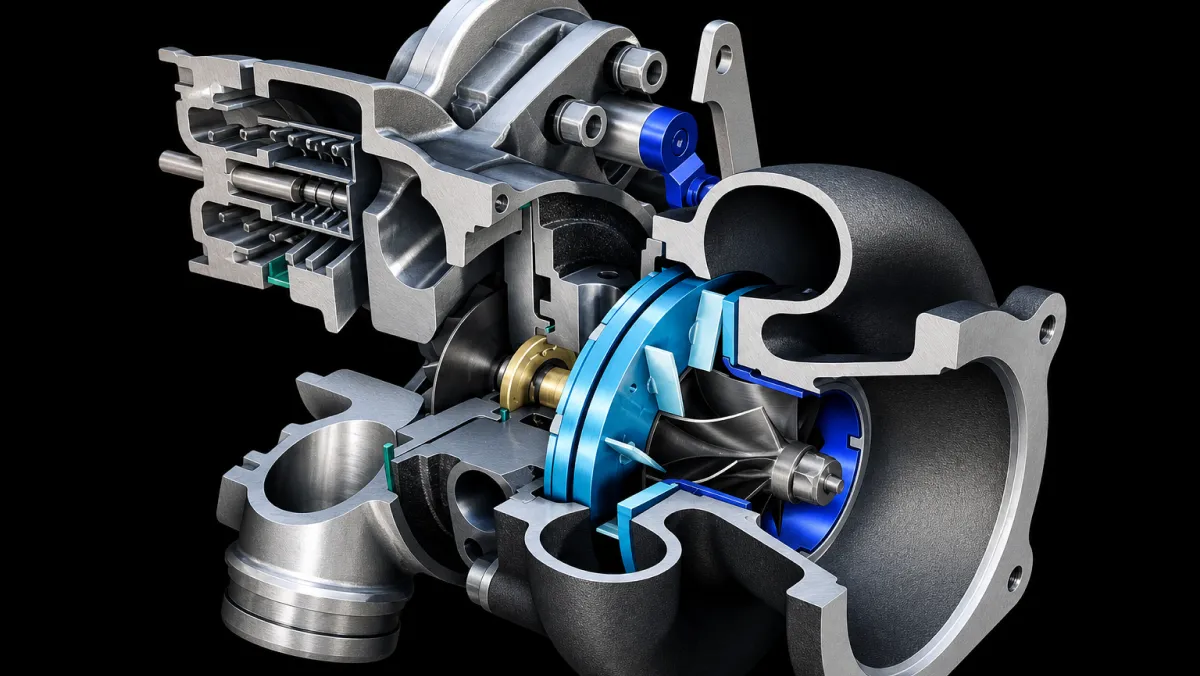
Most diesel turbo failures trace back to five causes: oil starvation or coking, foreign object damage, heat damage, contaminated oil, and boost leaks. Modern variable-geometry diesels add a sixth, diesel-specific failure mode: soot buildup that sticks the VGT vanes and overworks the actuator.
- Oil starvation and coking. Interrupted oil supply scores the bearing in seconds. Repeated hot shutdowns bake oil into carbon inside the housing, slowly strangling the same passages.
- Foreign object damage. Anything that gets past the air filter, from dust to a loose clamp screw, strikes the compressor wheel at speed and chips the blades.
- Heat damage. Over-fueling, exhaust leaks, and sustained lugging push exhaust temperatures past what the turbine housing was designed to hold, warping components over time.
- Contaminated oil. Metal particles, coolant, or fuel in the oil act like abrasive slurry on the bearing surfaces.
- Boost leaks. Cracked charge piping or a tired intercooler makes the turbo work harder to hold the same boost, adding heat and wear.
- Sticking VGT vanes. Long idling and short runs load the turbine side with soot, and the vanes in a vgt turbo gradually lose their range of movement until boost control fails.
First Signs Your Turbo Is Nearing the End
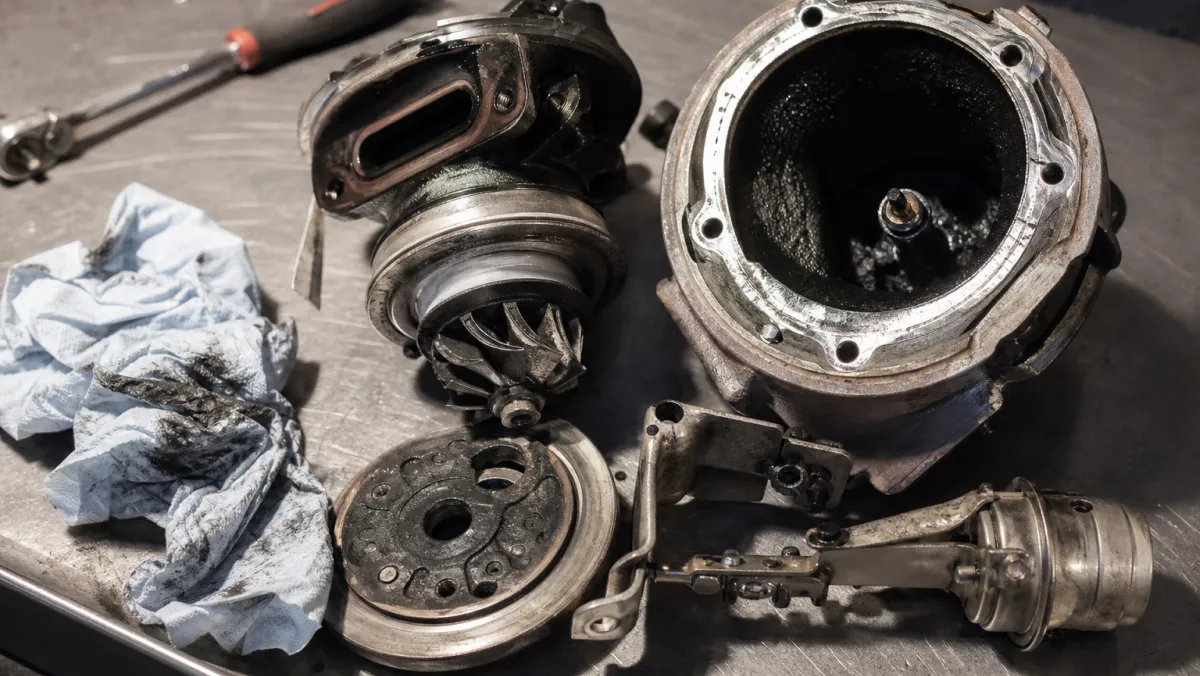
A wearing diesel turbo announces itself through falling boost and power, blue-gray exhaust smoke after idling, a rising whine or siren-like noise, increased oil consumption, and underboost fault codes such as P0299. Catching these signs early turns a roadside failure into a planned, cheaper replacement.
- Power and boost loss. Slow spool, weak pull under load, or an engine that can no longer hold highway speed on grades.
- Blue or gray exhaust smoke. Worn seals let oil into the exhaust side, and it burns off as smoke, often most visible right after idle.
- Unusual noise. A whine that gets louder week by week points to bearing wear; rattling or grinding means the wheels may already be touching the housings.
- Rising oil consumption. Oil disappearing without an external leak often exits through the turbo seals.
- Fault codes. P0299 (underboost) and P0234 (overboost) are the classic turbo-related codes on modern diesel platforms.
A full breakdown of these warning signs, with the sounds and smoke patterns that distinguish them, is in our guide to diesel turbo failure symptoms.
How to Make a Diesel Turbo Last Longer
Extending turbo life is mostly about protecting the oil film and managing heat. A short routine of correct oil changes, brief warm-up and cool-down idling, clean intake air, and early leak repairs covers most of what shortens turbo life in the first place. Owners who ask how long will a turbo last with disciplined maintenance can realistically expect the upper end of the ranges above.
- Follow the oil specification and interval. Fresh, correct-grade oil is the cheapest turbo insurance there is.
- Idle briefly at both ends of the drive. Give the engine 30 to 60 seconds after a cold start so oil reaches the bearing, and a short cool-down idle after hard running so heat soaks out of the housing instead of cooking the oil.
- Keep intake air clean and sealed. Replace the air filter on schedule and inspect intake piping for dust tracks.
- Go easy on a cold engine. Full boost on cold oil is hard on bearings that have not reached temperature.
- Fix small leaks and codes early. A boost leak or a lazy actuator costs efficiency now and a turbo later.
When It Finally Wears Out: Rebuild, Replace, or Buy New
When a diesel turbo reaches the end of its service life, the choice is between a rebuild, a remanufactured unit, or a brand-new replacement. Rebuilding makes sense on simple wastegated turbos with undamaged wheels and housings. On modern VGT units, where vanes, actuator, and bearings wear together, a properly built and calibrated replacement is usually the better value.
Whatever route you choose, three things decide how long the next turbo lasts. First, match the unit by the part number on the old turbo's nameplate or the engine serial number, since a mismatched turbo works outside its efficient map from day one. Second, understand what you are buying: every unit we sell is brand new with 100% new components, so there is no used core inside and no core deposit to manage. Third, check the warranty; ours run one year with unlimited mileage, and we verify the part number against your engine before any order ships. For a deeper cost and decision breakdown, see our guides on turbo rebuild options and turbo replacement cost.
The Bottom Line on Diesel Turbo Lifespan
So, how long do turbochargers last on a diesel engine? Plan on 100,000 to 150,000 miles as the baseline, and with clean oil, heat discipline, and a quality unit, 200,000 miles is a realistic outcome rather than a lucky one. When your current turbo starts telling you it is tired, send us the part number from the nameplate or your engine serial number. We will confirm exact fitment against our US-stocked inventory before you order, free of charge.

FAQ
There is no fixed replacement interval. Turbos are condition-based components, replaced when wear symptoms appear, such as boost loss, smoke, noise, or rising oil consumption, rather than at a set mileage. Planning on a typical 100,000 to 150,000 mile service life simply lets fleets budget ahead.
Five causes account for most failures: oil starvation or coking, foreign object damage through the intake, heat damage from over-fueling or exhaust leaks, contaminated oil, and boost leaks that overwork the unit. On modern variable-geometry diesels, soot buildup that sticks the VGT vanes is an additional, diesel-specific killer.
As a general industry baseline, 100,000 to 150,000 miles under normal use. Well-maintained diesel turbos frequently exceed that range, and 200,000 miles or more is common on highway trucks with disciplined oil changes and sensible driving.
Yes, provided the engine was designed for boost and the maintenance is there. Modern diesel engines are engineered around turbocharging from the start, and a cared-for turbo engine will match a naturally aspirated engine for service life. What shortens the comparison is neglected oil changes and heat abuse, not the turbo itself.