Detroit DD15 Turbocharger: Failure Signs, Replacement Cost & the HX55 vs B3G Split
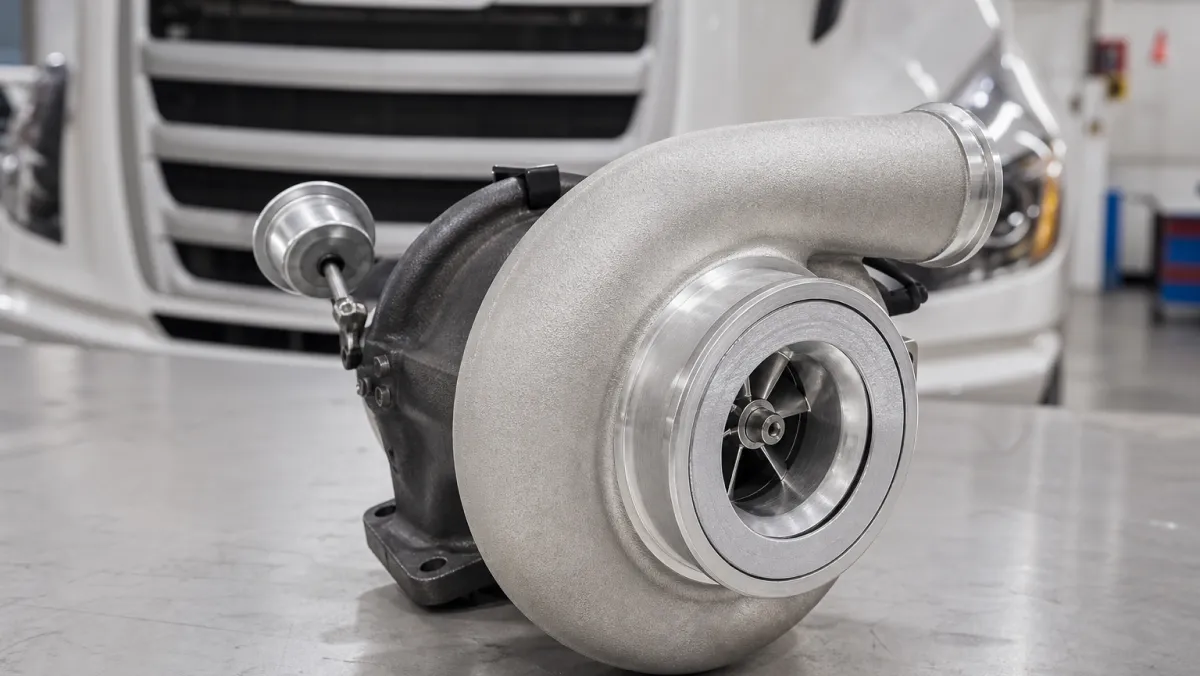
The Detroit DD15 powers more Class 8 trucks in North America than any other heavy-duty engine, and most of those trucks are Freightliner Cascadias. That makes DD15 turbocharger work some of the highest-volume business in any diesel shop. It also makes ordering mistakes expensive. The DD15 ran two completely different turbochargers across its production life, built by two different manufacturers, and they share nothing — not the flange, not the controls, not the sensors. This guide covers how to identify which turbo your DD15 takes, how the common failures show up, what replacement realistically costs in the US market, and how to order the right unit the first time.
Which Turbocharger Does a DD15 Use? — HX55 vs B3G by Model Year
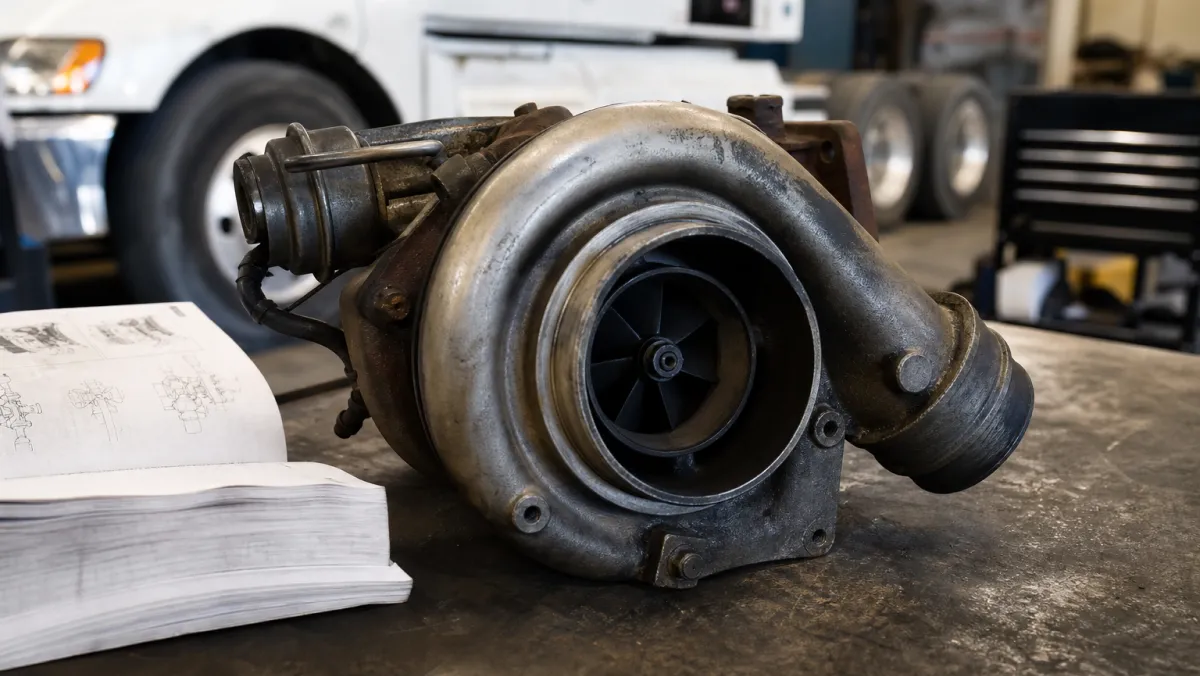
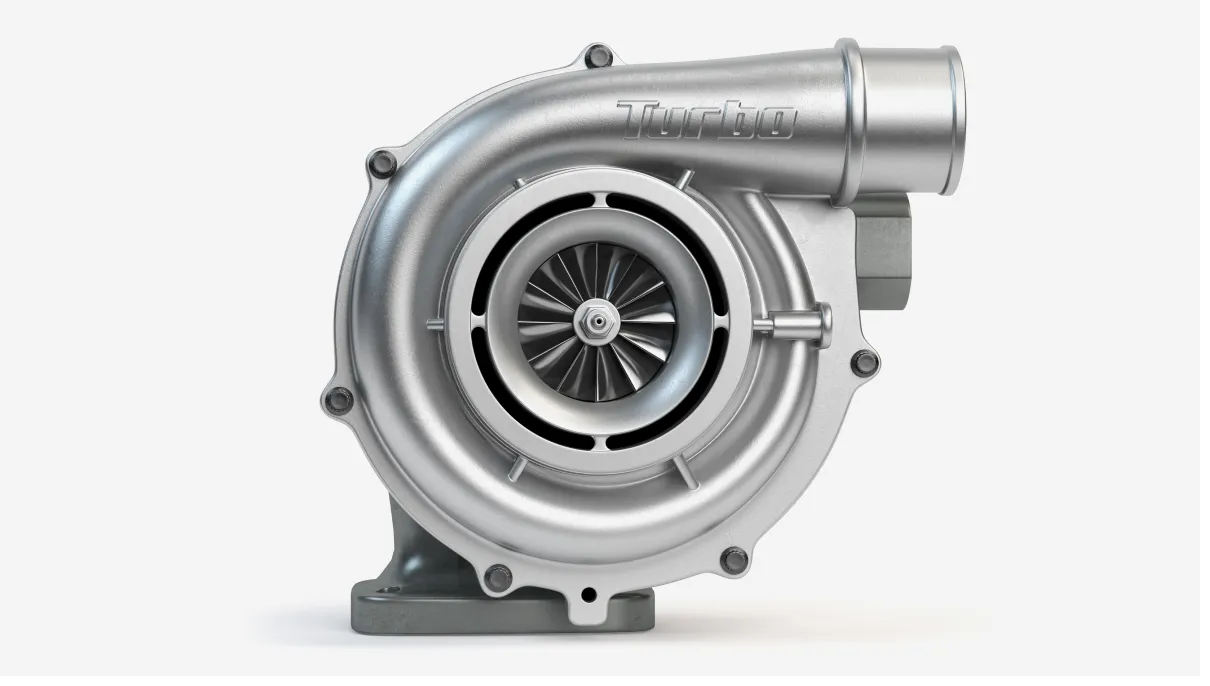
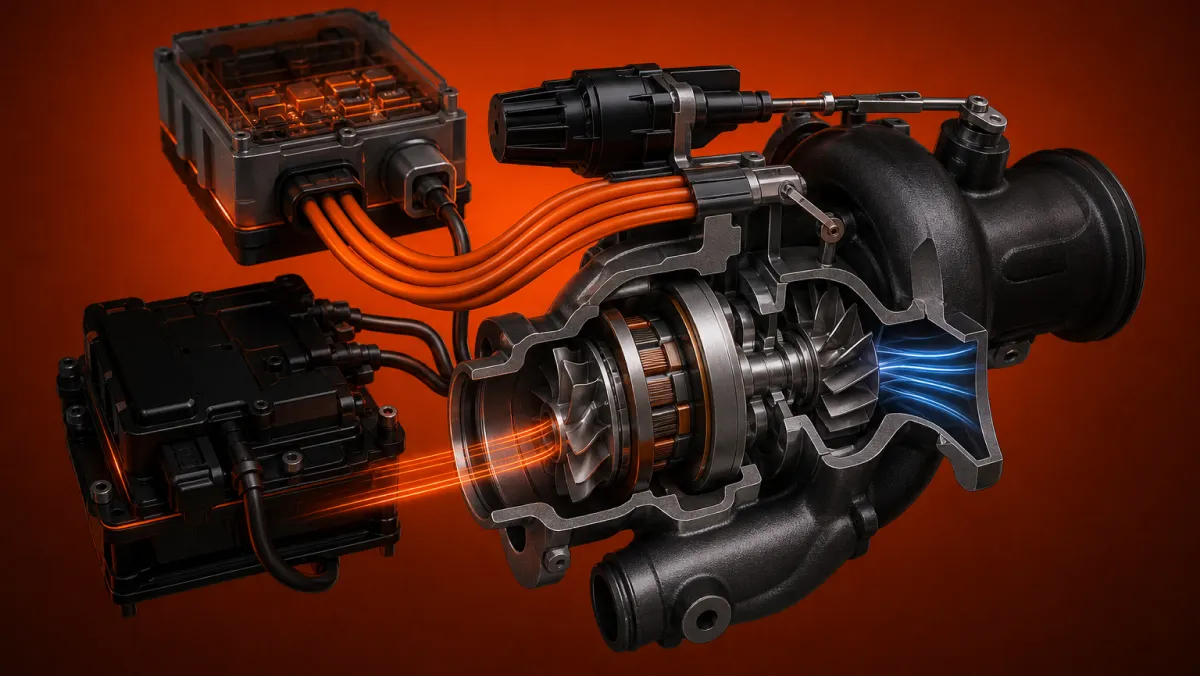
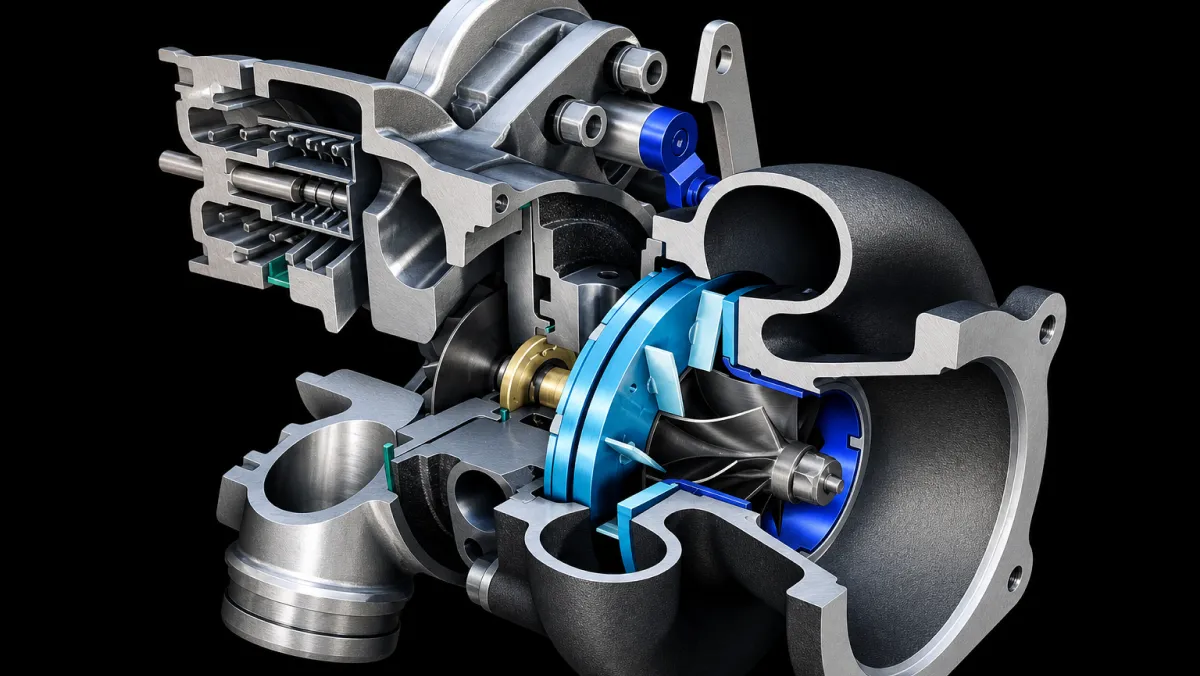
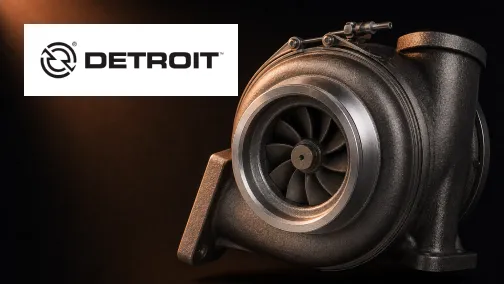
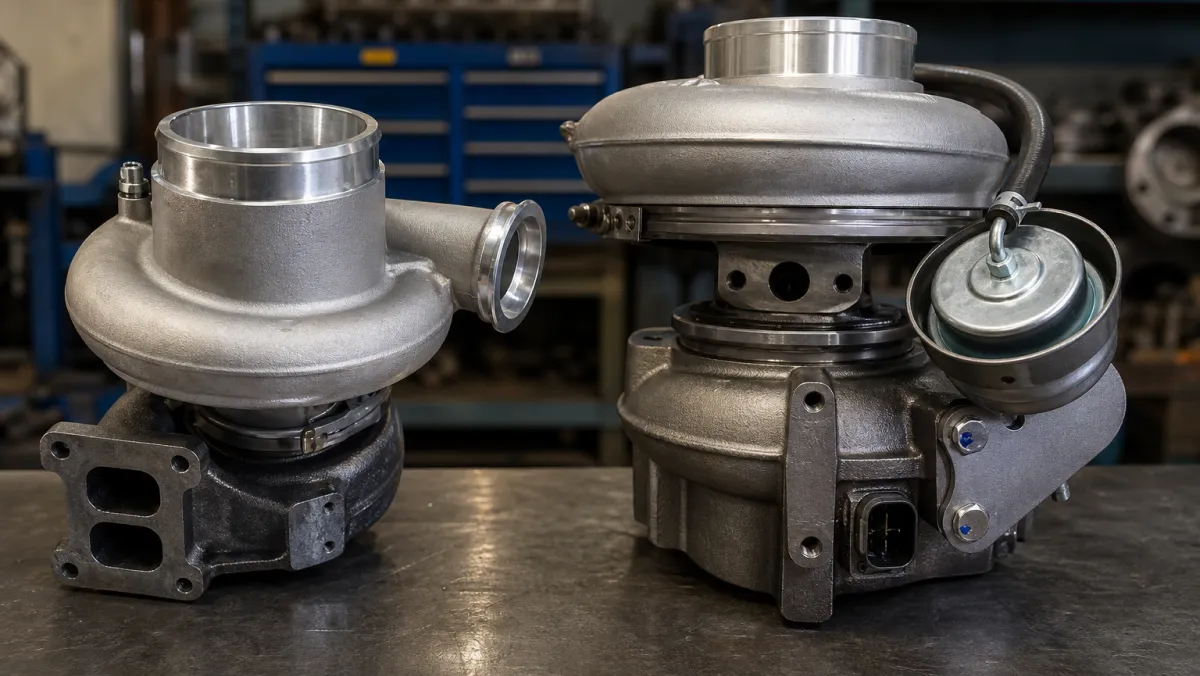
The short answer: early DD15 engines from the EPA10 era (pre-2015) use a Holset HX55, a fixed-geometry wastegated turbo with no electronic components. From 2015 onward, Detroit switched to the BorgWarner B3G, a larger wastegated turbocharger with an integrated speed sensor that reports shaft speed directly to the ECM. The two are not interchangeable in any way.
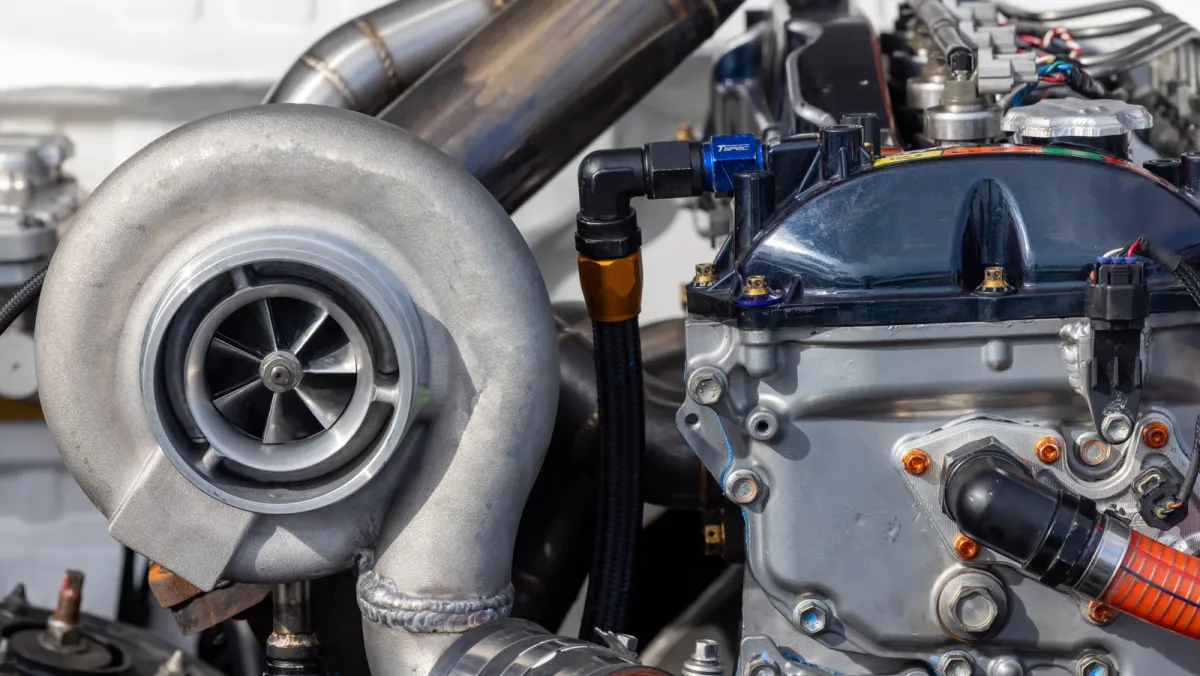
The DD15 is a Daimler engine, sharing its architecture with the Mercedes-Benz OM 471, and Daimler changed turbo suppliers as the engine moved through emissions tiers. The B3G arrived with a more compact package and better ECM monitoring of turbo behavior. What did not change is the control strategy: the DD15 has never used a variable geometry turbo. Both eras are wastegated designs, unlike the Holset VGT units found on the Cummins ISX or the earlier Detroit Series 60.
That last point deserves emphasis because it is a common industry error. Diagnoses and even some supplier articles list "sticking VGT vanes" as a DD15 turbo failure mode. There are no VGT vanes on a DD15. If a diagnosis for a DD15 mentions variable-geometry vanes, the person writing it is working from a Cummins playbook — get a second opinion before approving parts.
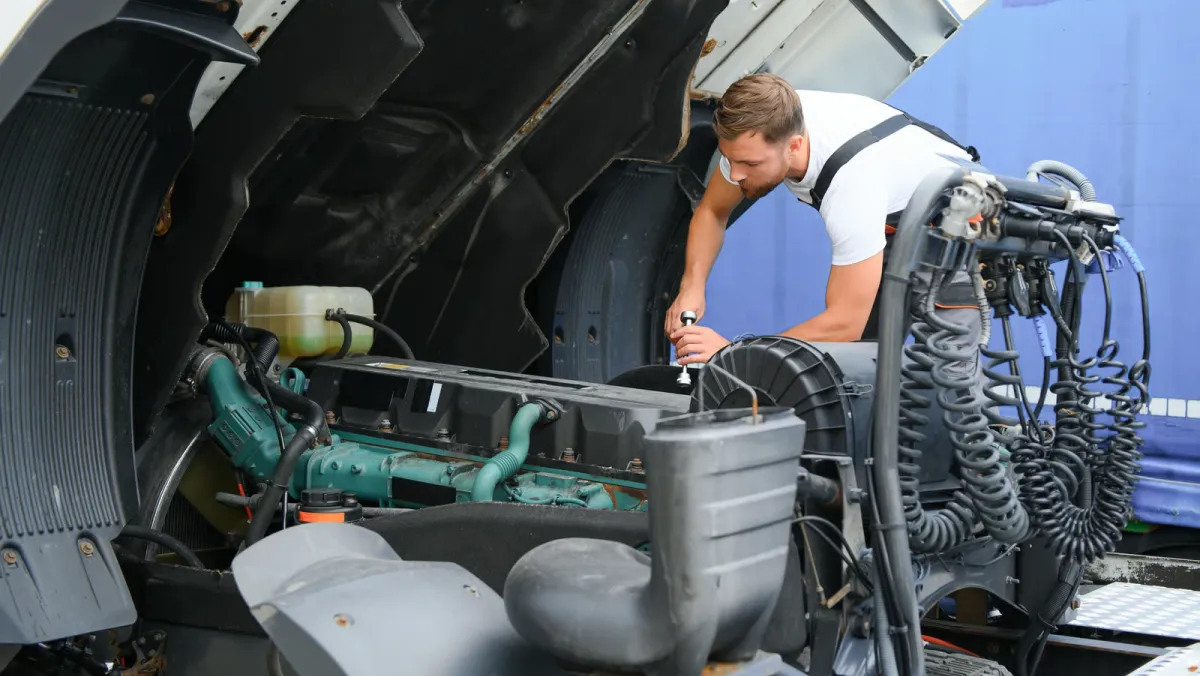
The application spread is worth knowing as well. The DD15 is the standard powerplant in the Freightliner Cascadia — the best-selling Class 8 truck in America — and also powers the Western Star 47X and 49X, plus a range of Daimler vocational platforms. For a shop, that means DD15 turbo jobs are not occasional specialty work; they are core volume. For a fleet, it means replacement supply is a procurement question, not an emergency purchase, if you plan it that way.
| Production Era | Turbo | Manufacturer | Design | Common Part Numbers | Ordering Note |
|---|---|---|---|---|---|
| EPA10 (pre-2015) | HX55 | Holset | Fixed geometry, wastegated, no electronics | 2836376 (crosses 2836378, A4720960799) | No calibration or scan tool needed |
| 2015-2018 | B3G | BorgWarner | Wastegated with integrated speed sensor | A4720901480 | Covers 455-560 hp ratings |
| 2018+ | B3G (updated) | BorgWarner | Updated wastegate calibration | A4720901880, 4720902780 | Not interchangeable with the earlier B3G |
Two traps sit inside this table. First, the B3G changed part numbers mid-production: the A4720901480 covers 2015-2018 trucks, while A4720901880 and 4720902780 cover 2018 and newer with a different wastegate actuation pressure and speed sensor calibration. Second, mid-year production changes mean model year alone is not a reliable selector. Match by the Detroit part number on the old turbo's nameplate, or by engine serial number if the plate is unreadable.
What Are the First Signs of a Failing DD15 Turbo?
A DD15 turbo usually announces itself weeks before it lets go. The earliest signs, in the order most shops see them:
- Lazy boost and power loss under load. The truck pulls grades it used to walk over, and acceleration feels flat. This is the most common first complaint and the easiest to dismiss.
- A rising whine or siren that tracks engine RPM. Bearing wear changes the sound of the turbo before it changes performance. A new noise at the top of the engine deserves a look.
- Blue or gray exhaust smoke and climbing oil consumption. Worn seals pass oil into the compressor or turbine side. Smoke under load is the tell.
- Boost fluctuation or surging at steady cruise. On B3G trucks this often traces to a tired wastegate actuator rather than the turbo core.
- Fault codes in the boost or turbo-speed families. Watch SPN 102 (intake manifold pressure) codes on either era, and SPN 103 (turbocharger speed) codes on 2015+ B3G trucks.
- Oil film at the compressor inlet or inside charge-air pipes. A physical check that takes five minutes with the boots off.
Any one of these warrants inspection before the next long haul. The reason shops push for early inspection is simple math: a failing turbo that is caught at the symptom stage is a turbo job, while one that runs to failure can scatter debris into the charge-air system, contaminate the intercooler with oil, or in the worst case feed enough oil into the intake to damage the engine itself. What starts as a turbo replacement can end as an engine repair. For a deeper symptom-by-symptom walkthrough, see our guide to diesel turbo failure symptoms.
Common DD15 Turbo Problems and Their Root Causes
Wastegate actuator wear
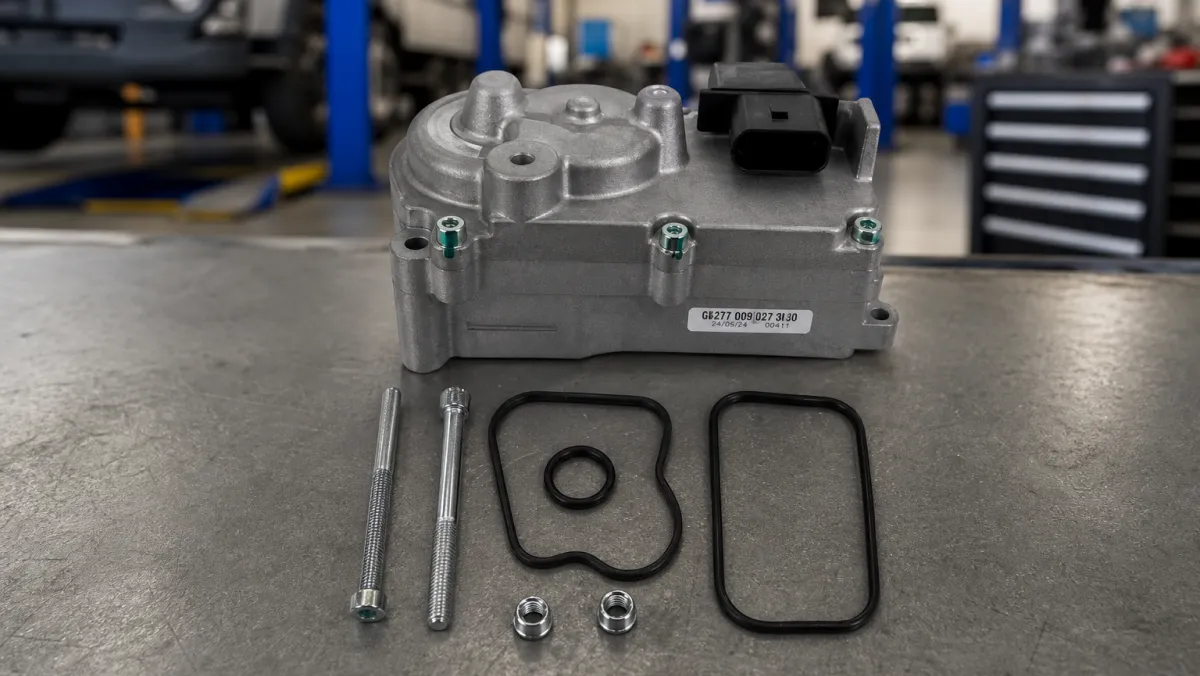
The B3G uses a vacuum-operated wastegate actuator to control boost. Diaphragm fatigue and linkage wear show up as inconsistent boost control, fluctuation under load, and turbo performance codes. What to check first: actuator linkage free play and a commanded boost test. A worn actuator can mimic a failing turbo and costs a fraction of the fix.
Bearing wear and oil coking
Oil problems are behind the majority of heavy-duty turbo failures — US repair shops put the figure around 80%. Extended drain intervals, low oil level, contaminated oil, and hot shutdowns all starve or cook the bearing system. Carbon baked into the center housing after a hard run without cool-down idling grinds away at the bearings over time. What to check first: shaft play at the compressor wheel and oil feed pressure at the turbo inlet. New turbos die young on engines with unresolved oil supply issues.
Speed sensor failure (B3G only)
The 2015+ B3G carries an integrated turbo speed sensor that the ECM uses for boost control and overspeed protection. The sensor can fail on its own, and when it does, the truck sets turbo-speed codes that look like a dead turbo. What to check first: the sensor and its harness before condemning the turbocharger. Replacing a sensor is significantly cheaper than replacing a B3G.
Boost leaks
Charge-air piping, clamps, and intercooler boots leak with age. The turbo works harder to hold boost, runs hotter, and wears faster — while the symptom (low power) points a finger at the turbo itself. What to check first: a pressure test of the charge-air system. Fixing a $40 clamp beats replacing a healthy turbo.
Foreign object damage
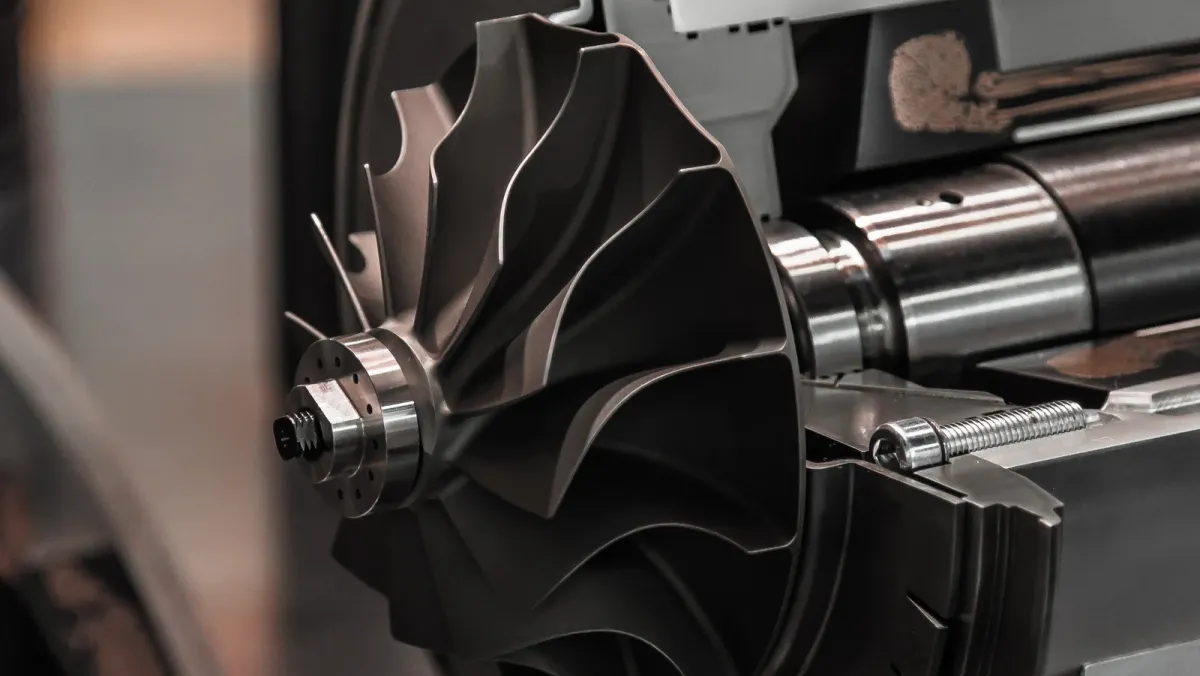
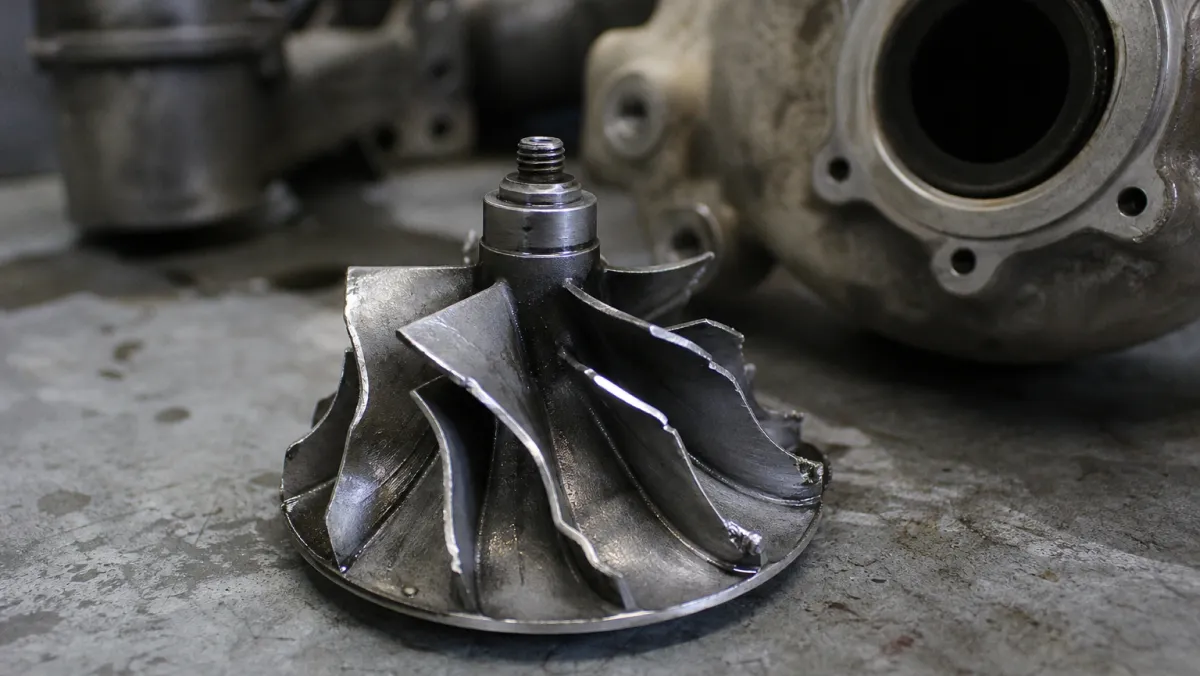
Anything that gets past the air filter — debris, a disintegrating filter element, a shop rag — strikes a compressor wheel spinning well past 100,000 RPM. FOD is instantly recognizable: bent or missing compressor blades with an otherwise healthy bearing system. What to check first: the intake tract and filter housing before installing the replacement, or the new turbo fails the same way.
How Many Miles Does a DD15 Turbo Last?
With clean oil, a healthy intake, and reasonable idle time, a DD15 turbocharger commonly runs 400,000 to 600,000 miles. That range comes from US fleet and shop experience across the DD15's service life. Trucks in severe duty — heavy idling, dusty routes, short cycles — can need a turbo closer to 300,000 miles.
Four habits decide which end of that range a truck lands on:
- Oil change discipline. Keeping to roughly 15,000-mile intervals with the correct spec oil is the single biggest factor.
- Cool-down idling. Two to three minutes of idle after a hard pull lets the bearing system shed heat before the oil supply stops.
- Air filtration. A restriction or a leaking filter housing shortens turbo life directly.
- Fixing boost leaks early. An overworking turbo accumulates heat and wear out of proportion to the size of the leak.
Fleets that treat the turbo as a scheduled component rather than a surprise failure get the better side of this math. Pulling a borderline unit during a planned service window costs a truck a day; waiting for a roadside failure costs the tow, the missed load, and whatever the failure took with it. High-mileage Cascadias with original turbos past 500,000 miles are candidates for planned replacement during other scheduled work.
Repair, Reman, or New — What Does DD15 Turbo Replacement Cost?
Current US shop estimates put a complete DD15 turbo replacement — parts and labor — between roughly $3,500 and $8,500, with labor running 8 to 12 hours at $150 to $200 per hour depending on access. The turbocharger itself is the biggest variable, and it depends on which route you take:
| Option | Typical Unit Cost | Typical Warranty | What You Give Up |
|---|---|---|---|
| Rebuilt | $2,000-3,000 | 6-12 months | Only worn internals are replaced; housings and wheels are reused |
| Remanufactured | $2,500-4,000 | 12-18 months | Core charge, freight both ways, and unknown service history |
| New, dealer channel | $4,000-6,000 | Up to 2 years | Highest price and possible lead time |
| New, aftermarket from US stock | Below dealer channel | 1 year (our standard) | Nothing on fit or function — built to OEM specification |
A few honest notes on the decision. Rebuilds make sense on older trucks being managed toward retirement. Reman dominates this market, but the core charge process — crating and freighting the old unit back, waiting on core credit — is real overhead for a shop, and the unit's history is unknowable. For trucks still earning, new-build is increasingly the default: no core to manage, no unknown history, and predictable behavior from mile one.
That is the position we supply from. Every DD15 turbo we ship is 100% brand new — new CHRA, new wheels, new wastegate mechanism, and on B3G units a new speed sensor pre-installed. Each unit is balanced and flow-tested at production, checked for oil sealing, and verified against your part number before it leaves our US warehouse. Orders dispatch within 24 hours, carry a one-year warranty, and there is no core charge to manage.

How to Order the Right DD15 Turbo
The ordering process is short if you follow it in order:
- Read the part number off the old turbo's nameplate. B3G units carry Detroit A-prefix numbers (A4720901480, A4720901880) or the 4720902780 variant. The HX55 era uses 2836376. This number settles the question.
- Match it against the era table at the top of this guide — never order by model year alone, because of the mid-year splits.
- If the nameplate is unreadable, use the engine serial number. The ESN identifies the exact variant the truck was built with.
- Confirm before anything ships. We verify every order against the Detroit part number, precisely because the B3G splits are easy to get wrong.
We stock both eras on a US shelf: the Holset HX55 2836376 for early DD15 trucks, and the B3G A4720901480 plus the later variants for 2015 and newer Cascadias and Western Stars. The full range sits on our new DD15 turbochargers page.
Installation notes that save the new unit
- Flush the oil feed line and inspect the drain path for restriction before the new turbo goes on.
- Prime the turbo with clean engine oil through the feed port and spin the shaft by hand.
- On B3G units, seat the speed sensor connector fully — a loose connector sets codes immediately.
- Replace the oil and filter at the same time; contaminated oil is how new turbos die early.
- Idle several minutes after first start to establish oil pressure before loading the engine.
- No scan-tool calibration is needed on either era — there is no VGT actuator to teach.
The bottom line: a DD15 turbo job goes right when the era and part number are settled before anything is ordered, and the failure's root cause is fixed before the new unit goes on. Send us the part number from the old turbo or the engine serial number, and we will confirm exact fitment against our US-stocked, brand-new inventory — backed by a one-year warranty and no core charge — before you commit to anything.