Diesel Turbo Failure Symptoms You Shouldn't Ignore
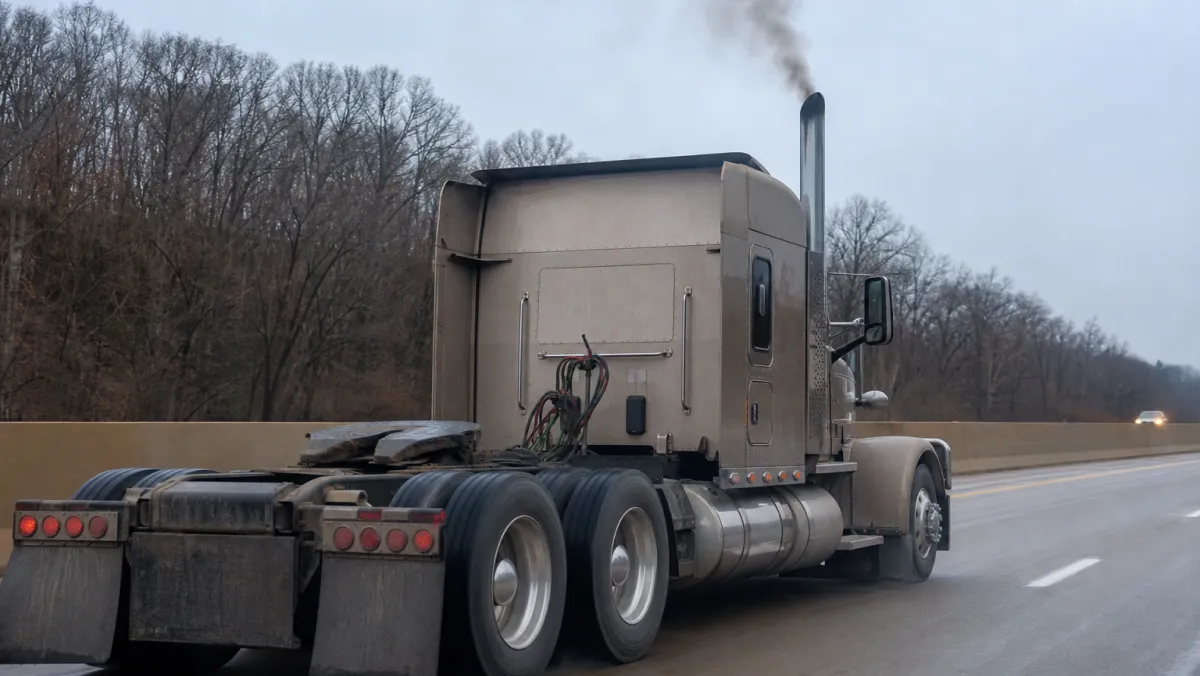
A diesel turbocharger rarely fails without warning. In most cases it gives weeks of signals first: the truck feels down on power, smoke changes color, a new whine shows up under load, oil consumption creeps up, or the ECM logs a boost-related code. Catching these signs early usually means a planned repair — a rebuild, an actuator, or a straightforward turbo swap. Missing them can mean a catastrophic failure that sends metal into the engine and turns a $1,000 to $3,000 turbo job into a five-figure engine repair. This guide covers the seven symptoms that matter, what each one actually indicates, and what to do when you see them.
1. Loss of Power and Sluggish Boost Response
Power loss is the symptom drivers notice first. The truck feels flat pulling away, struggles to hold speed on grades it used to climb easily, or takes noticeably longer to build boost after a gear change. Towing performance drops off before empty-truck performance does, because boost demand is highest under load.
Inside the turbo, several faults produce the same feeling: worn bearings adding drag, a VGT vane mechanism sticking from soot, a failed or miscalibrated actuator, or compressor wheel erosion cutting efficiency. Outside the turbo, split intercooler boots, loose clamps, and exhaust leaks upstream of the turbine cause identical power loss, which is why diagnosis starts with the cheap stuff. A boost leak forces the turbo to overspeed to hit target pressure, wearing it out faster, so even an external leak deserves same-week attention.
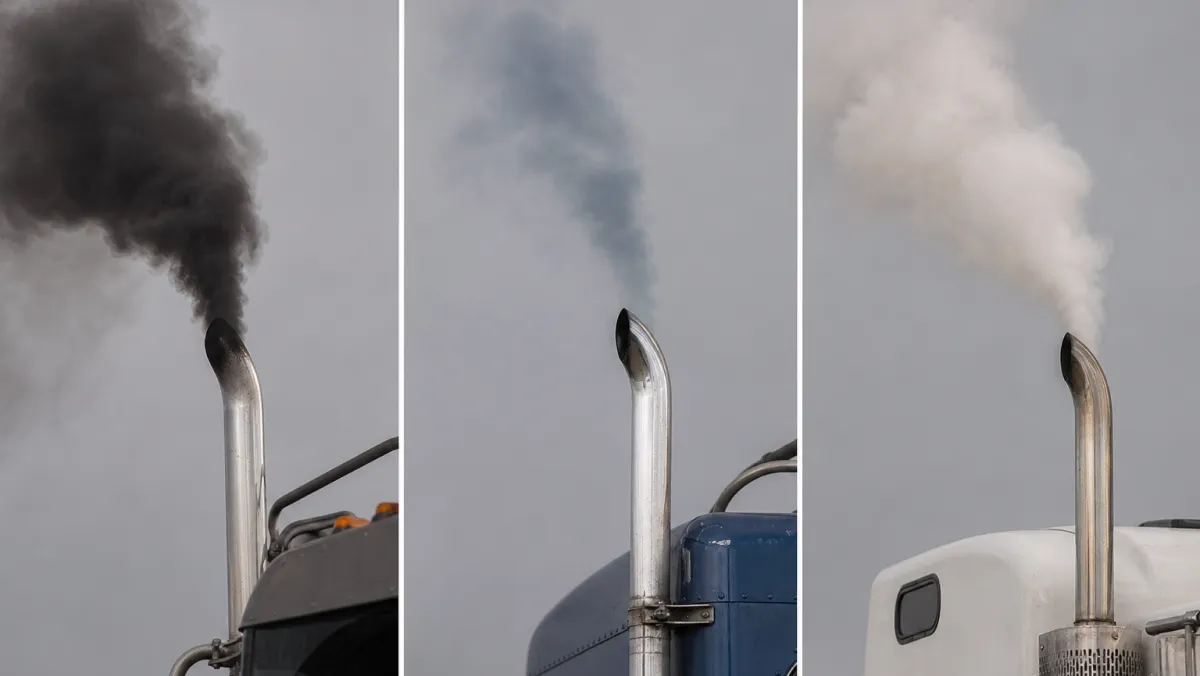
2. Exhaust Smoke: Read the Color
Smoke color and timing tell you more than any other single symptom. A cold-start puff that clears in seconds is normal on many diesels; sustained or load-dependent smoke is not.
| Smoke | Most likely cause | Notes |
|---|---|---|
| Blue or blue-gray, worse under boost or on deceleration | Oil burning — worn turbo seals letting oil into the intake or exhaust side | Often paired with rising oil consumption. Can also come from valve seals or high crankcase pressure, so confirm the source |
| Black under acceleration | Over-fueling for the available air — low boost, boost leak, or restricted intake | The engine is injecting fuel for air it is not getting. Also check air filter, injectors, and EGR condition |
| White, persistent after warm-up | Coolant or unburned fuel — cracked housing or gasket, injector fault, low compression | Least likely to be the turbo itself, but a cracked water-cooled housing does occur. Sweet smell points to coolant |
Smoke that tracks with boost events (appears when the turbo spools, clears at cruise) points harder at the turbo than smoke that is constant across all conditions.
3. Noises That Should Not Be There
A healthy diesel turbo makes a light whistle as it spools. Four sounds signal trouble:
- Siren-like whine that rises with rpm. The classic bearing-wear sound. As journal or ball bearings lose clearance control, shaft vibration becomes audible. It gets louder week by week.
- Grinding or scraping. The compressor or turbine wheel is contacting its housing. This is a stop-driving sound — every minute of running sheds aluminum or steel debris downstream.
- Hiss or whoosh under load. Usually a boost leak at an intercooler boot, clamp, or cracked pipe rather than the turbo itself. Cheap to fix, expensive to ignore.
- Surging flutter on throttle lift. Compressor surge, often from a sticking VGT mechanism or a boost control fault.
4. Oil Consumption and Oil Where It Shouldn't Be
Turbo seals do not hold oil back like a gasket; they manage oil with controlled clearances and rely on clean supply and free drainage. When bearings wear and shaft play grows, oil migrates. Three places to look:
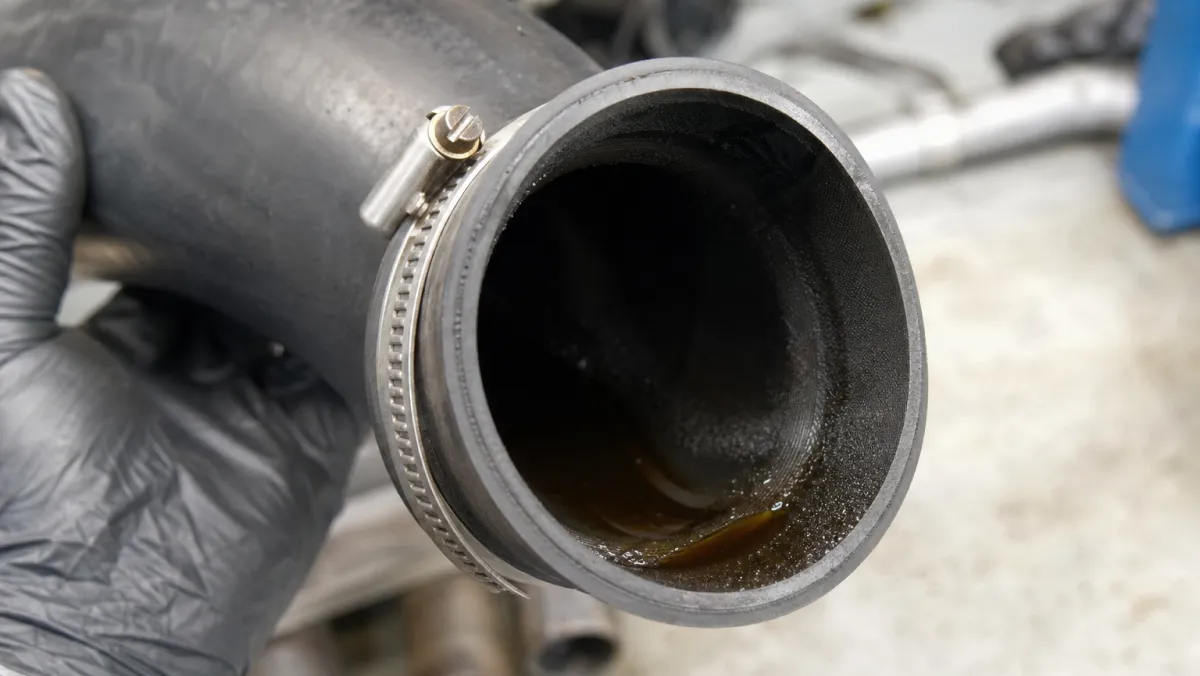
- Inside the charge pipes and intercooler. Pull a boot at the intercooler outlet. A light film is normal on high-mileage engines with closed crankcase ventilation; pooled oil is not. Pooled oil plus blue smoke points at the compressor-side seal.
- At the turbine outlet and downpipe. Oil on the exhaust side shows up as smoke on deceleration and after idling.
- External seepage at the center housing. Often a blocked or kinked oil drain line rather than a failed turbo. Check the drain before condemning the unit.
Rising oil consumption without any visible external leak — a quart every few hundred miles on a highway truck — belongs on this list even before smoke appears.

5. Fault Codes and Derate Conditions
Modern diesels watch boost continuously, and codes often appear before the truck feels any different. The ones that matter for turbo diagnosis:
- P0299 (underboost) — boost below target. Turbo wear, boost leak, sticking VGT, or actuator fault.
- P0234 (overboost) — boost above target. Sticking vanes, wastegate fault, or actuator calibration drift.
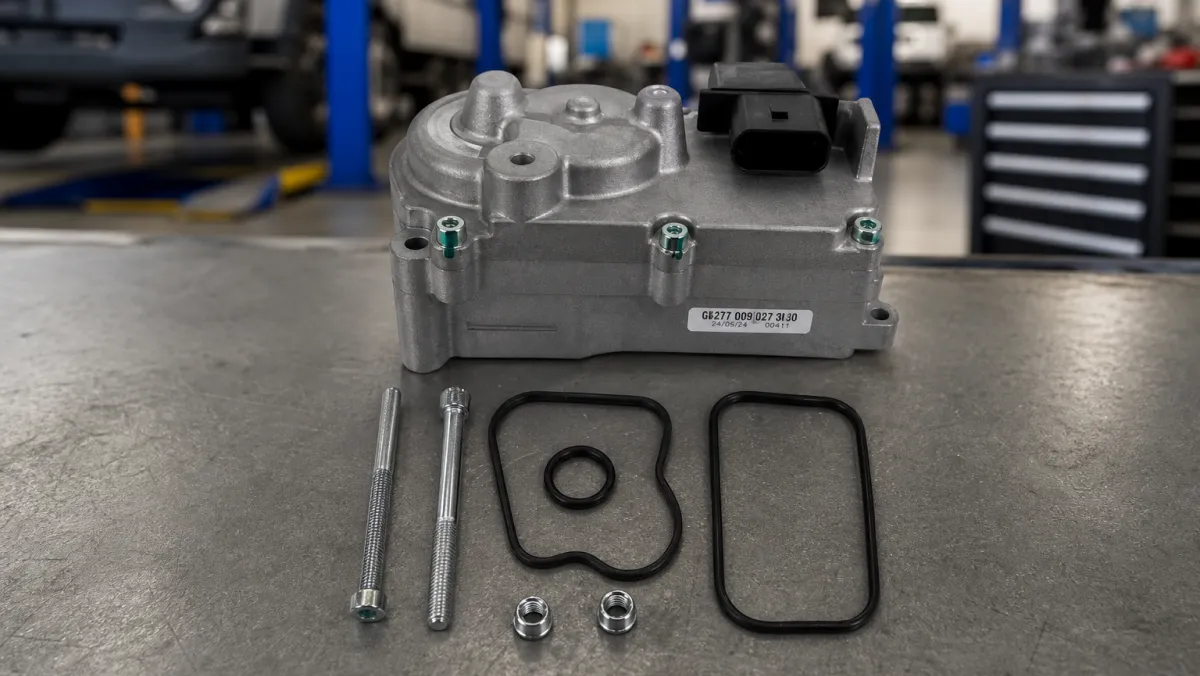
- Actuator circuit and position codes (P003A, P0046 and similar; SPN 641, SPN 2789 on heavy-duty J1939 engines) — the electronic VGT actuator is failing or the vanes it drives are sticking. On units like the HE400VG and HE300VG, the actuator is a frequent failure point and is serviceable separately from the turbo core.
Two cautions. First, an unresolved boost fault on an EPA10-or-newer engine escalates to a derate, and derates strand trucks. Second, clear-and-drive is not a diagnosis. A code that returns within one drive cycle is telling you the fault is real.
6. Fuel Economy Getting Worse
A worn turbo costs fuel two ways: lower boost pressure means worse combustion, and the ECM adds fuel to compensate for lost air. A gradual 5 to 10 percent fuel-economy decline across a fleet vehicle with no driver or route change is a legitimate early warning, especially paired with any smoke or noise on this list. Exhaust gas temperature creeping upward at steady cruise points the same direction.
7. What Happens If You Keep Driving
The failure sequence is predictable. Bearing wear grows shaft play. Shaft play lets the wheels rub the housings. Rubbing wheels shed metal — aluminum fragments go through the intercooler into the cylinders; steel turbine fragments go through the exhaust into the DPF. At that point the repair bill adds an intercooler, possible engine work, and a DPF to the turbo itself. The gap between "rebuildable core" and "scrap plus collateral damage" is often just a few hundred miles of ignored grinding noise.
What to Do When Symptoms Appear
- Scan for codes first. Note stored and pending boost or actuator codes before clearing anything.
- Check oil level and condition. Low or degraded oil both causes and accelerates turbo wear.
- Inspect the charge pipes. Look for oil pooling, cracked boots, and loose clamps from the compressor outlet to the intake manifold.
- Check shaft play. With the engine off and cool, remove the intake pipe and check radial and axial play at the compressor wheel. Slight radial movement is normal on floating journal bearings; any contact with the housing or visible blade damage is not.
- Decide on driving. Light symptoms (small oil film, faint whine, single underboost code) allow a planned shop visit within the week. Grinding noise, heavy smoke, or a derate means park it.
Repair, Rebuild, or Replace?
Once the turbo is off and inspected, the economics split three ways. Actuator-only faults on electronic VGT units are fixed with a new actuator and calibration, no core work needed. Cores with intact housings and undamaged wheels are rebuild candidates — see our turbo rebuild vs replace guide for the decision criteria. Cores with wheel contact, cracked housings, or bent shafts go straight to replacement. For current pricing context across all three options, the turbo replacement cost guide breaks down the numbers.
Get the Right Replacement Fast
UPAPSI stocks replacement turbochargers, actuators, and repair components for the full range of North American diesel applications, including Cummins and Detroit platforms. Match by the part number on your old turbo's nameplate and we will confirm fitment, price, and availability — usually within one business day, with volume pricing for fleets and wholesale buyers. Common questions are answered on our FAQ page.

FAQ
The earliest signs are usually a gradual loss of power under load, a change in exhaust smoke color, and a new whining or siren-like noise that rises with engine speed. Rising oil consumption without a visible leak and a stored underboost code (P0299) also appear early, often before the truck feels any different to drive.
It depends on the symptom. A faint whine or a single underboost code allows a planned repair visit within days. Grinding or scraping noises, heavy blue or black smoke, or an active engine derate mean the truck should be parked. Continued driving with wheel-to-housing contact sends metal fragments into the engine and turns a turbo repair into an engine repair.
Blue smoke means engine oil is burning. On a turbocharged diesel, the common source is worn turbo seals letting oil into the intake or exhaust side. Valve stem seals and high crankcase pressure produce the same smoke, so the source should be confirmed by checking for oil pooling in the charge pipes and intercooler before condemning the turbo.
A light whistle during spool-up is normal. A loud, siren-like whine that climbs with rpm indicates worn turbo bearings and growing shaft play. A hiss under load usually points to a boost leak at an intercooler boot or clamp rather than the turbo itself. Grinding or scraping means the wheel is contacting the housing and the engine should be shut down.
The key codes are P0299 (turbo underboost) and P0234 (overboost), plus actuator circuit and position codes such as P003A and P0046. On heavy-duty J1939 engines, SPN 641 and SPN 2789 flag VGT actuator faults. Codes that return within one drive cycle after clearing indicate a real hardware fault, not a glitch.
Yes. A failing turbo damages the engine in two ways. Metal fragments from a wheel that contacts its housing travel into the cylinders and score pistons, rings, and cylinder walls. Oil pushed through failed seals fouls the intercooler and DPF and accelerates wear. Early repair typically stays in the $1,000 to $3,500 range; a catastrophic failure can exceed $10,000 with collateral damage.
In line-haul truck service, a well-maintained diesel turbo commonly lasts 500,000 miles or more, and many run the life of the engine. Real-world lifespan depends on oil quality and change intervals, warm-up and cool-down practice, air filtration, and how quickly boost leaks and EGR problems are corrected. Most early failures trace back to oil starvation or contamination rather than the turbo itself.