Turbo Rebuild vs Replace: When to Rebuild Your Turbocharger
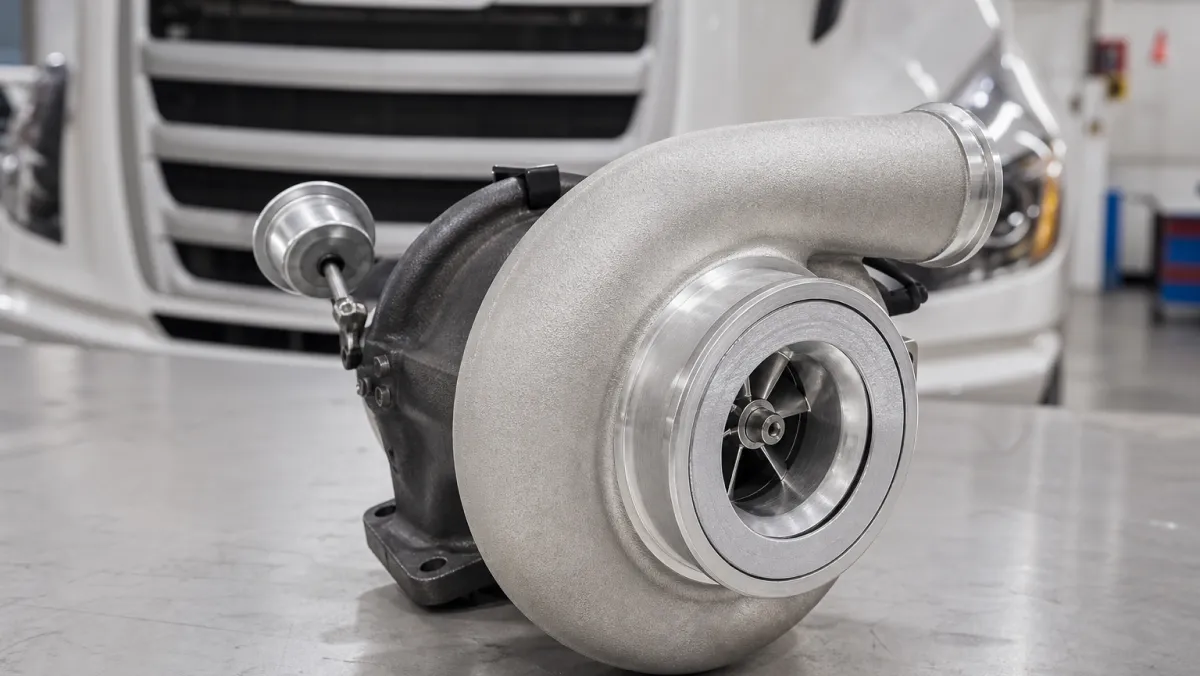
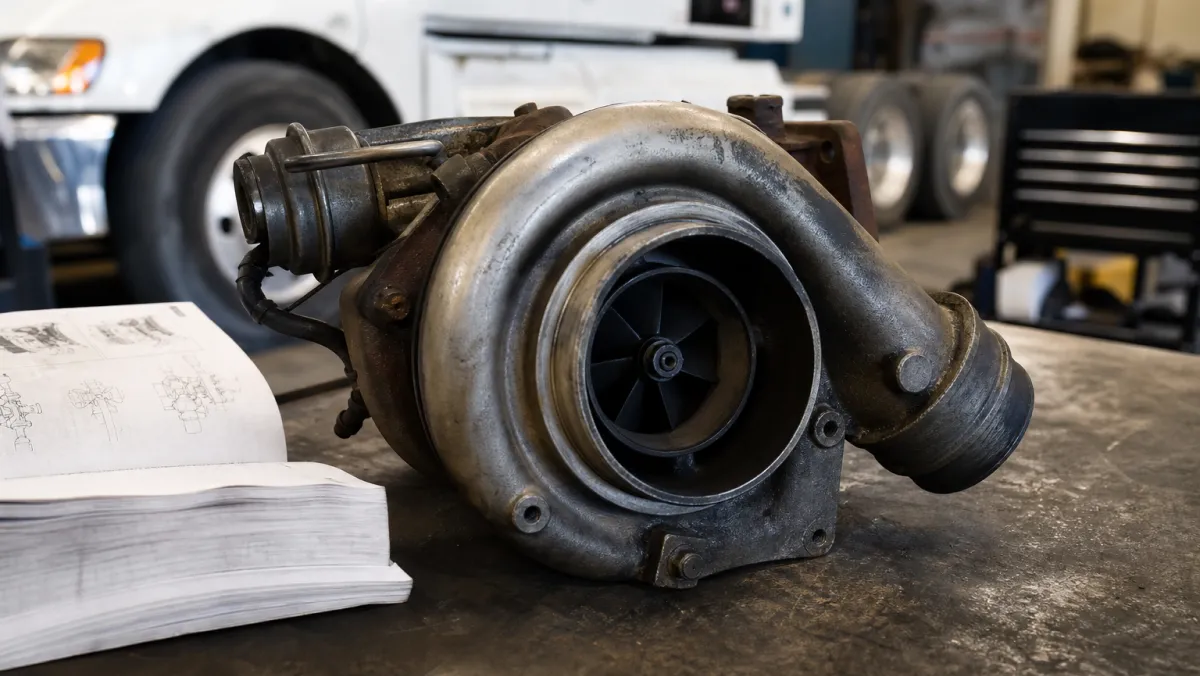
When a diesel turbo starts losing boost, pushing oil, or making noise, the first cost question is whether to rebuild the unit on the truck or install a replacement. The honest answer depends on what failed inside. As a rule of thumb: if the housings are intact, the shaft and wheels are undamaged, and wear is limited to bearings, seals, and rings, a rebuild restores full performance for roughly half the price of a new turbo. If a wheel has contacted the housing, the shaft is scored or bent, or the turbine housing is cracked, rebuilding that core is money spent on a part that will fail again. This guide walks through what a rebuild actually includes, how to make the rebuild-or-replace call, what each option costs, and what to expect from a rebuilt unit in service.
What a Turbo Rebuild Actually Involves
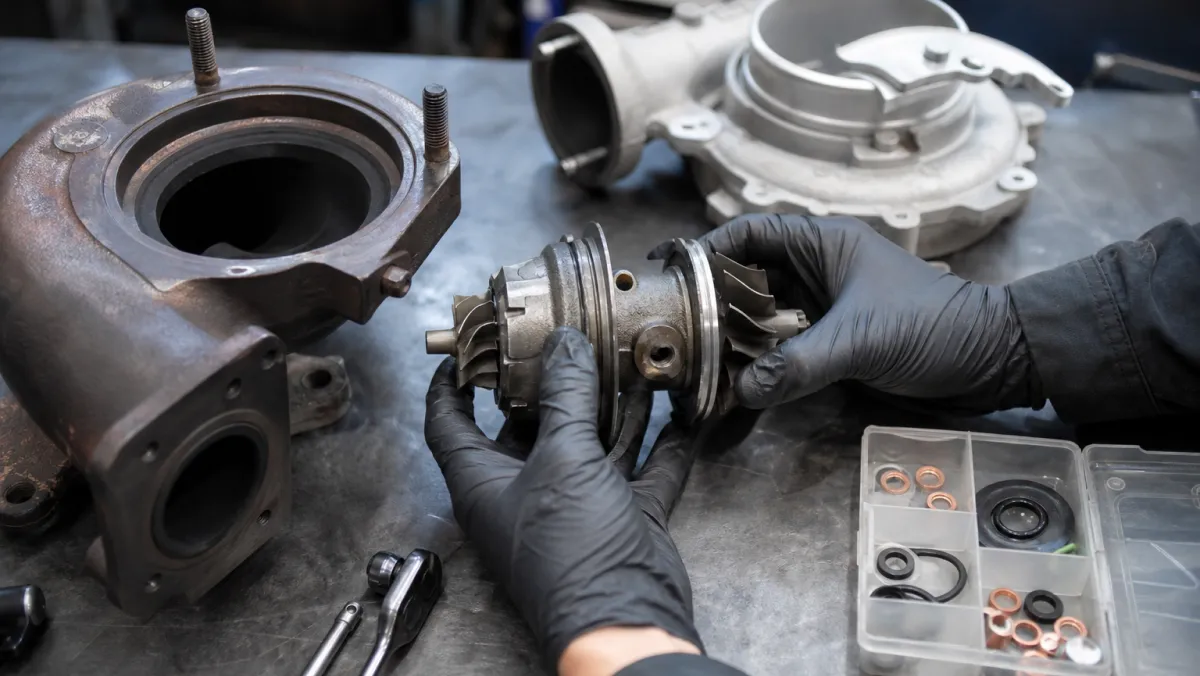
A proper turbo rebuild is a controlled workshop process, not a quick reseal. On a professional bench it follows a fixed sequence:
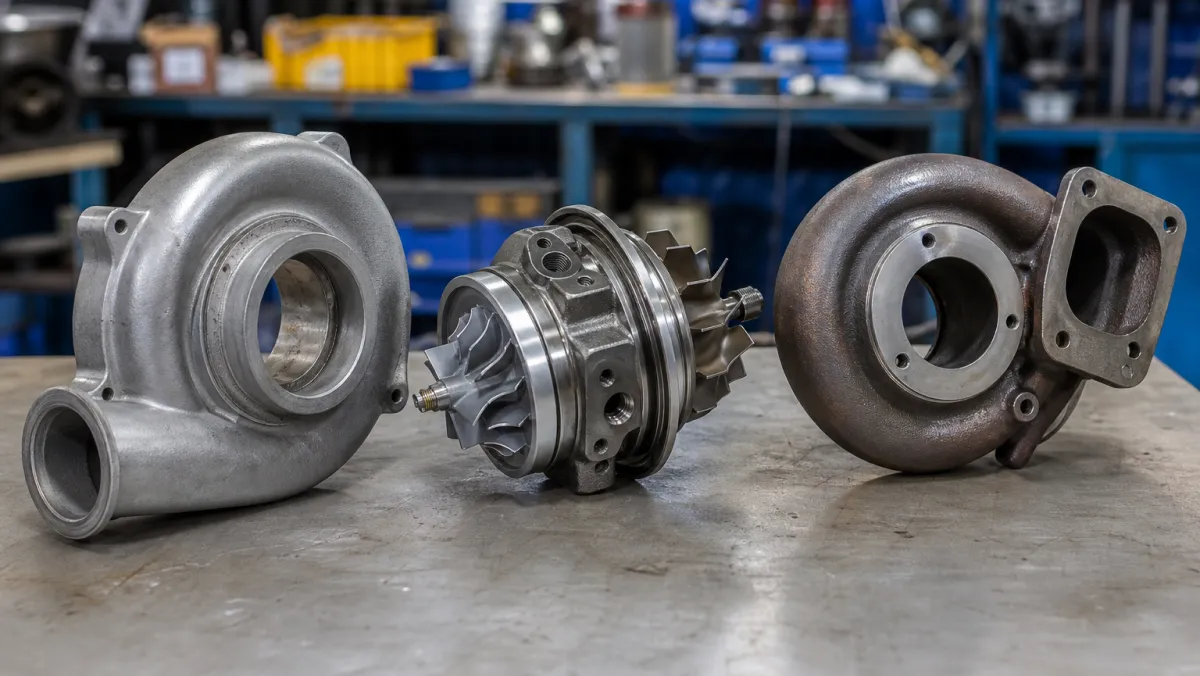
- Disassembly and cleaning. The compressor and turbine housings come off, and the center housing rotating assembly (CHRA) is stripped. Carbon, coke, and burnt oil are removed from oil passages and housings, usually with chemical cleaning and media blasting.
- Dimensional inspection. Shaft diameter, bearing bores, and thrust surfaces are measured against specification. Wheels are checked for blade erosion, foreign object damage, and rub marks. Housings are inspected for cracks, especially around the wastegate port and turbine inlet.
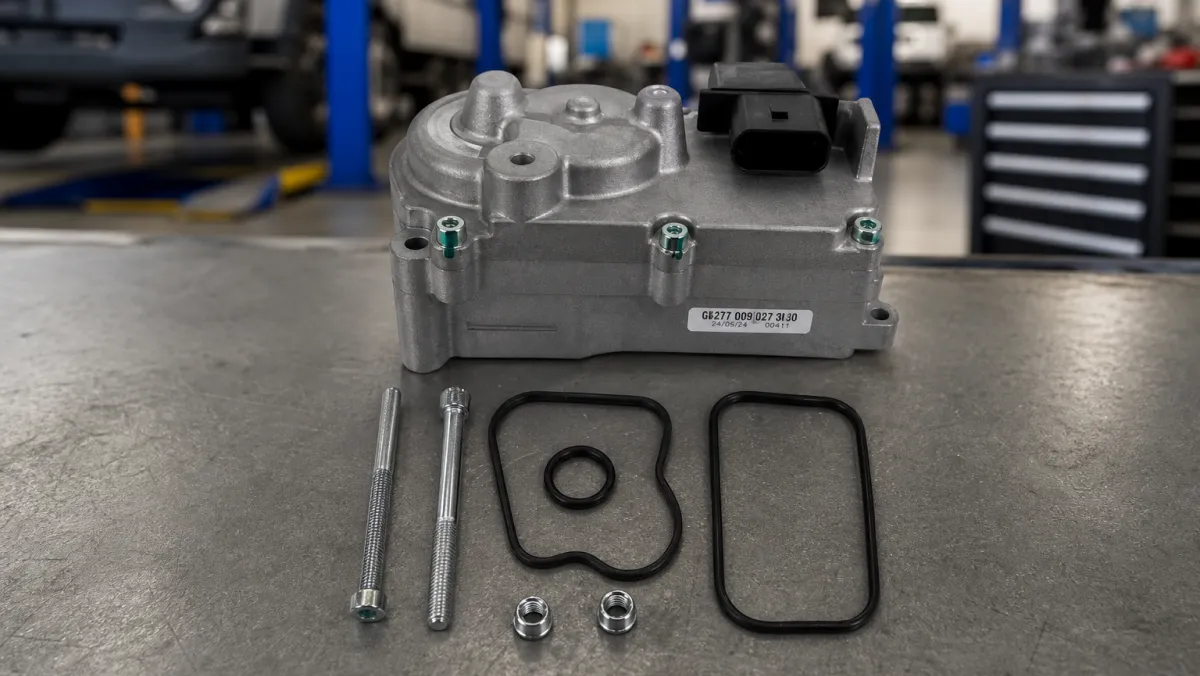
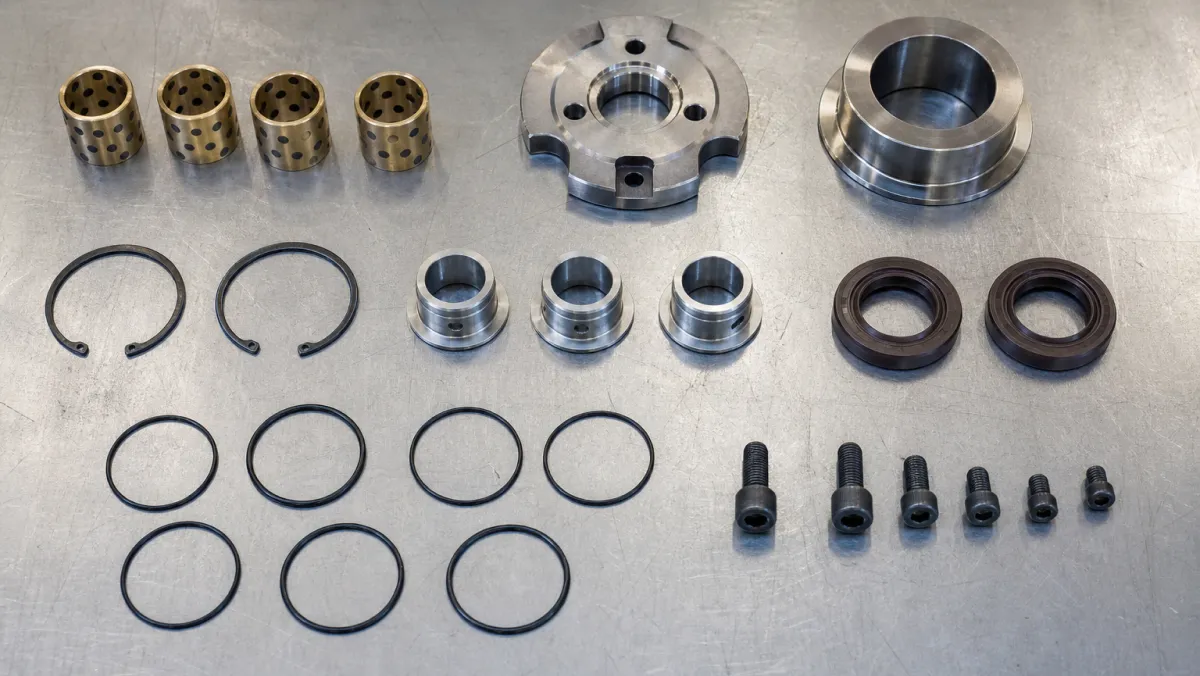
- Replacement of wear parts. Journal or ball bearings, thrust bearing and collar, piston rings, seals, O-rings, and fasteners are replaced as a set, typically from a model-specific turbo repair kit. A standard kit for a Holset or BorgWarner heavy-duty unit costs $40 to $200.
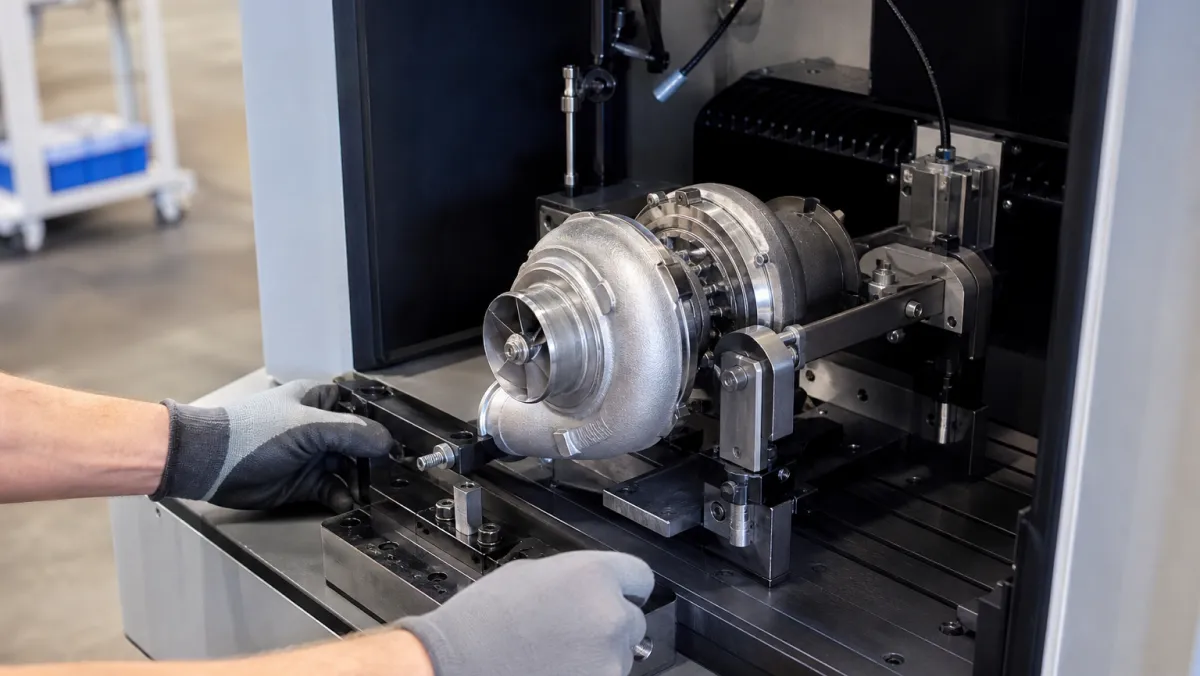
- Balancing. The shaft-and-wheel assembly is balanced first, then the complete CHRA is balanced at operating speed on a VSR (vibration sorting rig) machine. A turbo shaft spins past 100,000 rpm; at that speed, an imbalance measured in fractions of a gram destroys new bearings within weeks.
- Reassembly and functional check. The CHRA goes back between the housings, and the wastegate or VGT mechanism is checked for correct travel and calibration.
Shops commonly split the work into two levels. A standard rebuild uses a repair kit when the shaft, wheels, and housings are sound. A full rebuild adds a new shaft-and-wheel assembly or a complete replacement CHRA when the rotating parts are worn but the housings are still good. Anything beyond that point stops being a rebuild and starts costing more than a replacement unit.
Rebuild, Remanufactured, and New: The Differences That Matter
Buyers often use "rebuilt" and "remanufactured" interchangeably. They are different products with different guarantees, and the difference decides what the turbo is worth.
| Factor | Rebuilt | Remanufactured | New (OEM or aftermarket) |
|---|---|---|---|
| Scope of work | Repairs the failed area; wear parts replaced | Complete teardown; every wear component replaced to OE spec | All-new components |
| Inspection | Varies by shop; often limited to obvious damage | Full dimensional inspection of all parts | Factory quality control |
| Balancing | Should include VSR balancing; verify before paying | VSR balancing standard | Balanced at factory |
| Testing | Basic functional check | Flow test and actuator calibration | Factory-tested and calibrated |
| Typical heavy-duty price | $500–$1,200 including labor | $2,100–$3,600 plus core | $3,000–$10,000 depending on model |
| Expected service life | Good if root cause is fixed and balancing is done | Close to new | Full design life |
| Warranty | 90 days to 1 year, shop-dependent | Usually 1 year or more | 1–2 years |
We covered the full remanufacturing process in How Turbocharger Remanufacturing Works. The short version: a rebuild fixes what broke on your core; remanufacturing restores the whole unit to specification in an industrial process. A quality rebuild from a shop that measures, balances, and tests properly is a legitimate repair. A "rebuild" that is a bearing swap on a bench without balancing is a short-lived one.
When Rebuilding Your Turbocharger Makes Sense
Rebuild is the economical choice in a defined set of situations. Check these conditions before authorizing the work:
- Normal wear only. High-mileage bearing wear, seal leakage, and thrust play with no blade damage. This is the classic rebuildable core.
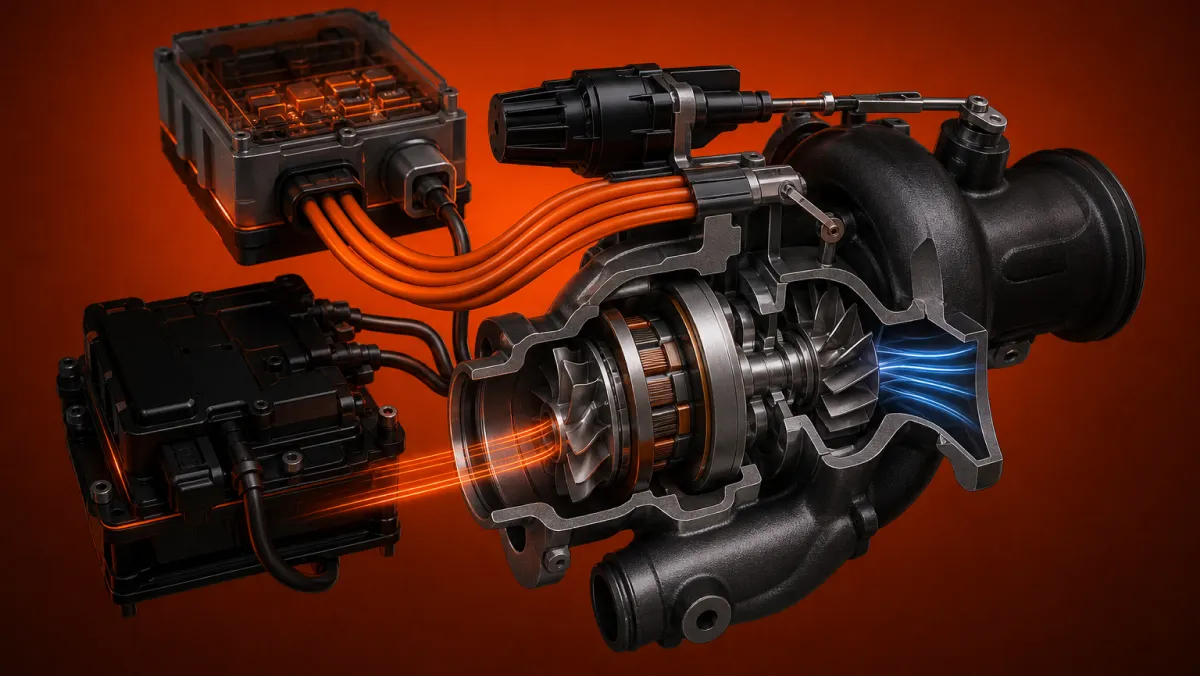
- External damage only. A failed wastegate actuator, damaged oil feed fitting, or broken clamp while the rotating group is healthy. VGT actuator faults are a separate service item on most electronic units and can be replaced without touching the CHRA.
- Oil-related failure caught early. A blocked feed line or extended oil change interval that wore the bearings but was caught before the wheels contacted the housings. Fix the oil supply problem first, or the rebuilt turbo fails the same way.
- Discontinued or hard-to-source models. When new assemblies are on backorder or no longer produced, rebuilding the original core is often the only practical option.
- Housings and wheels pass inspection. This is the hard gate. If the shop cannot confirm crack-free housings and damage-free wheels with measurements, the rebuild decision has no foundation.
When You Should Replace Instead of Rebuild
Some failure modes take a turbo out of the rebuildable category entirely. Replace the unit when inspection finds any of the following:
- Wheel-to-housing contact. Compressor or turbine blades that have rubbed the housing leave the wheel out of balance and often bent. Even with a new wheel, a housing with deep rub scoring or distorted bore geometry is scrap.
- Cracked turbine housing. Common on high-EGR engines after repeated hot shutdowns. Cracks around the wastegate port or inlet flange cannot be reliably repaired for commercial duty.
- Bent or scored shaft. A shaft damaged by oil starvation or a bearing collapse cannot be brought back with polishing. Replacement shafts plus a new CHRA usually cost more than a remanufactured turbo.
- Catastrophic failure. If the turbo shed blades, fragments went downstream into the intercooler and possibly the cylinders. The turbo needs replacement, and the intake tract needs inspection before the new unit goes on.
- Foreign object damage. Debris through the compressor side typically damages the wheel, bearings, and seals together. The repair bill approaches replacement cost.
- Repeated failures. A turbo on its second rebuild, or one that failed again within a year, is telling you the root cause was never fixed. Diagnose the engine side (oil pressure, crankcase pressure, EGR condition, boost leaks) and install a fresh unit.
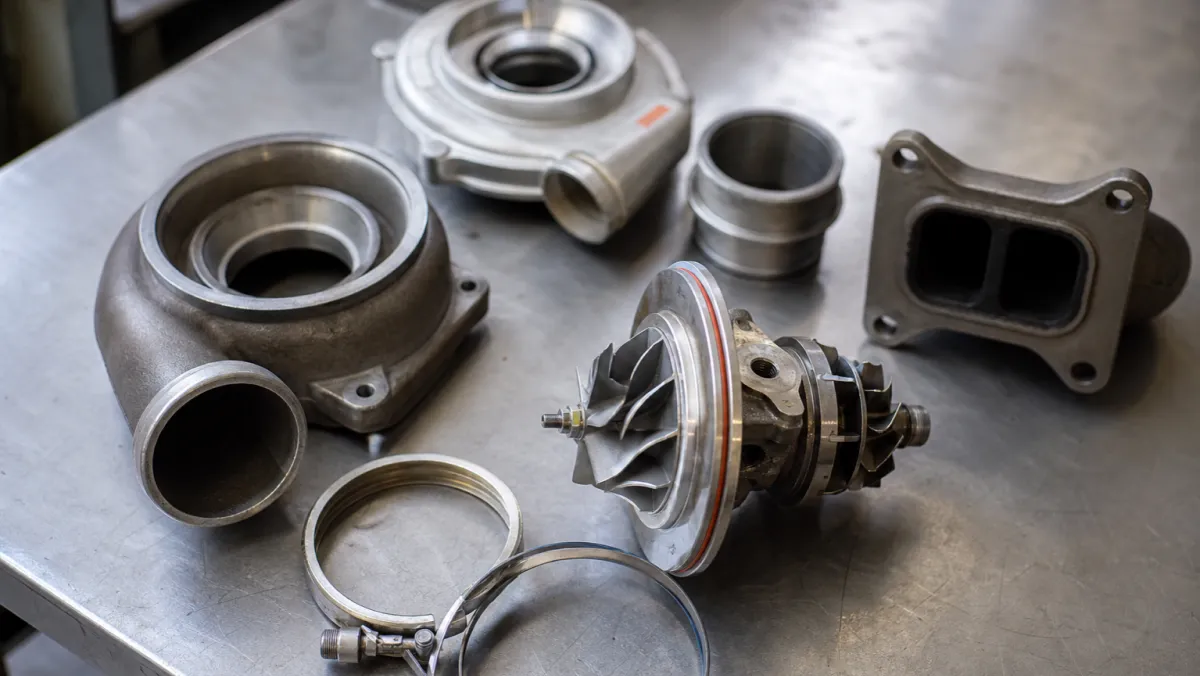
For fleet buyers, there is an operational argument as well. A rebuild ties up the truck while the core is out and on a bench, and quality varies with the shop. A stocked replacement or remanufactured unit from a turbocharger wholesale supplier gets the truck back in service in one bay visit, which is usually worth more than the parts savings when downtime runs $500 to $1,000 per day.
Cost Comparison: Rebuild, Remanufactured, and New
Realistic numbers for a heavy-duty diesel turbo in the North American market:
| Cost item | Rebuild | Remanufactured | New |
|---|---|---|---|
| Parts | Repair kit $40–$200; CHRA $400–$900 if needed | Included in unit price | Included in unit price |
| Labor / service | Shop labor $400–$900 (3–10 hours; VGT units at the high end) | Core charge $400–$800, refunded on return | None beyond installation |
| Total typical outlay | $500–$1,200 | $2,100–$3,600 | $3,000–$10,000 (VGT units on ISX, X15, DD15 at the top) |
| Downtime | Days to weeks depending on shop queue | Same-day swap if stocked | Same-day swap if stocked |
A rebuild saves 50 to 70 percent against a new OEM unit when the core qualifies. The savings shrink fast once the CHRA needs replacement, and disappear when the housings are bad. For a detailed breakdown of what drives turbo pricing across all three channels, see our turbocharger replacement cost guide.
What to Expect From a Rebuilt Turbo
A correctly rebuilt turbo with new bearings, seals, and thrust components, balanced at speed, delivers performance indistinguishable from the original unit at installation. Service life depends on factors outside the rebuild itself: oil quality and change interval, warm-up and cool-down practice, air filtration, and whether the original failure cause was corrected. In fleet service, a quality rebuild routinely runs several hundred thousand miles when the engine side is healthy.
Set expectations accordingly. A rebuild restores worn soft parts; it does not reverse metal fatigue in housings or erosion on wheels that passed inspection but are aged. Warranty terms reflect this: most rebuild shops cover 90 days to one year, against one to two years on new and remanufactured units. Ask for the warranty in writing, and ask specifically what it covers, bearing failure, seal leakage, and workmanship should all be listed.
How to Choose a Turbo Rebuild Shop
The quality gap between rebuilders is wide. A five-point check separates professional operations from parts-swappers:
- Ask about balancing equipment. The shop should run a VSR or equivalent high-speed balancer and provide a balance report. A shop that only checks static balance is not equipped for modern turbos.
- Ask what gets measured. Shaft journals, bearing bores, and thrust dimensions should be measured against specification, with the numbers recorded.
- Ask which parts are replaced. The answer should be "all wear parts, every time," from a kit matched to your turbo's part number.
- Ask about actuator and VGT work. On electronic VGT turbos (HE300VG, HE400VG, HE451VE and similar), the actuator must be calibrated after reassembly. Shops without calibration capability should not quote these units.
- Ask for the inspection result before work starts. A legitimate shop inspects first, tells you whether the core is rebuildable, and quotes based on findings. An estimate fee of $90 to $190 is normal and usually waived if you proceed.
Planning Your Next Step
Start with a teardown inspection and get the findings in writing. If the core qualifies, a professional rebuild with VSR balancing is the most economical repair. If it does not, a remanufactured or new replacement is the lower-risk spend. UPAPSI supplies new replacement turbochargers for Cummins, Detroit, Caterpillar, PACCAR, Volvo, and other major diesel applications, along with model-matched repair kits and rotating components for shops and fleets doing their own rebuilds. Browse our full turbocharger catalog or contact our team with your turbo's nameplate part number for a matched quote, including volume pricing for fleet and wholesale buyers.

FAQ
Yes, when the core qualifies. A standard rebuild with a repair kit and professional labor typically runs $500 to $1,200, compared with $2,100 to $3,600 for a remanufactured unit and $3,000 to $10,000 for a new heavy-duty turbo. The saving holds only if the housings, shaft, and wheels pass inspection. Once the CHRA or a housing needs replacement, the rebuild bill approaches the price of a remanufactured turbo and replacement becomes the better value.
A correctly rebuilt turbo with new bearings, seals, and thrust parts, balanced at operating speed, routinely delivers several hundred thousand miles in fleet service. Lifespan depends less on the rebuild itself than on oil quality, oil change intervals, air filtration, and whether the original failure cause was fixed. If the root cause, such as a restricted oil feed line, is not corrected, a rebuilt turbo fails the same way the old one did.
Disassembly is within reach of an experienced DIY mechanic, but a complete rebuild is not practical without workshop equipment. The rotating assembly must be balanced at operating speed on a VSR machine, and balance errors measured in fractions of a gram destroy new bearings at 100,000 rpm. A common compromise is doing the removal and installation yourself and sending the turbo to a rebuild shop for the internal work.
A standard rebuild replaces all wear components from a model-matched repair kit: journal or ball bearings, thrust bearing and thrust collar, piston rings, oil seals, O-rings, and fasteners. If the rotating group is worn, the rebuild moves up to a new shaft-and-wheel assembly or a complete replacement CHRA. Housings are reused only after passing crack and dimension inspection.
In terms of performance at installation, a properly rebuilt turbo with verified balancing is indistinguishable from new. The differences are in inspection depth and warranty. A rebuild repairs what failed on your core; a new or remanufactured unit has every wear component new and is flow-tested as a complete assembly. Rebuild warranties typically run 90 days to one year, against one to two years on new and remanufactured units.
The core is rebuildable when the compressor and turbine housings are crack-free, the shaft and wheels show no contact damage, and wear is limited to bearings, seals, and rings. Any wheel-to-housing rub, cracked turbine housing, bent or scored shaft, or foreign object damage takes the unit out of the rebuildable category. A rebuild shop should confirm this in writing after teardown inspection before quoting.
The bench work itself takes 3 to 10 hours depending on the turbo type, with VGT units at the high end because of actuator calibration. Total turnaround is usually a few days to two weeks depending on the shop's queue and parts availability. For trucks that cannot afford the wait, a stocked replacement or remanufactured unit installed in one bay visit is often cheaper than the downtime.