Cat C15 Turbo: Single vs Twin, Common Failures & Replacement Cost

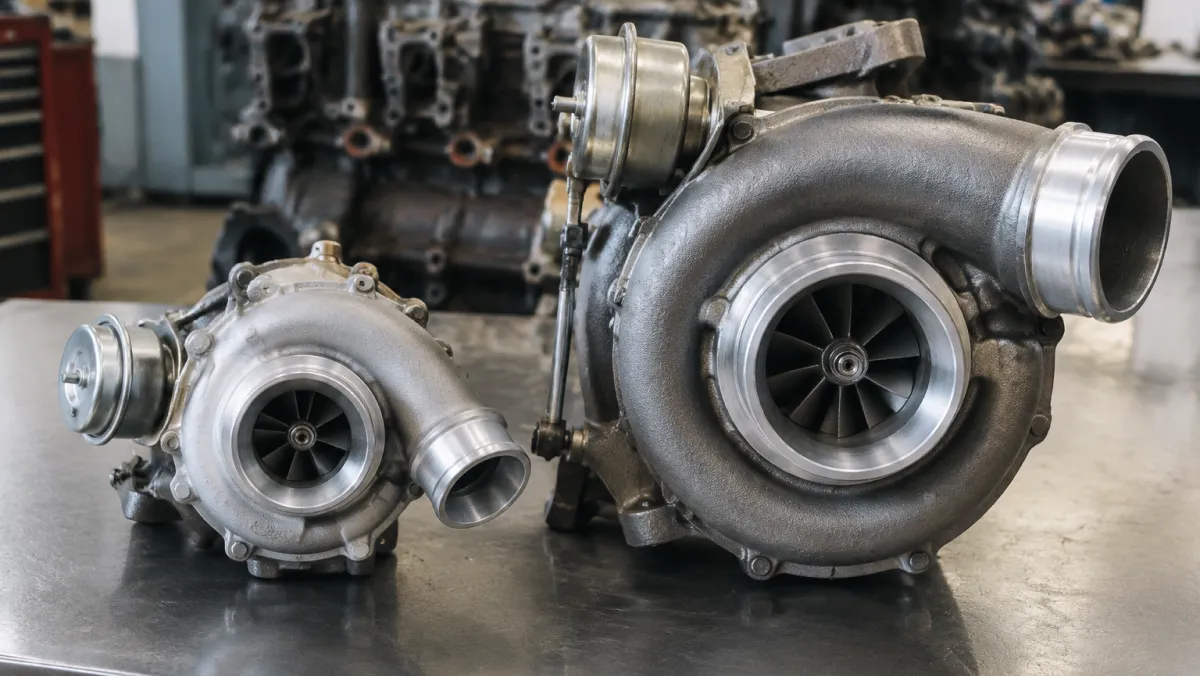
Ask ten Caterpillar C15 owners what turbo their engine runs, and you may get three different answers, all of them correct. The Cat C15 was built in two distinct turbocharger configurations. Pre-ACERT engines with 6NZ or MBN serial prefixes use a single fixed-geometry turbocharger, most commonly from the BorgWarner S410G family. ACERT engines, carrying BXS, MXS, NXS, or SDP prefixes, mostly run a series sequential twin-turbo system that pairs a high-pressure stage with a low-pressure stage. That one detail, the serial prefix on the engine data tag, determines which cat c15 turbo fits, how it tends to fail, and what a correct replacement looks like.
It is also where most ordering mistakes begin. A high-pressure ACERT turbo will not bolt onto a single-turbo 6NZ. A C13 unit that looks close will not hold up on a 15.2-liter C15. And a turbo that matches the part number but not the engine's ECM calibration and VVT strategy can cost a fleet days of downtime before anyone finds the real problem.
This guide walks through the C15 turbo lineup the way a buyer actually needs it: how to identify your configuration by serial prefix, how the single and twin systems differ, which failures to watch for and how to catch them early, what can extend turbo life past 300,000 miles, and what to verify before placing a replacement order. Whether you maintain one truck or source parts for an entire fleet, you will finish this guide knowing exactly which questions to ask before you buy.
Which Turbo Does a Cat C15 Use? It Depends on Your Engine Serial Prefix
The serial prefix is printed on the engine data tag, and it tells you more than the model year ever will. Caterpillar moved the C15 through two major phases: the pre-ACERT engines (6NZ and MBN) carrying fixed-geometry single turbos, and the ACERT lineup (BXS, MXS, NXS, SDP) that adopted a series sequential twin-turbo arrangement on most on-highway applications. The table below maps each prefix family to its factory turbo configuration and the part numbers buyers most often cross-reference when ordering.
| Serial Prefix | Engine Phase | Turbo Configuration | Common Turbo Models | Frequently Crossed OE Numbers |
|---|---|---|---|---|
| 6NZ, MBN | Pre-ACERT | Single, fixed-geometry | BorgWarner S410G family | 177148, 169227, 170354, 704604-0007 |
| BXS, MXS, NXS | ACERT | Series twin-turbo (high-pressure plus low-pressure) | Garrett GTA4294BS (HP) with GTA5518B (LP) | HP: 10R1887, 10R2407, 2331592, 2331596; LP: 231-6616, 232-1811, 10R1888 |
| SDP | Late ACERT | Series twin-turbo, revised calibrations | GTA4294BS / GTA5518B revisions | Confirm by ESN before ordering |
One caveat is worth stating plainly: a minority of ACERT and industrial C15 applications left the factory with a single variable-geometry turbo rather than the twin set. Prefix gives you the configuration in most cases, but the engine serial number settles it. If there is any doubt, confirm the configuration by ESN before you order.
The Pre-ACERT Single Turbos (6NZ and MBN)
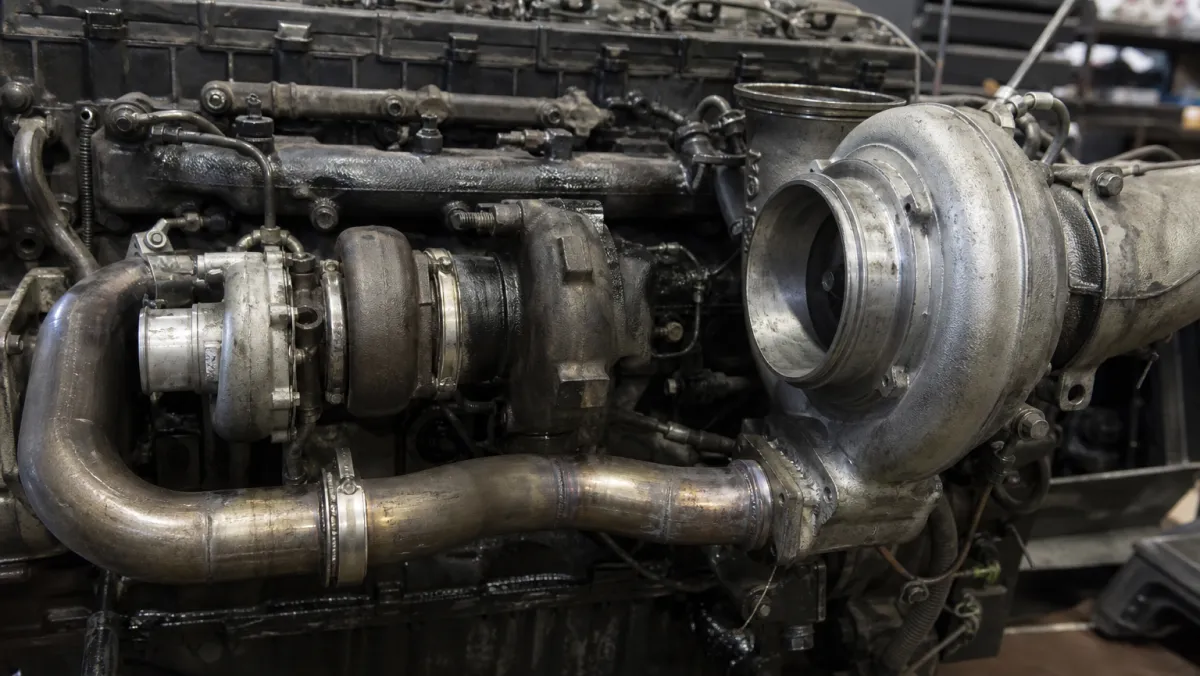
The 6NZ earned its reputation as one of the most durable over-the-road engines Caterpillar built, and its turbo hardware matches that character: a fixed-geometry single turbo, mechanically simple, easy to diagnose, and supported by a deep parts supply chain. The MBN bridge engines that followed kept the same basic architecture. For buyers, that simplicity means straightforward fitment and predictable service work.
The ACERT Twin-Turbo Era (BXS, MXS, NXS, SDP)
ACERT technology was Caterpillar's answer to tightening EPA emissions rules, and the twin-turbo arrangement was central to it. A smaller high-pressure turbo works in sequence with a larger low-pressure unit, cutting lag and broadening the torque curve while helping the engine meet emissions targets. The trade-off is complexity: interstage plumbing, more actuators and sensors, and roughly double the failure points of a single-turbo truck.
Single-Turbo Cat C15 Turbos: The S410G Family Explained
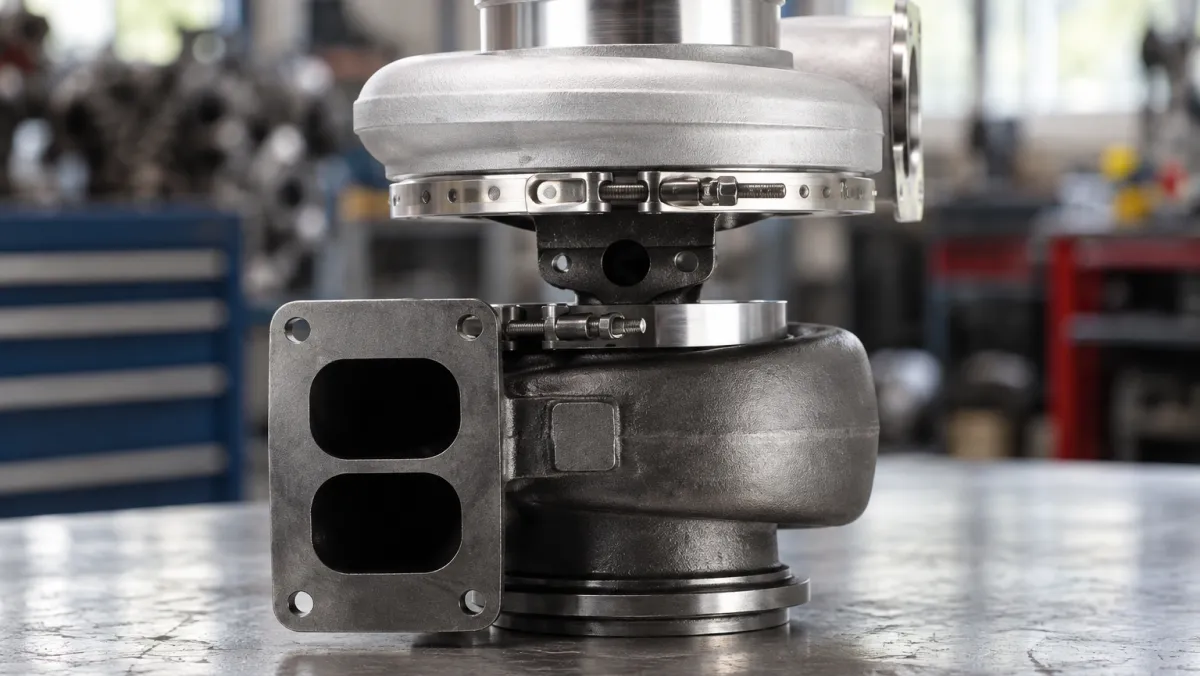
On 6NZ and MBN engines, the BorgWarner S410G is the turbo most buyers will cross when ordering. It is a fixed-geometry, journal-bearing unit with a huge installed base, which keeps fitment predictable and parts available. Our own catalog crosses the S410G family across C15, C16, 3406E, and 3406C applications, including OE numbers 177148, 169227, and 170354, so matching by part number is usually a short conversation. You can see an example on our S410G turbocharger for Cat C15 and 3406E product page.
When evaluating a replacement or a used unit, the checks that matter are shaft play, compressor and turbine wheel condition, and wastegate function where fitted. Felt play at the compressor wheel means the bearings are done; nicked or bent blades mean the wheel is done. Neither is worth gambling on for a working truck.
One warning that saves shops real money: a turbo pulled from a C13 or C11 can physically bolt to a C15 manifold, but its flow characteristics and calibration do not match the larger 15.2-liter engine. Expect persistent boost codes and a short service life. Match by OE number and ESN, never by flange pattern.
The ACERT Twin-Turbo System: How High and Low Pressure Stages Work Together
In a series sequential arrangement, exhaust energy drives the small high-pressure turbo first, then flows to the larger low-pressure turbo. Intake air is compressed twice, once by each stage. The result is strong low-RPM response with the airflow a 15.2-liter engine needs at the top of the rev range, which is exactly what a heavy truck pulling grades asks for.
The High-Pressure Stage (GTA4294BS)
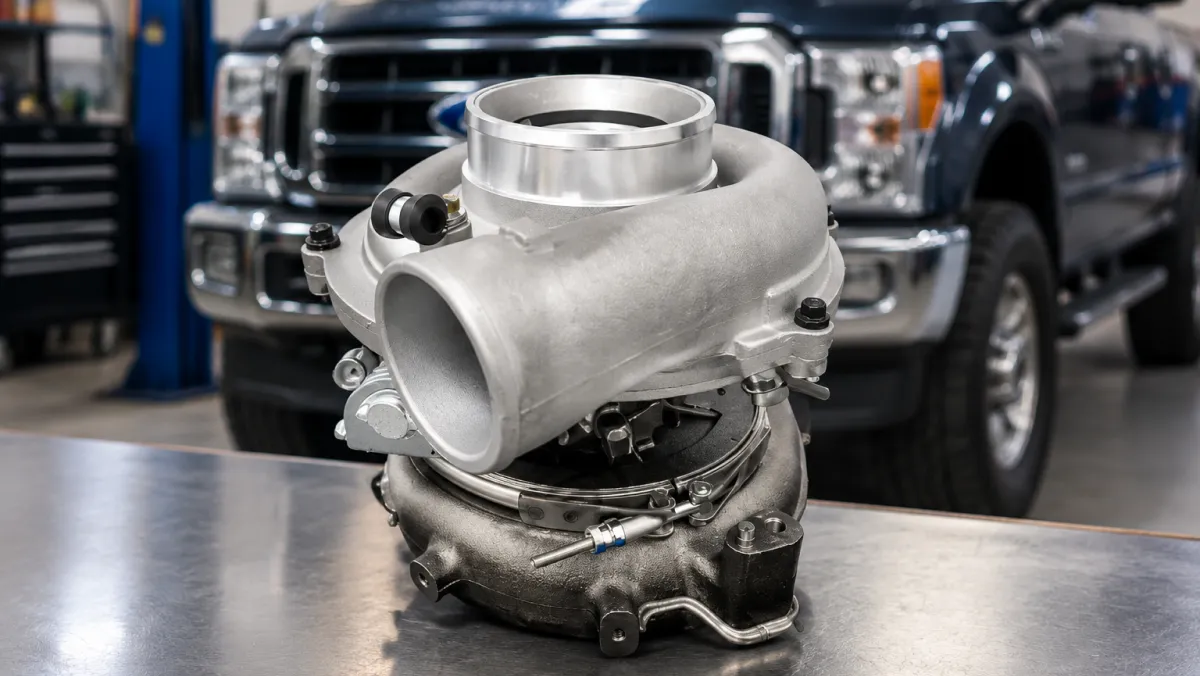
The high-pressure turbo is the smaller, faster-spinning unit mounted closest to the engine. It spools early, does much of the work at low and mid RPM, and lives in the hottest part of the system, which is why it tends to show wear first. Common OE crosses include 10R1887, 10R2407, 2331592, and 2331596, as listed on our GTA4294BS C15 ACERT high-pressure turbocharger page.
The Low-Pressure Stage (GTA5518B)
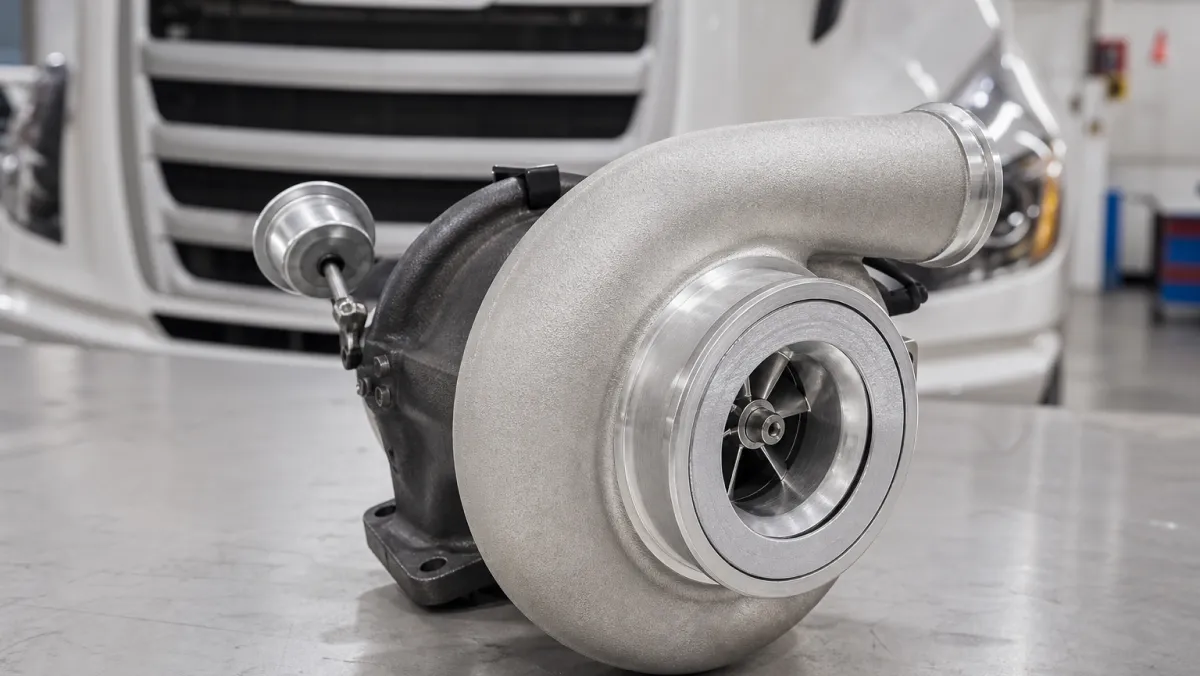
The low-pressure turbo is the larger unit that feeds the high-pressure stage and handles the bulk of total airflow at higher engine speeds. Frequent OE crosses include 231-6616, 232-1811, and 10R1888. Because the two stages work as a system, a failure in one often loads the other; when either stage is replaced, the healthy-looking unit still deserves a shaft-play and actuator check.
Why Caterpillar Went Twin-Turbo
The twin arrangement let the C15 meet EPA emissions targets without giving up the low-end torque that vocational and mountain-route trucks depend on. For a fleet, the practical takeaway is simpler: the system works well when maintained, but it has more components to wear, more plumbing to leak, and more calibration dependencies than the older single-turbo trucks. Diagnosis time and parts planning should both be budgeted accordingly.
Common Cat C15 Turbo Failures and Symptoms
Most C15 turbo failures are not random. They trace back to oil, heat, or wear that could have been caught earlier, and the truck usually warns you first. The table below maps the symptoms drivers report to the causes shops most often find.
| Symptom | Likely Cause | Severity |
|---|---|---|
| High-pitched whine that changes with RPM | Worn journal bearings, shaft play | High; plan replacement soon |
| Blue smoke under load, oil in intake piping | Failed seals or restricted oil drain-back | High |
| Loss of power, low boost, derate codes | Actuator or wastegate fault | Medium to high |
| Grinding or rattling from the turbo | Wheel contact or foreign object damage | Critical; stop and inspect |
| Black smoke, sluggish throttle | Boost leak or carbon buildup | Medium |
Bearing Wear and Oil Starvation
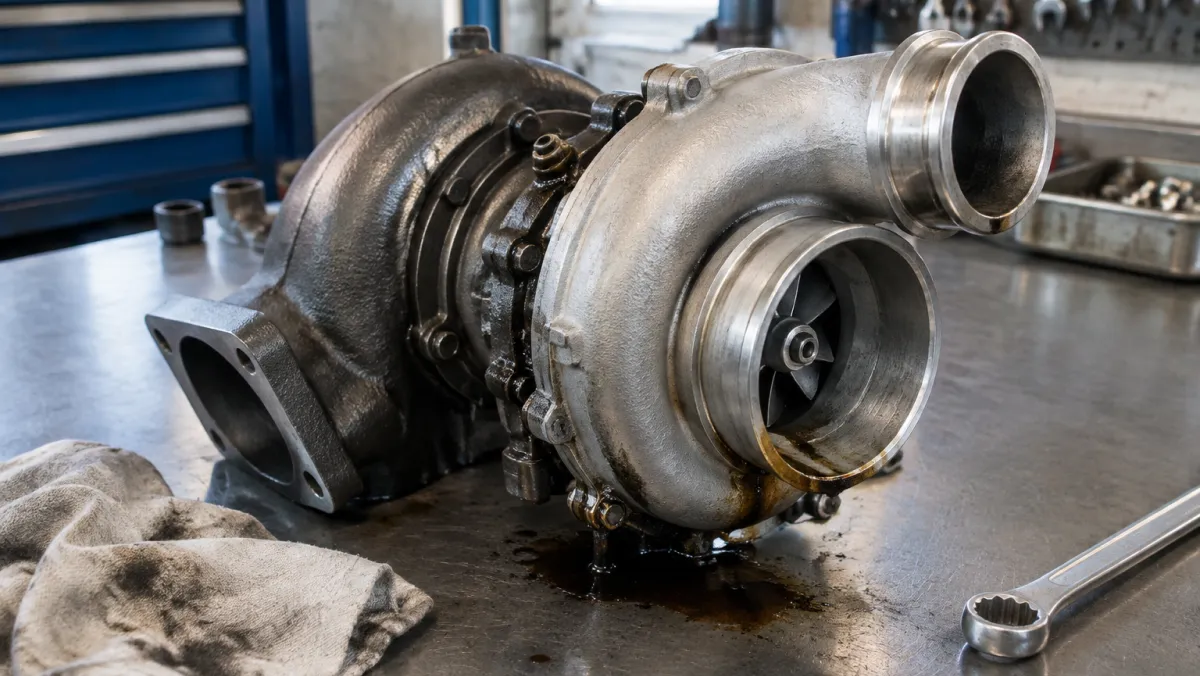
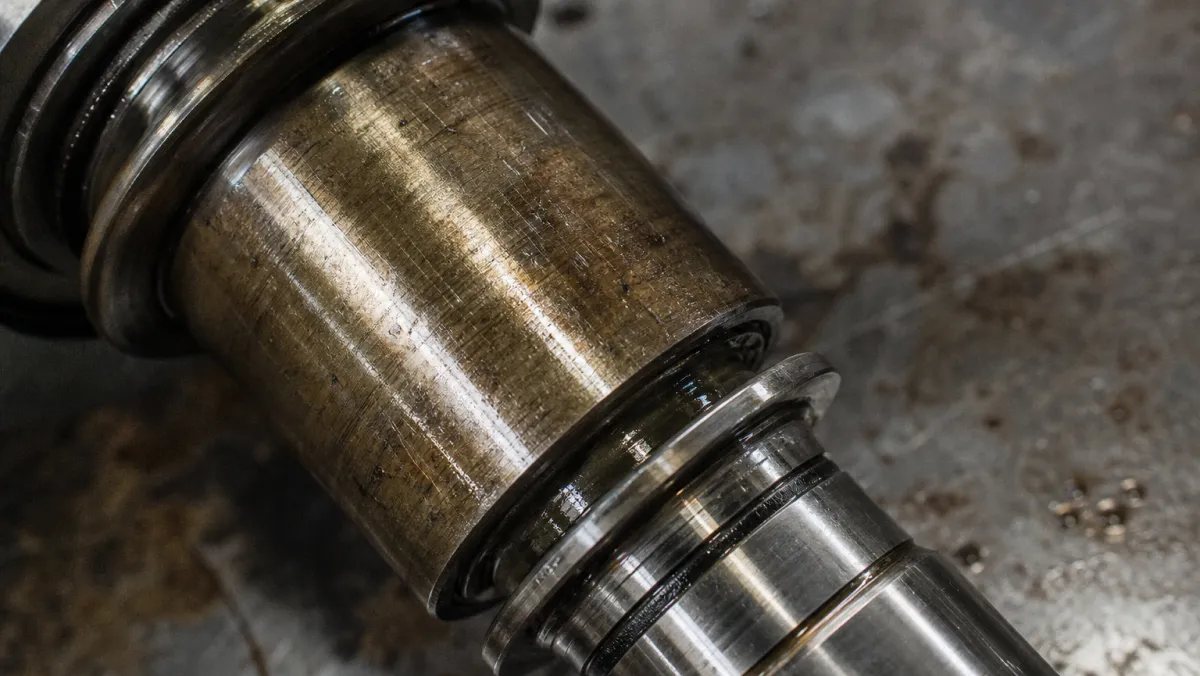
The journal bearing inside the turbo is fed by engine oil, and it is the most common failure point on the C15. Stretched drain intervals, contaminated oil, or a partially coked feed line starve the bearing and let the shaft develop play. A high-pitched whine that tracks throttle position is the classic early warning.
VVT Actuator Failure: Test It Before You Condemn the Turbo
On ACERT engines, the variable-geometry actuator commonly wears out well before the turbo's core bearings do. A truck throwing intermittent boost codes often needs an actuator, not a full turbo. Testing the actuator's full range of travel with a scan tool takes minutes, and it is the cheaper fix and the more common failure point, so it belongs at the top of the diagnostic list.
Carbon Coking and Foreign Object Damage
Hot shutdowns bake the oil sitting in the center housing into hard carbon, which then grinds away at the bearings on the next cold start. On the intake side, a failed air filter or debris from a previously failed turbo will nick or shear compressor blades; even small leading-edge damage destroys balance. Both causes are preventable with cooldown habits and intake inspections. For a broader symptom-by-symptom walkthrough, see our guide to diesel turbo failure symptoms.
As a baseline reference, a healthy C15 ACERT typically holds peak boost around 35 to 40 psi under full load, depending on tune and application. A truck that reads noticeably below that band under load is telling you the turbo is worn, the system leaks, or the installed unit is mismatched.
How to Make Your C15 Turbo Last 300,000+ Miles
Turbo life on a C15 is mostly maintenance behavior. On a well-maintained engine, 300,000 to 400,000 miles is a realistic service life, and the habits that get you there are neither exotic nor expensive.
- Change engine oil on roughly a 15,000-mile schedule, shorter for severe service. Clean oil of the correct heavy-duty specification is the single biggest life factor for the turbo bearing.
- Idle 3 to 5 minutes before shutdown after hard runs. This one habit prevents most carbon coking.
- Check boost pressure and actuator travel about every 25,000 miles so drift is caught before it becomes a failure.
- Inspect and clean the oil drain-back line around every 50,000 miles; restricted drainage pressurizes the center housing and pushes oil past the seals.
- Inspect the air filter and intake piping at every service. Foreign object damage is a turbo killer with an entirely preventable cause.
- Fix boost leaks promptly. A turbo that over-speeds to compensate for a leak is wearing its bearings out early.
Replacing a Cat C15 Turbo: What Buyers Need to Know
Match by OE Number and ESN, Not by Engine Name
The C15 name spans more than a decade of production and dozens of part numbers, so the engine name alone cannot specify a turbo. The reliable path is the OE number on the turbo nameplate plus the engine serial number. Our catalog crosses the most common C15 units, including the S410G family (177148, 169227, 170354), the GTA4294BS high-pressure stage (10R1887, 10R2407, 2331592, 2331596), and the GTA5518B low-pressure stage (231-6616, 232-1811, 10R1888). You can browse the full Caterpillar turbocharger range, or send us the numbers and we will match them for you.
The ECM Calibration and VVT Matching Trap
On ACERT engines, the variable-geometry turbo talks to the ECM in real time. A turbo pulled from a different calibration family will often run, but the ECM cannot command vane position correctly, and boost fluctuation or fault codes show up within the first few hundred miles. If the replacement is not a like-for-like OE match, budget ECM calibration into the job from the start rather than discovering it as a comeback.
New vs Remanufactured: The Downtime Math
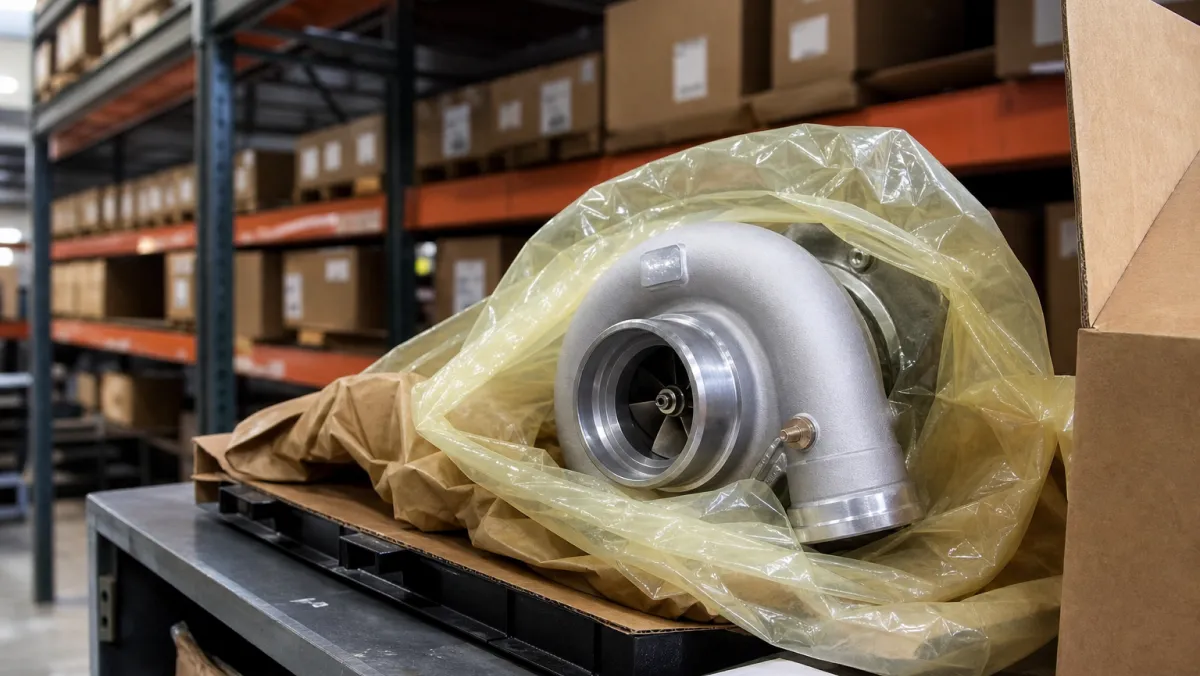
Remanufactured turbos cost less up front, but they carry a wear history you cannot see and usually require a core return. For shops and fleets where a tied-up bay or a parked truck costs more than the part, the math often favors new. We supply brand-new, never-remanufactured turbochargers stocked in our US warehouse: orders are processed within 24 hours, every unit carries a one-year unlimited-mileage warranty, and there is no core charge to manage.
Installation Essentials
- Prime the turbo: pour clean engine oil into the feed port and spin the shaft by hand before first start. Dry starts scar new bearings immediately.
- Replace the oil feed line instead of reusing a line that may be partially coked.
- Verify the drain-back path to the oil pan is clear before bolting everything up.
- Find out why the old turbo failed and fix that first, whether it was intake debris, a boost leak, or coking.
- Use new gaskets and hardware, and torque the V-band clamps and mounting bolts evenly.
- After installation, idle 3 to 5 minutes, confirm oil pressure, check for leaks, and verify actuator travel with a scan tool before loading the truck.
The bottom line: when you order a cat c15 turbo, start with the serial prefix and the OE number, decide how much calibration work the job needs, and choose a supplier whose stock position and warranty protect your schedule. Send us your ESN or the OE number from the turbo nameplate, and we will confirm exact fitment against our US-stocked, brand-new inventory, backed by a one-year unlimited-mileage warranty and no core charge, before you commit to anything.

FAQ
It depends on the engine serial prefix. Pre-ACERT engines with 6NZ or MBN prefixes use a single fixed-geometry turbo, most often from the BorgWarner S410G family. ACERT engines (BXS, MXS, NXS, SDP) mostly use a series twin-turbo set pairing a GTA4294BS high-pressure stage with a GTA5518B low-pressure stage. Confirm by engine serial number before ordering.
A healthy C15 ACERT typically holds peak boost around 35 to 40 psi under full load, depending on tune and application. Readings noticeably below that band under load usually point to a worn turbo, a boost leak, or a mismatched replacement unit.
With clean oil, sensible change intervals, and proper cooldown habits, 300,000 to 400,000 miles is a realistic service life, and many units go further. Hot shutdowns, stretched drain intervals, and intake leaks are the habits that shorten it most.
Conversion kits exist and are common in the performance market, but the trade-offs for a working truck are real: ECM recalibration, changes to emissions hardware, and potential compliance issues depending on local emissions regulations. For most fleets, keeping the factory configuration and replacing like-for-like is the lower-risk path.
Intermittent boost codes, boost that fluctuates under steady load, and slow vane response are the classic signs. On ACERT engines the actuator often wears out before the turbo bearings do, so test full actuator travel with a scan tool before condemning the whole turbocharger.
It may physically bolt up, but the flow characteristics and VVT calibration do not match the larger C15. Expect persistent boost codes, weak performance, and shortened turbo life. Match by OE number and engine serial number instead of by flange.
For shops and fleets, often yes. A brand-new unit carries no unknown wear history and needs no core return; ours ship from US stock with a one-year unlimited-mileage warranty and no core charge. When downtime costs more than the part, new is usually the better math.