S300 vs S400 Turbo: Spool, Power Range, and Which Frame Fits Your Truck
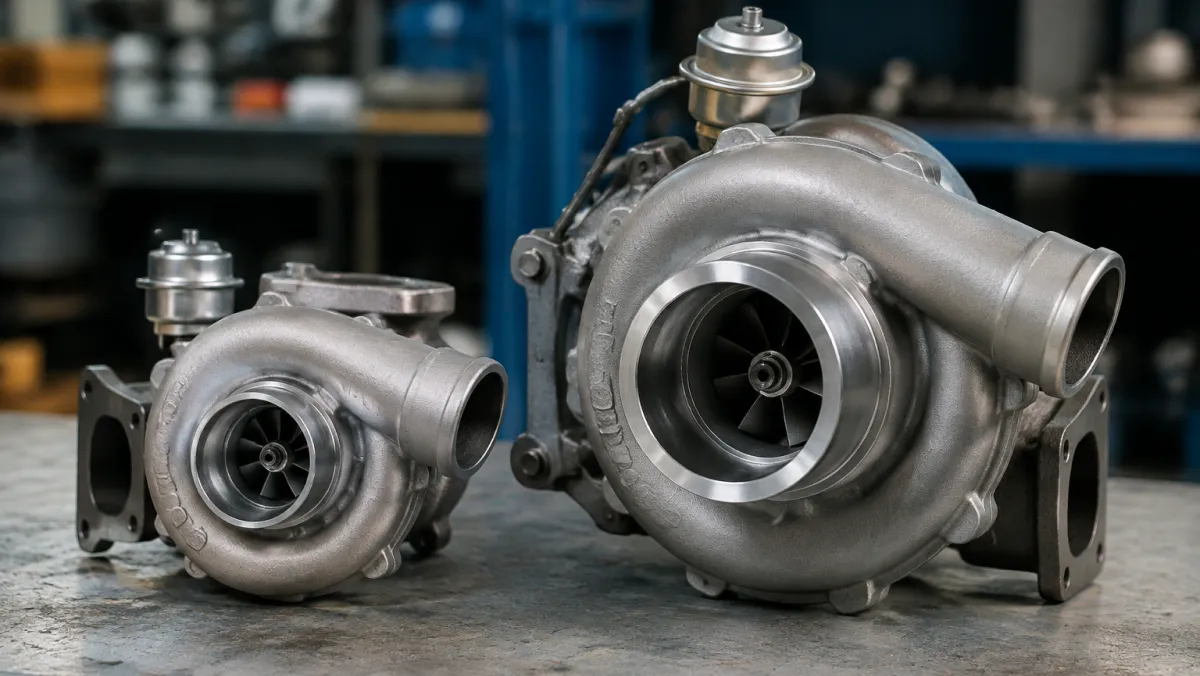
The short answer: an S300 is the frame for trucks that tow and daily drive — it lights early and makes boost at the rpm you actually use. An S400 is the frame for builds chasing four-digit power, or for the low-pressure slot in a compound setup. The practical crossover sits around 800 hp. Below that, an S400's extra ceiling mostly buys you lag; above it, an S300 is working harder than it should. Here's how the two frames actually differ, and how to tell which one your truck wants.
S300 vs S400 Turbo: Quick Answer
Both are BorgWarner S-series frame families, and everything else follows from the frame:
| S300 | S400 | |
|---|---|---|
| Frame class | Medium frame | Large frame |
| Compressor wheel range | 57 to 80 mm | 64 to 88 mm |
| Practical power band | Up to roughly 820 hp | 820 to 1,500+ hp |
| Spool | Early; strong low and midrange | Later; comes alive at higher rpm |
| Towing | Yes — boost at working rpm | Not ideal as a single turbo |
| Best for | Daily drivers, tow rigs, street trucks | Big-power builds, race, compound low-pressure stage |
The power figures are practical working ranges, not compressor ceilings — individual wheels on both frames are rated higher on paper. The rest of this guide unpacks each row.
What Do S300 and S400 Actually Mean?
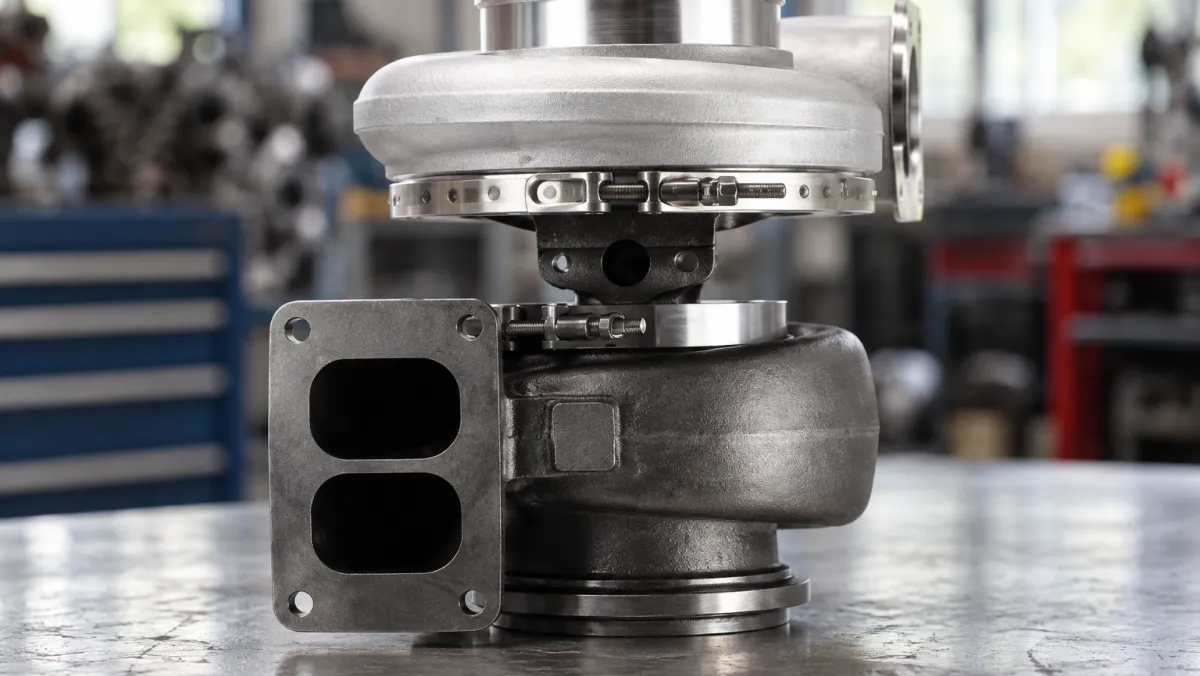
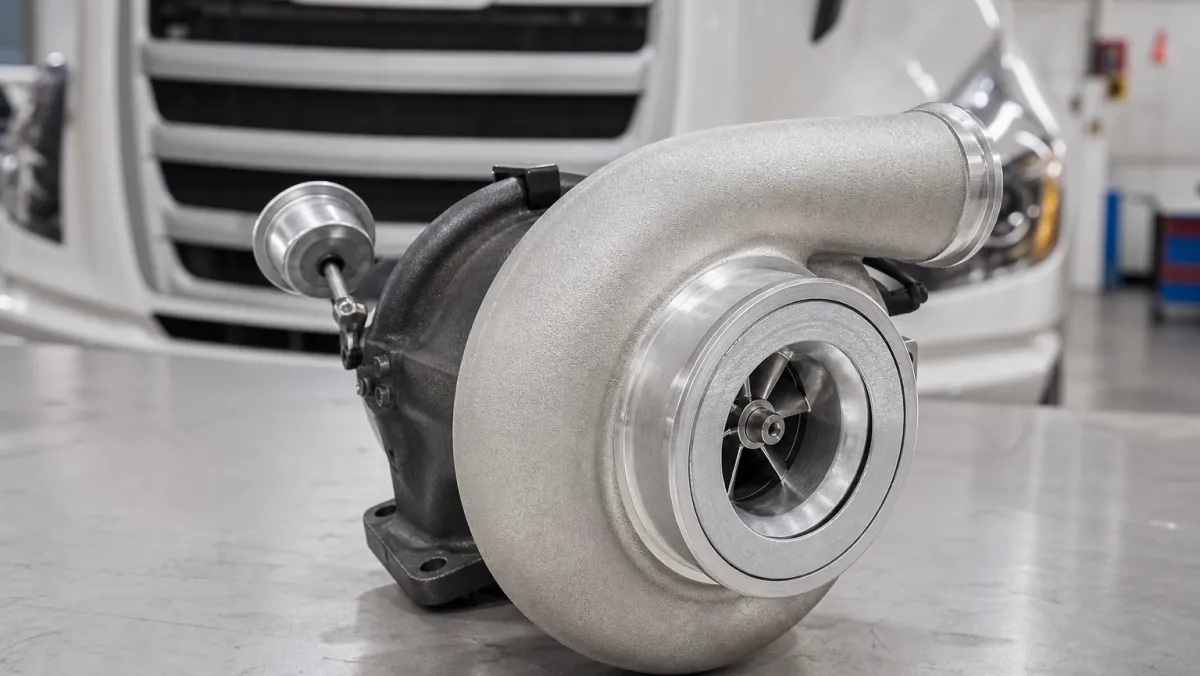
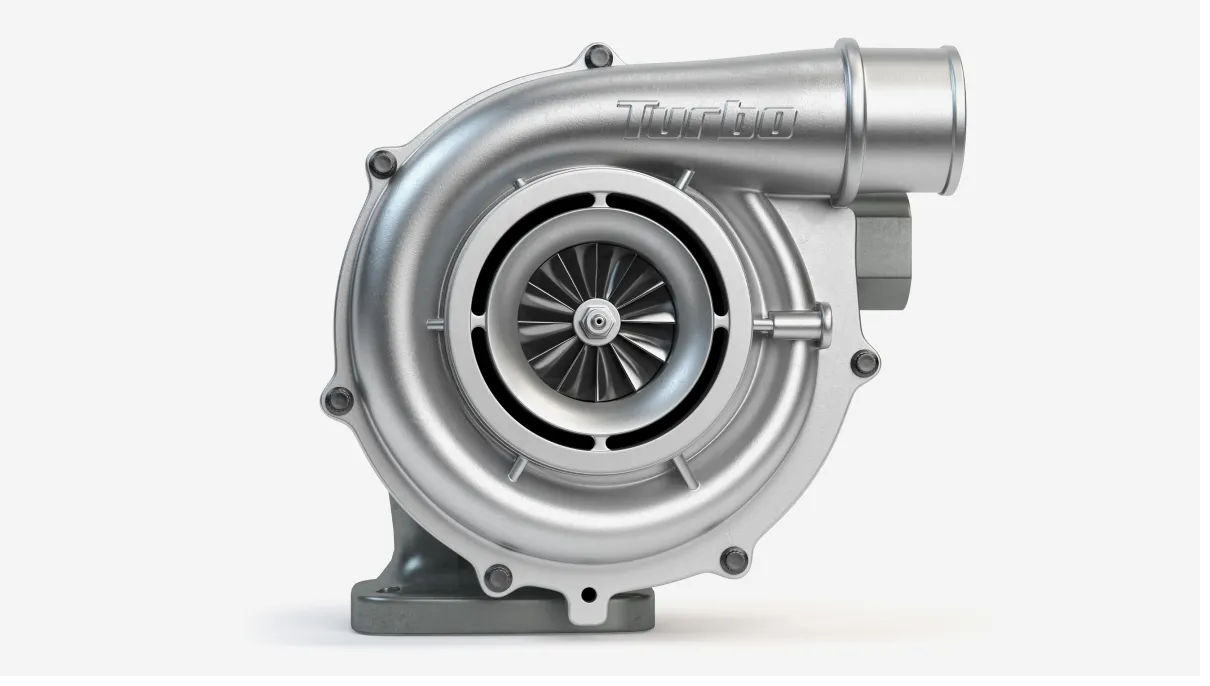
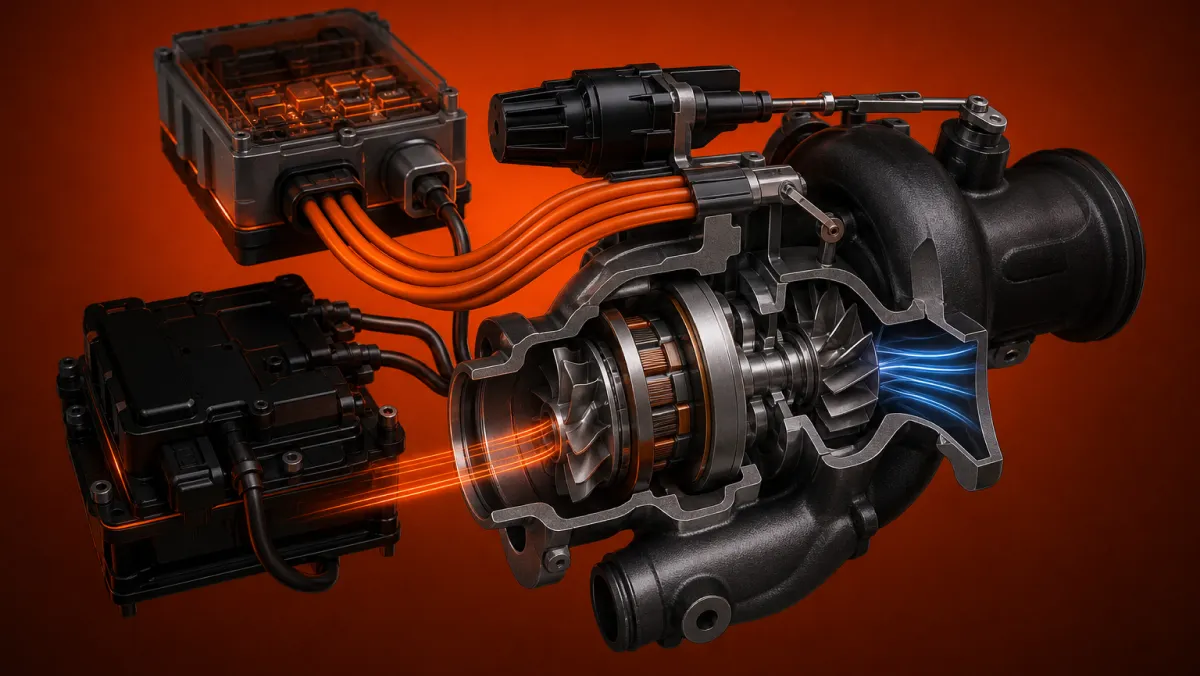
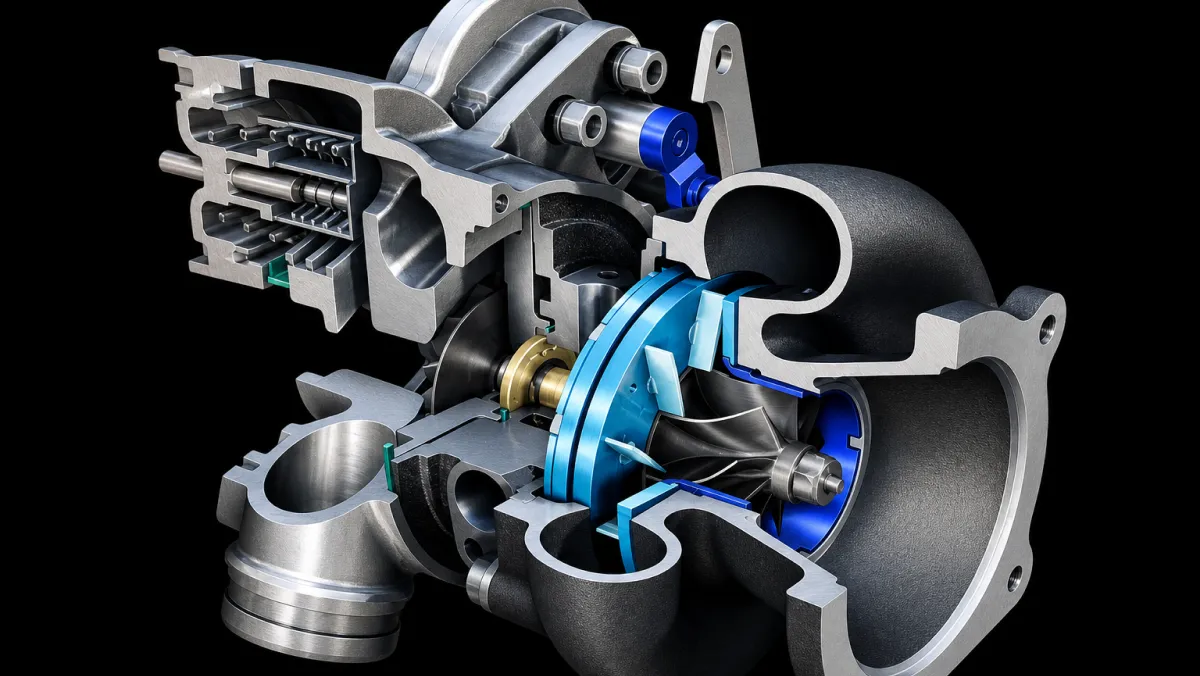
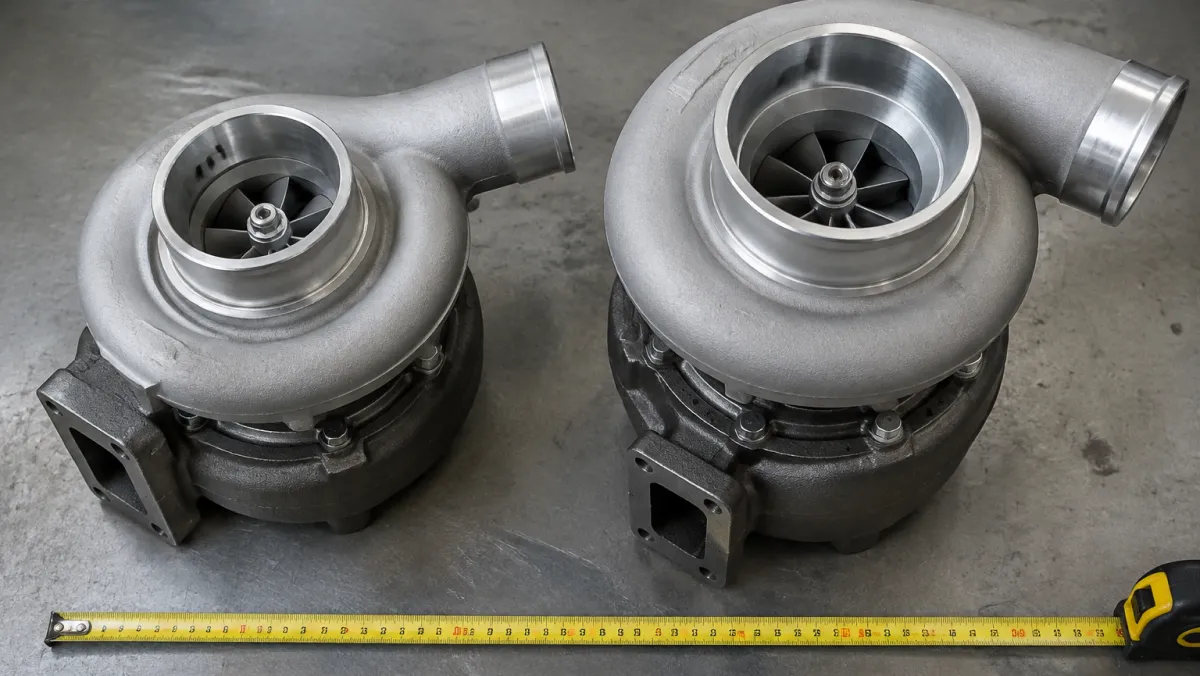
S300 and S400 are frame size families, most commonly associated with BorgWarner's S-series turbochargers. The frame is the turbo's basic architecture: bearing housing size, turbine wheel and housing options, and the flanges everything bolts to.
The numbers after the frame letter are the compressor wheel diameter in millimeters. An S363 is a 63 mm compressor wheel in an S300 frame; an S475 is a 75 mm wheel in an S400 frame. This is where buyers get tripped up: a 66 mm wheel in an S300 frame and a 67 mm wheel in an S400 frame sound identical, and they behave nothing alike, because the frame behind the wheel decides how exhaust energy reaches the turbine and how the whole unit packages on the engine.
Think of it like engine blocks: same family name, different displacement, different use case. When someone says a truck "runs an S400," they are describing the frame. What the truck actually does still depends on the compressor wheel, turbine housing, and A/R bolted into that frame — but the frame is the decision every other choice hangs on.
Two housing terms ride along with the frame decision and are worth knowing before you shop. T4 and T6 describe the turbine inlet flange footprint: T4 is the smaller, more common pattern on street setups; T6 is the larger pattern used on bigger housings and high-airflow builds. A/R is the turbine housing's volume ratio — a smaller A/R (0.91, 1.00) spools faster and carries more exhaust backpressure; a larger A/R (1.10, 1.32) spools slower but flows better up top. This is why two turbos with the same frame and wheel can drive completely differently, and why a listing that only tells you the frame is telling you half the story.
S300 vs S400 HP Range and Spool: Where Each Frame Works Best
Spool is the difference you feel from the driver's seat. An S300 lights early — exhaust energy spins the smaller assembly quickly, so boost arrives at low and mid rpm, where a street or tow truck actually lives. An S400's larger rotating assembly takes more exhaust energy to get moving; it comes alive higher in the rev range and keeps pulling past the point where an S300 runs out of map.
On power: an S300 frame works comfortably up to roughly 820 hp in diesel truck use, while an S400 covers 820 to 1,500+ hp depending on wheel and housing. That 820 figure is a selection crossover, not a hard limit — the largest S300-frame wheels are rated well above it. The logic is efficiency, not possibility: past about 820 hp, an S400 makes the same power with less strain, less heat, and room to grow, while below it an S400's ceiling mostly costs you response.
One misconception worth correcting, because it drives a lot of bad purchases: no turbo "adds" horsepower on its own. A turbocharger lets the engine burn more fuel by supplying the air to match it. The power ceiling on any build is set by the fuel system, engine internals, and tuning — the turbo decides whether that ceiling is reached comfortably or with the compressor shoved into a corner of its map. Size the frame to the power you will actually make, not the number on a wish list.
The cost of getting this wrong is not symmetric. An oversized turbo does not fail — it just never works in the rpm range you use, so the truck feels lazy, makes more heat, and asks more of the tune every mile. An undersized turbo at least tells you quickly: it runs out of air at the top and drives fine everywhere else. If the honest answer about your build is "mostly street, occasional pull," the smaller frame is almost always the one you will be happier with.
Is an S400 Good for Towing? S300 vs S400 by Use Case
Towing: the S300, in nearly every case. Towing wants boost at 1,500 to 2,000 rpm under sustained load — exactly where the smaller frame is strongest. An S400 single on a tow rig feels lazy below its boost threshold and runs hotter trying to catch up, which is the opposite of what a loaded trailer needs on a grade.
Daily driving: also the S300. Throttle response around town, merging, and part-throttle drivability all come from early spool. A frame sized for 1,000 hp spends its whole life bored at 40 hp of airflow in commuting traffic.
Race, drag, and pulling: the S400. Dedicated competition trucks live at wide-open throttle and high rpm, where the large frame's airflow ceiling is the entire point and its slower spool barely matters.
The honest middle: aggressive street trucks in the 600 to 800 hp range can go either way — a big S300 (S366-S369 class) keeps street manners; a small S400 (S467-S471 class) buys headroom at the cost of some low-end. The deciding question is whether the truck tows. If it does, stay on the S300 side.
S300 + S400 Compound Turbo Setups
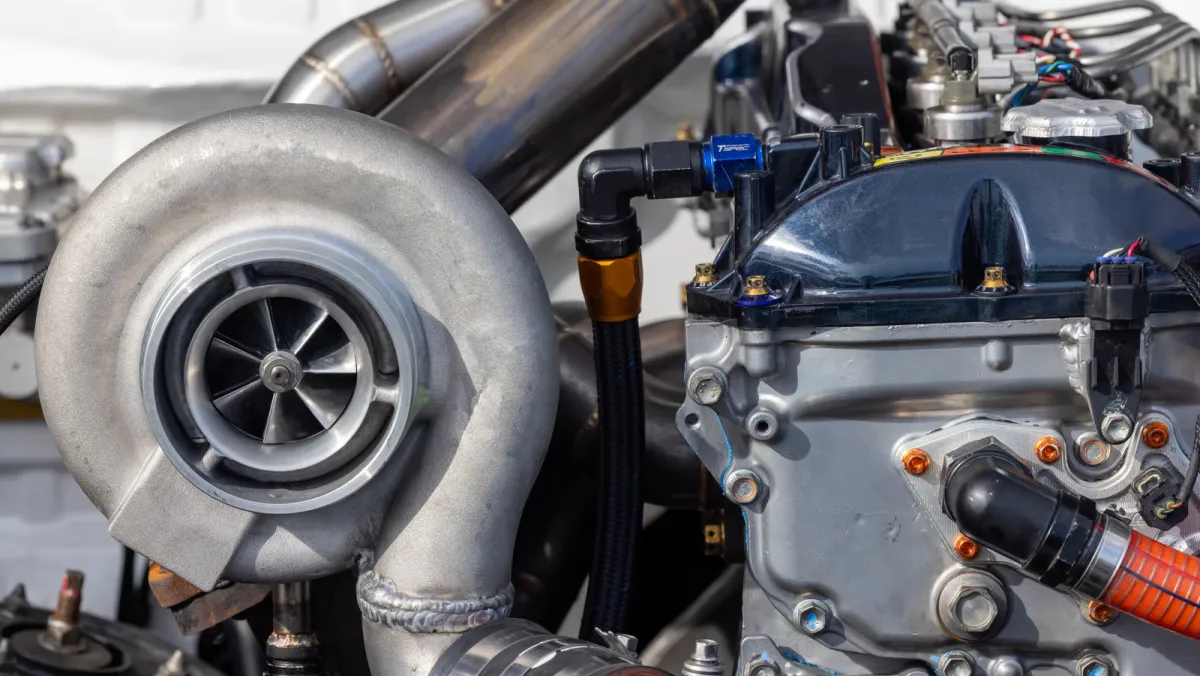
The reason this choice is not always either/or: compounds. A common high-power arrangement runs an S400 as the atmospheric (low-pressure) charger feeding a smaller S300 as the high-pressure unit. The S300 lights immediately and covers low-rpm response; the S400 carries the top end once exhaust energy builds. You get most of both frames' strengths, at the cost of complexity, packaging, and a second turbo to buy and plumb.
This is the standard answer for a truck that genuinely needs to tow on weekdays and race on weekends. The staging logic, piping layout, and which engines ship with factory compounds are covered in our guide to compound turbo systems — worth reading before you price a twin setup.
Switching From S300 to S400: Flange, Oil Drain, and Hardware That Must Change
Moving between frames is not a turbo swap — it is a hardware swap. The two frames share almost nothing at the connection points, and each mismatch has its own price if you discover it after ordering:
- Manifold. The turbine flange footprints differ between frames. Wrong frame means a new manifold — the single most expensive line in this list, and the one that turns a "quick upgrade" into a weekend of fabrication.
- Downpipe. The S300 turbine discharge is a 4.25-inch marmon flange; the S400 uses a 4.62-inch half marmon on T4 housings or a 5.75-inch marmon on T6. They look nearly identical in photos and will not clamp together. A wrong downpipe is a return shipment plus a week of downtime.
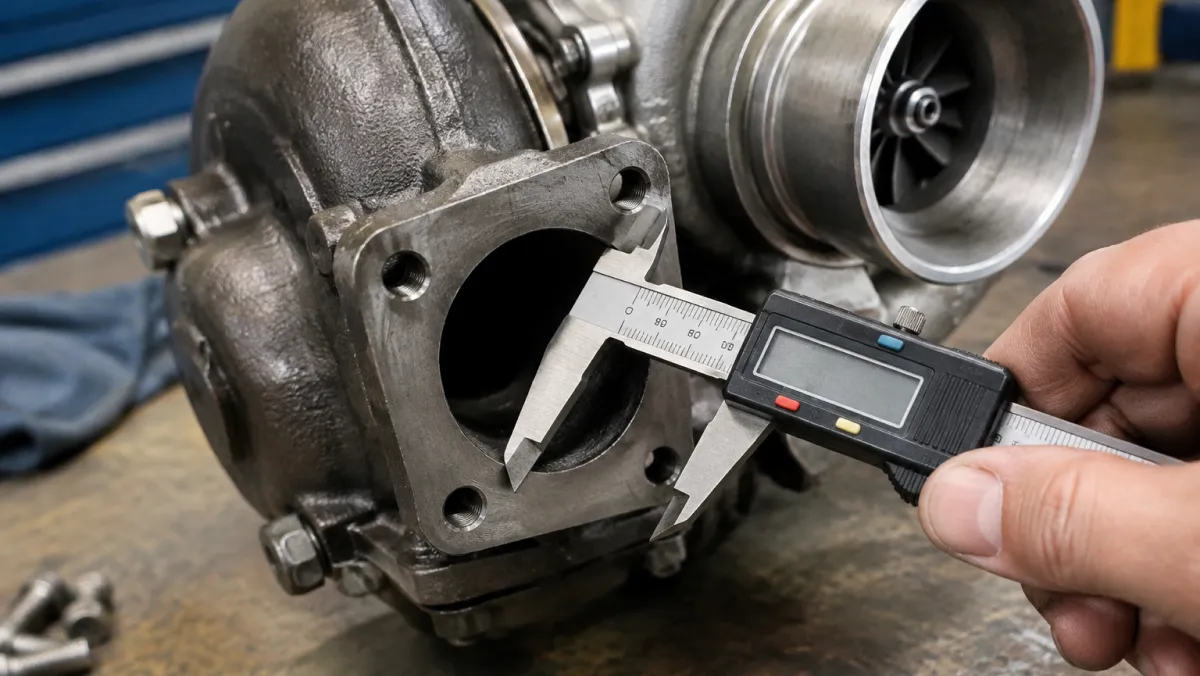
- Oil drain. S300 is a mid-frame drain at 50 mm bolt centers; the S400 is large frame at 50.8 mm. Only 0.8 mm apart — close enough to ruin your week if you assumed. Measure with calipers, and step the drain line up to 12AN for the larger frame.
- Charge piping. Compressor discharge sizing usually changes with the frame, so couplers and pipe sections carry over only if you planned for it.
- Boost control. A larger frame needs proportionate wastegate capacity; an undersized gate on a big frame is an overboost problem waiting for a hard pull.
Measure with calipers before you order anything. Five minutes with a measuring tool beats five days of returns.
S400 Replacement on Heavy-Duty Trucks: OEM Applications
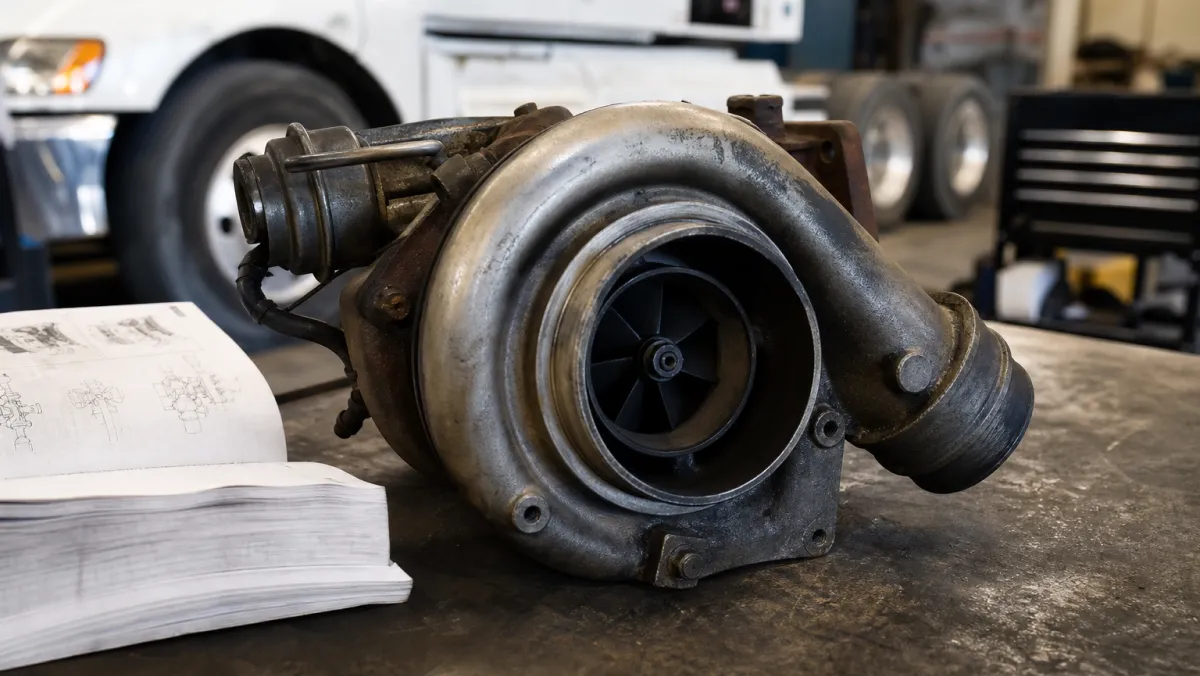
Everything above treats the S400 as an upgrade path, but the frame has a second, quieter life: it is factory equipment on heavy-duty diesels. The Detroit Series 60 12.7L, one of the most produced truck engines in North America, left the factory with BorgWarner S400-frame AirWerks units — the 171702 being the best known. For the shops and fleets keeping those trucks on the road, the question is never "which frame for my build" — it is "the original turbo is worn out, who has the right replacement in stock."
That is a different purchase, and it works by different rules. Nobody replacing an OEM unit wants a core deposit, a return shipment of a failed turbo, or a week of downtime while a rebuild queue clears. Every unit we supply is brand new with all-new components — no core charge, nothing to send back — high-speed balanced and leak-checked before packing, covered by a one-year unlimited-mileage warranty, and shipped from US stock, with most orders processed within 24 hours. Our new 171702 turbocharger sits in that stock alongside the broader S480 range for higher-airflow applications. Send us the part number off the old unit's dataplate, or the engine serial number, and we cross-reference both before anything ships — that fitment check is free and takes minutes.

FAQ
Neither frame is better in absolute terms — they are built for different jobs. The S300 spools early and suits trucks that tow and daily drive, with a practical working range up to roughly 820 hp. The S400 has a much higher airflow ceiling, spools later, and suits builds past about 800 hp or compound setups. Match the frame to how the truck is actually used, and the "better" choice picks itself.
A turbo does not add horsepower by itself — it supplies the air that lets the fuel system make power. An S300 frame supports roughly 500 to 820 hp depending on the compressor wheel, with the largest variants rated higher on paper. If your fuel system, engine internals, and tuning support more than that, the frame — not the parts catalog — is what needs to change.
Generally no, not as a single turbo. Towing needs boost at low and mid rpm under sustained load, and the S400's larger assembly spools too late for that duty cycle — the truck feels lazy and runs hotter below the boost threshold. The S300 is the towing frame. The exception is a compound setup, where an S400 handles the top end while a smaller turbo covers low-rpm response.
None by itself. A turbocharger does not create power; it allows the engine to burn more fuel by supplying matching airflow. An S400 frame supports builds in the 820 to 1,500-plus hp range, but only if the fuel system, engine strength, and tuning are already there. Bolted to a stock fuel system, a bigger frame mostly adds lag.
Not without changing hardware. The manifold turbine flange, downpipe flange, and oil drain flange all differ between the two frames, and the charge piping usually changes as well. Budget for the full hardware list, not just the turbo — the frame decision is the one that decides what everything else costs.
Around 820 hp is the practical crossover. Below it, an S300 does the job with better response and lower cost. Above it, an S400 makes the same power with less strain and leaves room to grow. It is a selection guideline rather than a hard limit — the largest S300 wheels are rated higher — but living past a frame's efficient range means heat, lag, and a turbo working at the edge of its map.
No. The S300 uses a mid-frame drain with 50 mm bolt centers, while the S400 large-frame drain sits slightly wider at just under 51 mm — close enough that guessing wrong is easy, so measure with calipers. The larger frame also wants a bigger drain line; 12AN is the common recommendation for an S400.